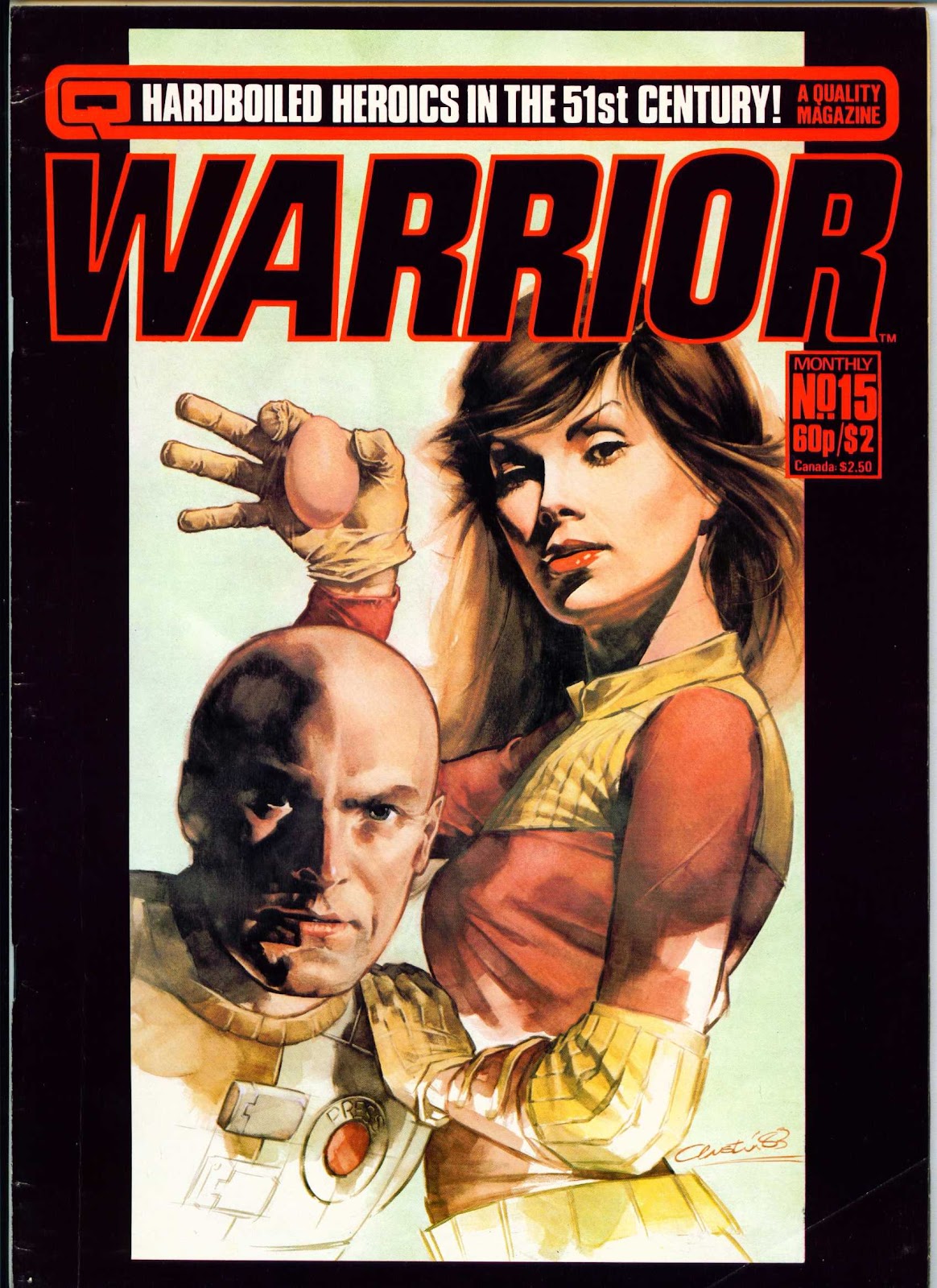
We dive into the remainder of Warrior magazine and discuss:
- The lasting legacy of Alan Moore’s Marvelman and V for Vendetta
- Warrior‘s successors (including… Boom! Studios?)
- A surprising influence from Warrior on Watchmen that WASN’T by Alan Moore.
Find Warrior Magazine part I here.
Subscribe to the podcast feed or find it on Spotify, Apple Podcasts, or your favorite podcast app.
Credits:
Credits:
Hosts: Klint Finley and John Ekleberry
Music: Krudler
Mentioned in this episode:
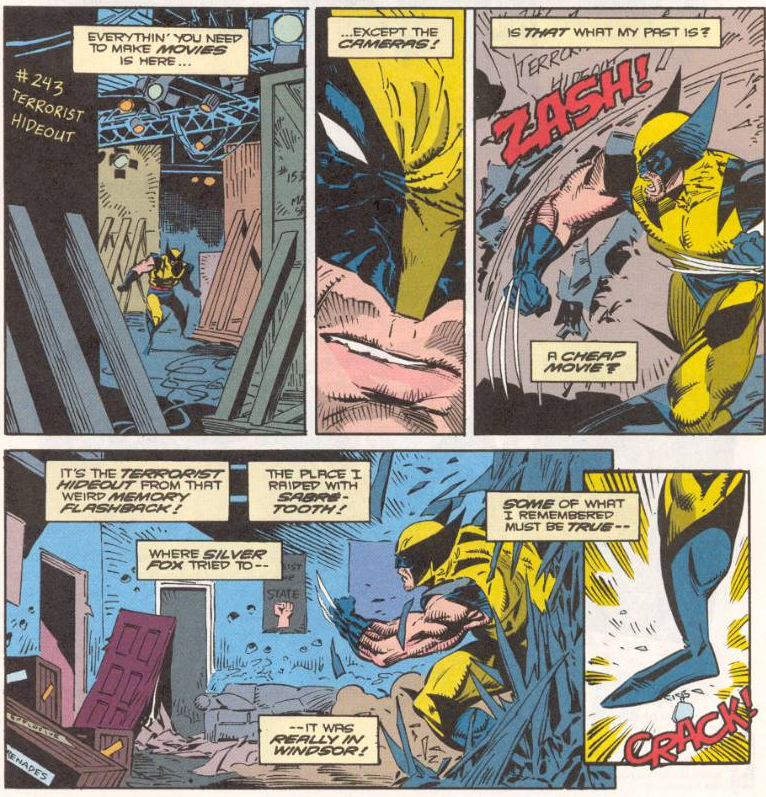
CBR: Provide Some Answers – When Did We Learn That Wolverine Had Memory Implants?
You can see James O’Barr’s early drawings of The Crow here. (The first one is actually dated 1980, and the second, dated 1981, already had him in make-up.)
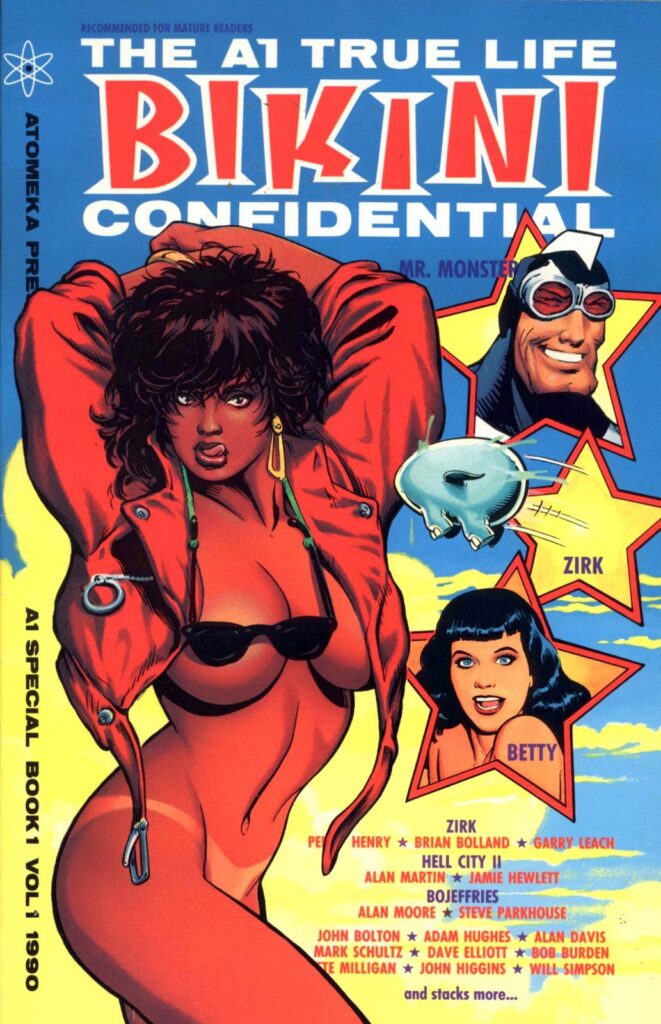
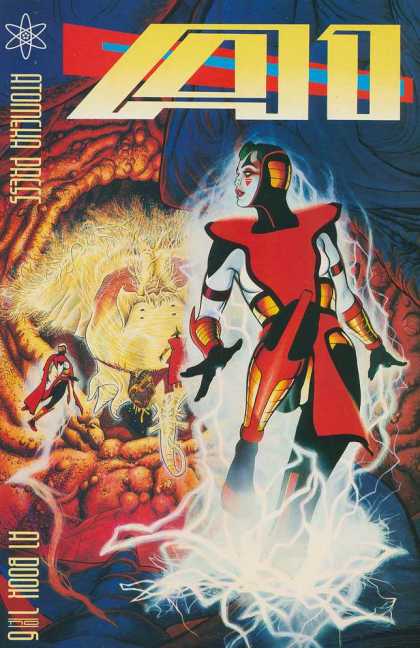
Atomeka Press, A1, A1 True Life Bikini Confidential
Monster Massacre (Atomeka Press) (James O’Barr pin-up only), Monster Massacre Special (Black Ball) (This one, from another Dave Elliot company, has O’Barr’s 14 pager “Snake Dance”)
The Beat interview with Alan Moore (Thing about Evey is the last answer on the page)
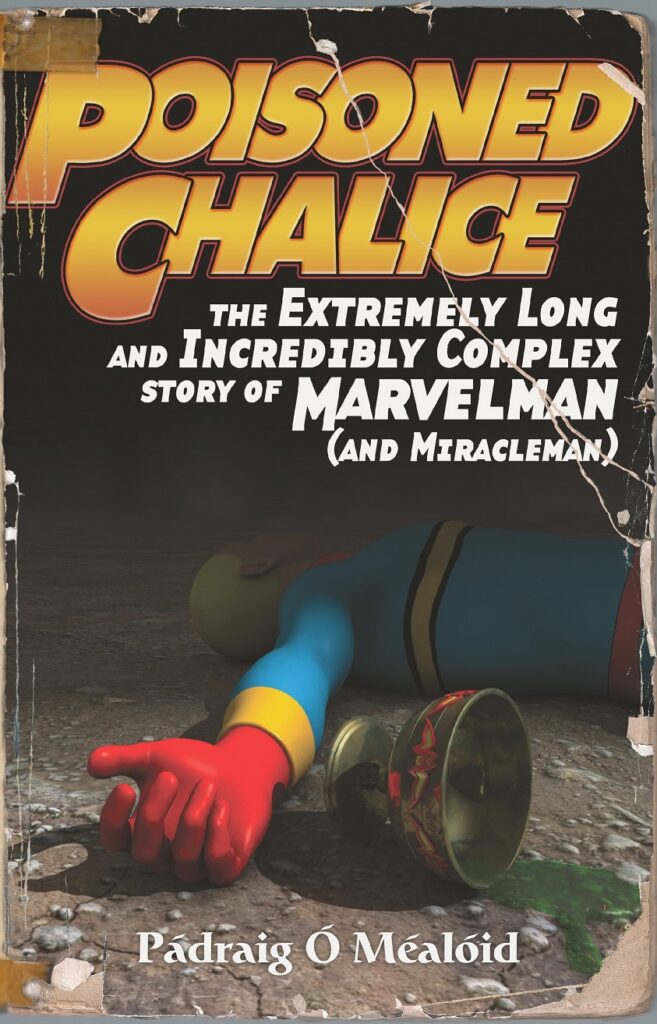
Poisoned Chalice: The Extremely Long and Incredibly Complex Story of Marvelman (and Miracleman) by Pádraig Ó Méalóid
Hermit of Shooters Hill by Pádraig Ó Méalóid (I couldn’t have read this in 2010, because it wasn’t published until 2014, which means I probably haven’t read it at all)
Unearthing by Alan Moore (about Steve Moore)
The Daredevils (Marvel UK Magazine)
Elizabeth Sandifer on The Daredevils in Last War in Albion, specifically parts 48 and 50
Transcript:
Klint Finley (00:13)
Welcome to Sewer Mutant, the comic book podcast for Weirdos Like You. I’m Klint Finley and I’m joined as always by my host, John Eckelberry. Our music is by Krudler. How are you doing today, John?
John (00:24)
Excellent always happy to be here.
Klint Finley (00:25)
Yeah, I just finished doing my taxes today. So there’s nothing quite like that to make you want to put on a Guy Fawkes mask and burn the whole system down.
So yeah, let’s jump into it. But first, I’m going do an icebreaker. So I always ask John these. He never knows what I’m going to ask him. So I wanted to ask you this time, John, interests outside of comic books. We each just name one interest that we have outside of comics.
John (00:51)
Alright, that sounds good. I suppose that mine would be movies. I used to watch a ton of movies, but much like comic books, I kind of drifted away and haven’t watched as many. I only made it to the theater eight times last year, which I feel like is a sad number, but maybe to people that don’t go to the movies, that’s not a small number, I don’t know.
Klint Finley (01:09)
Yeah, you may have had me beat and I feel like I go like a fair amount, but feels harder and harder to get out of the house these days. And I don’t even have kids and you’ve definitely got a responsibility there that I, that I do not have. And I imagine that would also affect what types of movies you can watch at different times.
John (01:30)
Yeah, typically in the house, there’s only children’s programming on the TV. But me and one of my other dad friends that lives a couple of blocks down the street occasionally sneak away and go see a movie together. So we, we try to get to the, the ones that look good.
Klint Finley (01:34)
Cool. So for me, I’m going to say Brazilian Jiu-Jitsu. It’s something I’ve been doing for about a year and a half now. It’s one of the most challenging and fun things that I’ve ever done. You know, I didn’t really have any particular interest in grappling arts before. Was more, I have a little bit of a background going back to when I was a kid in like striking arts like karate, Muay Thai.
But once I, I tried grappling, was just, just totally hooked. It’s actually like a puzzle solving, you solve puzzles with your body. And, so yeah, I highly recommend it. If anyone out there is interested in getting into martial arts or doing more physical activity. Grant Morrison, so that they got into a Jeet Kundo, which is a martial art based on Bruce Lee’s philosophy and style, because, they wanted to be more super heroic.
Well you know, if that is that something that appeals to you, there’s that’s that’s an option out there. Well, you know, else who else had interests outside of comic books is Alan Moore and Steve Moore, who both were contributors to Warrior magazine, which is what we’re talking about today. So previously we covered the first 13 issues of Warrior magazine. Actually, no, we stopped at 12 issues of Warrior magazine and now we’re jumping into the remainder of those issues.
John, do you want to maybe remind us a little bit of what Warrior is and where we left off?
John (03:07)
Yeah, so Warrior is a British anthology magazine that had a lot of excellent British talent work on it. The first year was pretty solid. They had four strips that ran for most of the issues and then they had some some one-offs by other creators. It was edited by a guy named Dez Skinn who goes through and edits the whole series and also edited a magazine called Comics International for several years. And it was the start of some great stuff for Alan Moore and several great artists that we’ve enjoyed from the British scene that have gone on to do other American work.
Klint Finley (03:45)
Yeah, and in particular, V for Vendetta and Marvelman were first serialized in Warrior. So those are the two best known and longest lasting influence coming out of that magazine. And it was really Alan Moore’s of like his real breakout work there. He’d been doing comics for a few years before that.
He was publishing strips in a music magazine called Sounds. He was doing work for 2000 AD. Before that, he had done some Doctor Who magazine. He did some stuff for Star Wars, Empire Strikes Back, British black and white anthology comic as well. But this is really what put him on the map. And V for Vendetta remains one of his best known works.
I think Marvelman would probably be, is also a really well remembered one, but because it was out of print for so long, I think it’s a little bit less remembered than it probably deserves to be. But yeah, so that’s a little bit of the context coming into this.
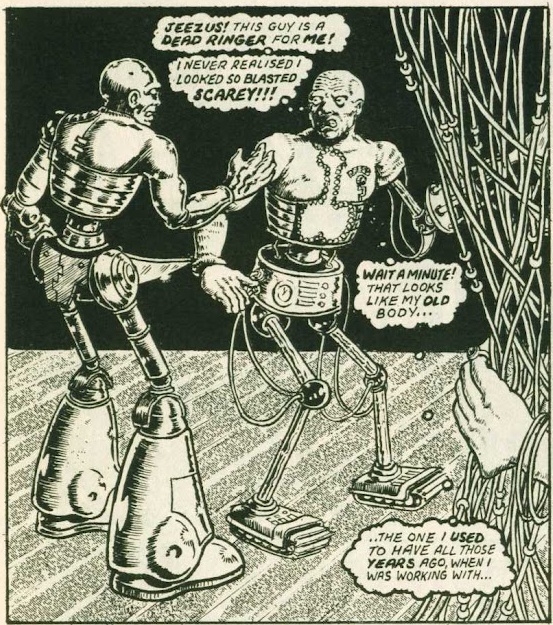
Now, the second half of it, I we wanted to kind of focus more on the impact that Warrior had in this episode rather than our opinions of the material, which is what we covered mostly last time around. But I do have to say, like, I feel like there was a pretty steep decline in the overall quality of the magazine in the latter half of it, especially the last few months of it, where it seemed like more of it was being written by Dez Skinn, who wasn’t a great writer or a bad writer, but it just, you he wasn’t, I think, up to the level that had been set in the earlier issues of Warrior. And Steve Dillon, who drew the Axel Pressbutton series that was written by Steve Moore departed at some point. And I guess the artist wasn’t on that, the replacement artists weren’t bad or anything, but I don’t know, it just really did not sing the same way anymore after that.
John (05:30)
It didn’t feel the same to me either, but interestingly, the replacement artists, well, first they reprinted the Christmas special that was from Sounds Magazine that was actually illustrated by Alan Moore, and that was really cool to see. And then as a replacement for Steve Dillon, they had, Alan Davis. So it’s really interesting. He Alan Davis stops drawing Marvelman, which is like their premier strip and that strip disappears from the book in issue 21 and he starts drawing Pressbutton for the rest of the series. Or at least the rest of the episodes that press button is in.
Klint Finley (06:06)
I thought there was somebody else on it. Yeah. Yeah, I thought somebody else was on it too for a while, but I don’t know. Yeah.
Do you have any other thoughts? One other thing I kind of wanted to jump to real quick was one of the other interesting things about this latter half is that there were interviews with a lot of the creators. It was like the “sweatshop talks” as they described them. And there’s one where Steve Moore essentially interviews himself because he wrote the Pressbutton books, those strips under the name Pedro Henry.
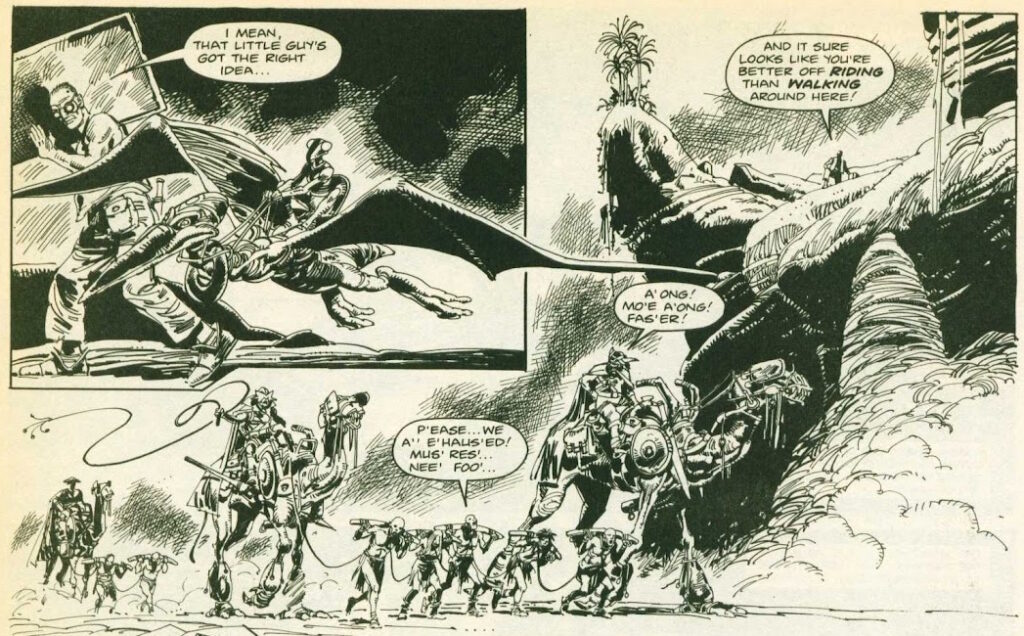
And so there’s this one that’s Pedro Henry interviewing Steve Moore or the other way around, I forget which. Something that stood out in it to me was that Steve Moore talked a lot in that about how he was trying to experiment more, he was being influenced a lot by manga and by Japanese cinema, and that he was trying to move more towards having his stories told more visually or through the dialogue. And that’s something I’ve talked about as being one of the really interesting shifts in comics storytelling that it didn’t necessarily start in the dark age, but accelerated in the dark age. I mean, the shift has never really fully happened. I mean, there’s still exposition in comics today and everything, it used to be, comics just used to be so much more exposition heavy, so it was interesting that Steve Moore had this awareness that comics needed to change and that his comics needed to change even. But looking at Twilight World, which is one of the new strips that he did in the kind of latter half of Warrior, even though it didn’t make it to the end of the series.
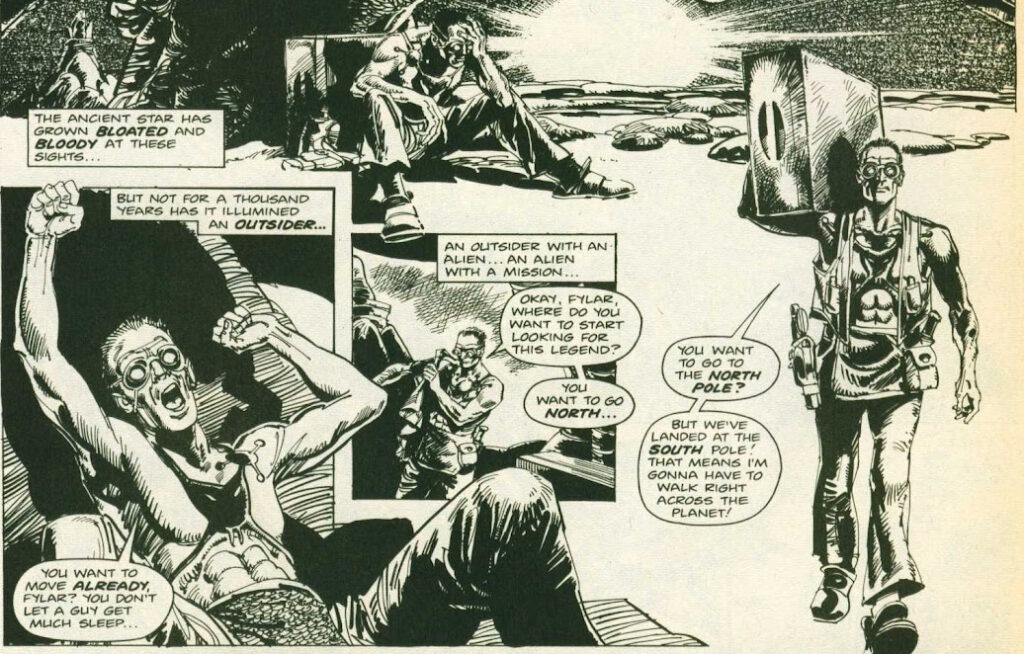
He just replaced the exposition with having the character talking to a computer. He succeeded in having it just be dialogue, which is one of his stated goals, but it was still just exposition. And it was actually for me, I thought it was really annoying because the, couldn’t, he didn’t include what the computer was saying to the main character. So the main character was constantly having to repeat what the computer was saying to him. So it was actually kind of worse than a traditional way of doing exposition in comics. Sorry to start off on a negative, I don’t know, as we chart the course of creators trying to figure out how to do better with the medium, that kind of stood out to me.
John (08:19)
Well, they also that that strip that you’re talking about Twilight World. I was kind of excited the issue before it starts they kind of had a text piece where he talked about the buildup of it and, the idea for it. And I thought, oh, yeah, that sounds cool. And I had seen the artist’s work. Jim, I hope I don’t butcher his name, his last name, but Jim Baikie. That might be pronouncing his last name wrong. But I had read other stuff that he’d done with Alan Moore in 2000 A.D. previously. And I thought, it’ll be cool to see him working with Steve Moore. And the art was fine in the strip, but the strip itself was not very strong and they ran it for four issues and then they just dropped it and it never, never recurred. So they must’ve realized that it wasn’t working.
Klint Finley (09:01)
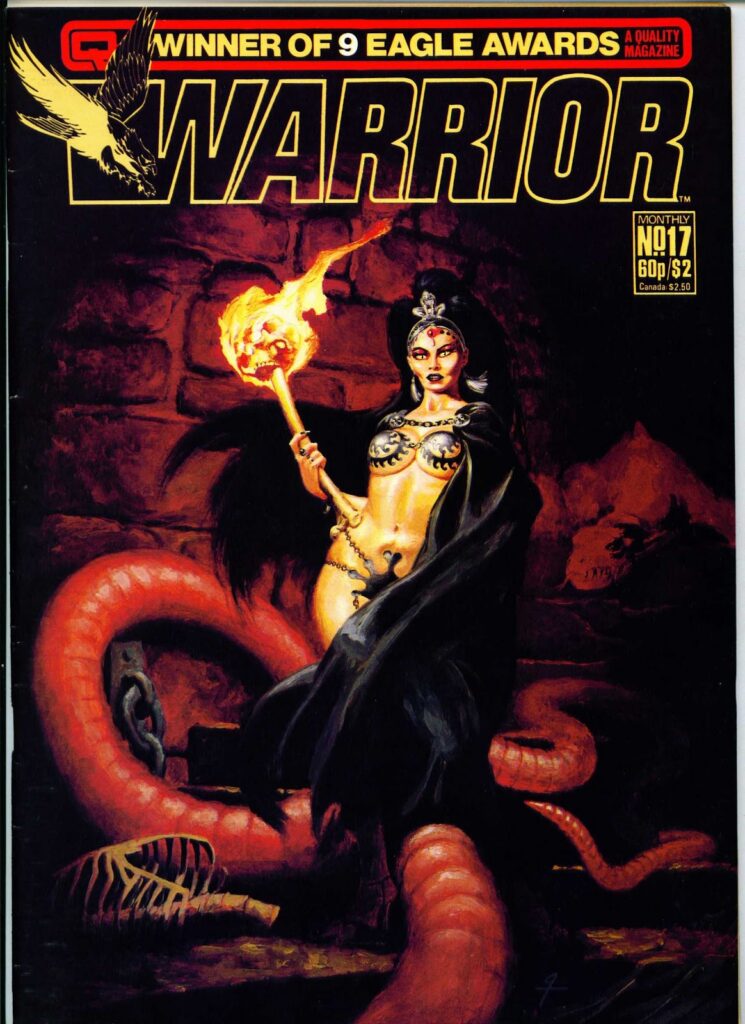
Yeah, I thought the art was great. I really liked the art in it. I will say that for it. But yeah, that was just one of a number of examples of the quality starting to drop off on the book. You’d see a lot of, there was a lot more T&A in it the last several issues. Readers even started to notice in the letters column some of that effort to try to get, I guess, like some a cheap sales boost and it seems not to have worked because the magazine was for better or worse, canceled with issue 26. But it, the influence of it clearly has lived on. So you had mentioned a while back that you, you thought that Faust was, was, probably pretty clearly influenced by it by particularly V for Vendetta. I wondering if you wanted to say more on that.
John (09:52)
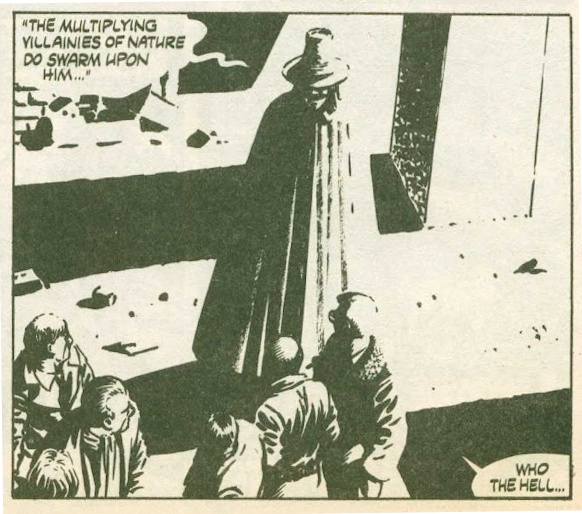
Yeah, I don’t know. We were talking a bit about the Outlaw comics that we enjoyed and if Warrior might’ve had an influence. And I don’t know if those creators had access to these magazines or not. I had actually thought a lot about when I was starting to read V for Vendetta again. I hadn’t read it in years when we started reading it for this. And I actually was thinking about how much it reminded me of the Crow. You know, both the way the main character carries himself with the mask and with his kind of the way that he speaks in poetry. And I guess you could apply that to Faust as well. You know, the kind of grotesque masked guy behind the scenes. But I think it’s a lot closer to The Crow for me than than to Faust on the way it’s presented in the stark, I mean, I guess them both being in black and white doesn’t hurt.
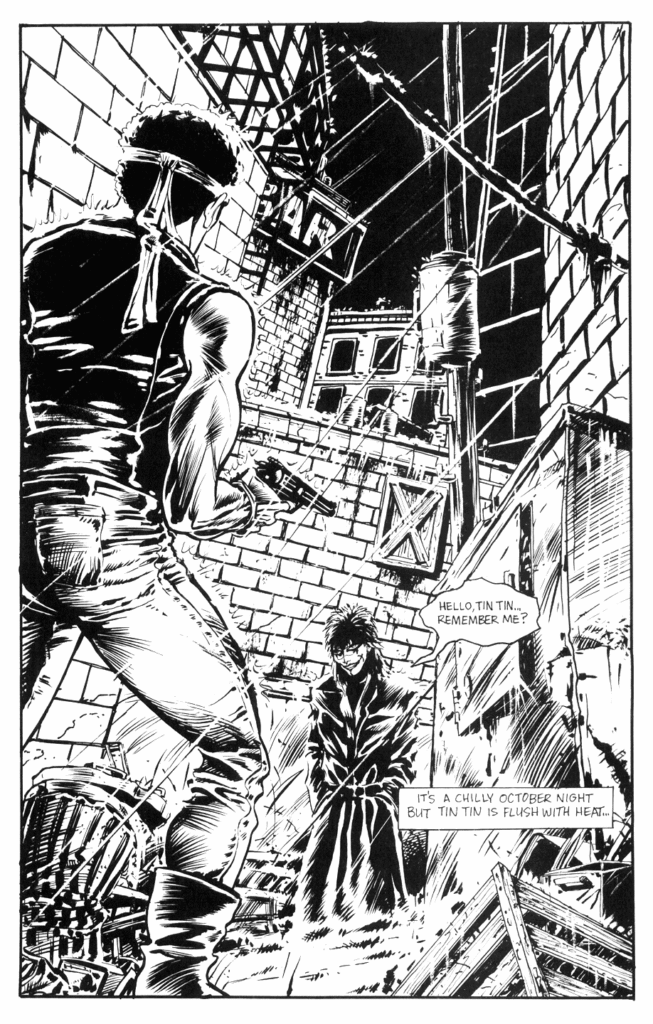
And I have seen early illustrations, when O’Barr was starting to work on The Crow in the early eighties, he had considered having Eric wear a mask rather than having his face painted, but then he opted to have, the face paint instead. But I can definitely see some similarities there and I have no idea if he, he was influenced at all by that, but I feel like they’re, they feel very similar and they’re of a similar time.

Poster of O’Barr’s first Crow drawing, included with Trust Obey’s Fear and Bullets 25th Anniversary Exclusive album. From John Bergin’s Instagram
Klint Finley (11:01)
Yeah, I saw that as well the second time through. It’s kind of funny that the first time, I don’t think it ever occurred to me that it may have influenced O’Barr and the Crow, but I couldn’t not see it this time through. Yeah, y’know O’Barr, if those early drawings, I think the earliest one is dated 1981, which would have been before Warrior. If the dating on that is correct. But the DC reprints started I think in 87 or 88, which was when he was probably really ramping up finishing the first parts of it for Caliber. And it seems like it would definitely have been on his radar by that point. You’d even wonder if maybe that was part of why he decided not to use a mask if he saw if he had started out wanting to have the character have a mask and then saw, that’s going to make it look too much like V for Vendetta, I’ve got to do something else. I could imagine that. But yeah, it’s hard to know. I don’t think O’Barr, in any of the interviews I’ve read, I don’t think he’s ever talked about it. But it definitely seems likely.
And then Marvelman, something I was just kind of poking around and I hadn’t realized this, but Wolverine didn’t have… So I’ll back up one second. the original Marvelman character dates back to the 50s and he was kind of a replacement for Captain Marvel, the original Shazam Captain Marvel.
The original stories were, you know, they’re definitely of the time of the 50s and 60s era of superhero comics and involved like a kid who would say a magic word, transform into a superhero. And Moore’s revision to that was essentially that, yes, he could say a magic word and transform into a superhero, but all of those adventures were imaginary. They were false memories implanted essentially by a government program where they were experimenting with alien technology. So and it’s it’s you can see the the influence of that, like all over comic books now. And so I had I was thinking, well, I guess there was Wolverine before that. And then I looked a little bit into the history of Wolverine. And he didn’t actually have memory problems or false memories for for quite a while. The false memories thing from what I’ve read didn’t start until 1991 in Wolverine number 48 by Larry Hama. So well after Marvelman.
I think you can see the influence of Marvelman with like pretty like the government stuff and alien technology stuff, but just, guess, know, the violence of it and so many different aspects of it, you know, all over comics, but particularly Image in Wildstorm.
I feel you can draw a really straight line from Marvelman to WildCATs to Gen 13 to The Authority, starting right there with those early Warrior issues that I’m sure must have been passed around amongst comics creators back in the day and left some of mark there.
John (13:57)
You even see it in places that you wouldn’t necessarily expect. Like DC did a reboot of the Archie characters, the Archie superheroes. And one of those characters was the Comet. And the reboot of that character, I didn’t read the 40s and 50s version of that character, but the rebooted version definitely has some, takes some things from Marvelman slash Miracleman. Even down to the idea of the character like kind of switching swapping bodies in like a different time and space or whatever in order to inhabit this like superhero body when they’ve, you know, powered up or changed or whatever. Yeah, it’s kind of interesting. And I think that that run was something that was talked about by fans for a long time. And like you mentioned it, it kind of went out of print and people had a hard time getting it.
And then it almost became more known for the legal battle surrounding it rather than for the story itself. But that’s a whole other story.
The Wolverine connection is really interesting though. That’s not a thing that I’d thought about. Certainly in Weapon X and Barry Windsor Smith’s run, it’s shown that Logan doesn’t remember any of that, but it doesn’t necessarily go into false memories. Although I think you had mentioned that they do use the idea of kind of the VR helmet, you know, that he wears in Weapon X in order to run some kind of like programming and controlling on him.
Klint Finley (15:20)
Yeah, but it doesn’t seem like they’re implying that they’re showing him false memories. It’s like they’re doing it for training purposes when they’re in that series. Yeah, the, he, they established that he had some memory gaps going back to like 1986 in Alpha Flight. So that there was the, yeah.
John (15:36)
And even that’s after Warrior because that Warrior would have been in the preceding years, just a couple years right before it.
Klint Finley (15:42)
Yeah, yeah. So yeah, I don’t know if that was what influenced Larry Hama to go with the false memory route or not, but Moore was definitely there before him. And yeah, I really feel, again, yeah, it’s hard not to see that influence all over the place. The only thing I was thinking about reading through it was even as the Pressbutton stories really started to lose me, the one thing that I thought of was Lobo. I realized that Pressbutton felt a lot like that character.
Pressbutton has something particular about the brand of humor there and his persona that feels like it has had reverberations in other characters further down the line.
One of the things I tried to look into a little bit was what sort of impact it was having at the time. And going back to issue four of Warrior, there was a letter by Warren Ellis when he was about 13 years old. And he writes in it, “You’re going places people don’t fumble it now.” And I think that kind of sums up the reaction to Warrior, at least as expressed in the letters column. It seemed like people knew that they were reading something special but not necessarily that they were witnessing comics history, like a complete revolution of the medium or at least of superheroes. And I think that’s kind of normal. Y’know, people don’t always realize how big, how important something is until later. But I had kind of this impression from reading things, particularly like Grant Morrison’s Supergods book gave me more of an impression of Marvelman just kind of like creating an instant revolution of superhero comics. That’s not really exactly what happened. It took some time.
John (17:35)
Well, and maybe for him too, you know, I mean, he’s British, like it would have hit him first, you know, if he was, if he was a reader at that age and you even get to see the transition, Grant Morrison does a script in, issue 26 for the Liberators. And so you kind of see at the very end of Warrior, you see that handoff, you know, when Alan Moore had previously and Steve Moore had been like the primary scribes in those last few issues, you know, Dez Skinn, as you mentioned, is writing a bunch of stuff. And then Grant Morrison comes in and writes, writes a script in the very last issue.
Klint Finley (18:07)
Yeah, and Morrison has definitely written that that Warrior was what inspired them to get back to try their hand at comics again, that they had actually been doing professional comics as long as Alan Moore. Morrison was doing as a teenager a strip in a Glasgow newspaper called, the strip was called Captain Clyde and they had some stuff in an anthology called New Myths around that same time, in the late 70s. And then they just took a break from comics for a while and came back to it after Warrior. So there was, mean, yeah, there was definitely an impact there, but just did, it wasn’t like an overnight change in the industry like I thought there might’ve been.
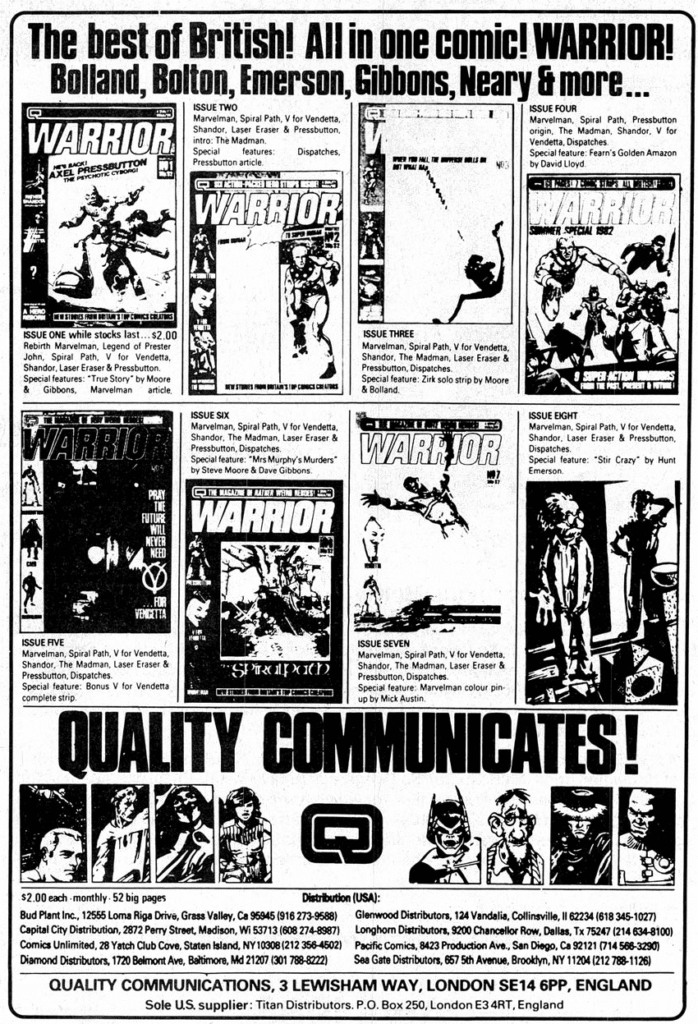
I tried going, I spent some time going through a bunch of American comics magazines from the early 80s to see if Warrior was talked about and it was barely on anyone’s radar. The Comics Journal had an ad for it in 83. There was an interview with a 2000 AD editor in comics interview in 1984, Richard Burton, where he just mentioned Warrior and called out Marvelman and V for Vendetta as the best strips from it. And there was a Comic Scene profile of Brian Boland in 1982 that mentioned his Zirk strip that I think was in Warrior number four or so. But yeah, just not a whole lot of recognition on our side of the pond, at least in those early days.
John (19:35)
Yeah. And then of course, you know, the stuff started getting reprinted. There’s a, I, I’m trying to remember how far along regular Warrior was. I made a note here someplace that in, they eventually publish, here it’s an issue 24. So at the end of year two, there’s an advertisement that Pressbutton is going to be a color comic and that it’s going to be, you know, come out in regular comic size. And so even as this magazine is dying, the content from it goes forward because you get press button and you get Miracleman and you get V. You know, published by other publishers in the States and then they get that exposure that they didn’t have earlier on.
Klint Finley (20:12)
Yeah, so I think each of those had continued beyond what was in Warrior. I think there were two different Pressbutton series, one that reprinted the Warrior stuff and then a second one that had some original material. And then, of course, Marvelman continued on. And V for Vendetta was eventually concluded by DC Comics.
Klint Finley (20:36)
And one of the things I hadn’t really realized or thought about was that the end of Warrior isn’t until 1986. So it’s it gets into, doesn’t end until after Crisis on Infinite Earths is already out. And after Moore is already either completed or almost done with his Swamp Thing run. If there was a, now comics were already starting to have that big change over here by the time Warrior was actually finished. And then Moore’s run on Marvel Marvelman or rather Miracleman as it, as it became in the U.S. didn’t end until 88 or 89. So it was after Watchmen even was, was completed when he completed his run on Miracleman. So that’s actually kind of a later statement on superheroes from him than Watchmen was.
John (21:23)
And the name change, of course, was due to some of the legal stuff, which is all kind of interesting. Like, nobody cared when Marvelman was a strip inside of Warrior Magazine. But once they published the Marvelman Special, which wasn’t even really anything, it was just a framing story by Moore with a bunch of reprints from the older stuff. You know, it is kind of a shame that they even that they even published it at all because maybe if they hadn’t, maybe they wouldn’t have gotten into legal trouble with Marvel.
But Marvel didn’t like the idea of them using the name. And so they sent Cease and Desist letters and Skinn publishes a couple of those in the last couple of issues of Warrior. He also tries to use them as kind of an excuse as why Marvelman’s not appearing in the book anymore. But it seems from other interviews and things that I’ve read that Alan Moore and Alan Davis kind of had a falling out and so that was kind of why there weren’t any fresh Marvelman stories. It just kind of ends on a cliffhanger in issue 21. And you don’t see him come back in Warrior again after that. And then when the Eclipse stuff starts reprinting new material, it’s not by Davis. It’s by a different artist, Chuck Beckham, and then later John Totleben. But Davis doesn’t ever draw Marvelman again after that.
Klint Finley (22:42)
Yeah, yeah. So I don’t know much about the… There’s literally two whole books about Miracleman and Marvelman and the saga of how all of that unfolded. There’s a lot of bad blood, I guess, between a lot of the people that were involved.
Klint Finley (23:03)
Probably best for us not to get into that in the podcast because it’s way too much detail and allegations flying around in all directions to try to untangle. But if anyone’s interested, Poison Chalice is still in print. I’m not sure about the other one. But Poison Chalice is more recent and would have the latest developments with Miracleman finally getting reprinted at Marvel. They still kept it Miracleman because they understandably didn’t really want to be associated too closely with the Marvel brand, I think.
John (23:37)
Yeah, it was interesting because they reprinted the old stuff, the McAnglo stuff under the Marvelman name. And they did that as kind of like a hype for the book that would eventually come out. But man, it took them so long. Like that stuff came out in, I think, 2011. And then they didn’t start reprinting the Alan Moore stuff till like 2014. And then like by the time they got
to the Neil Gaiman stuff down the line it was so much later that I didn’t even care anymore. It took them like a decade or more to get all that stuff out. I think by the time they did their version of the Silver Age, it was like 2023 or 2024. So it’s a whole nother saga that we could do a whole episode on, Miracleman at some point.
Klint Finley (24:20)
Yeah, and I think we’ve talked about wanting to do an episode on the endings of Marvelman or Miracleman and V for Vendetta. So we can go into that.
John (24:28)
And also the continuations in A1 that probably people are less familiar with. And the other characters that went on and had their stories concluded elsewhere.
Klint Finley (24:44)
Yeah, well, I thought that might be worth touching on here a little bit. So Warrior ended with 26. So with issue 25, it merged with another Dez Skinn magazine called Halls of Horror. And I guess he was hoping that the combined sales of the two… So that’s also a rather British tradition of merging magazines when the sales on one of them wasn’t doing so well. They tried that, clearly didn’t work. so the…
John (25:12)
Well, and there wasn’t much horror content that got added. didn’t feel like, you know, they said that they merged the magazines, but the magazine largely just continued as Warrior. I mean, there, I didn’t see really any stories in there, hardly. They reprinted a couple earlier Shandor stories in those last couple issues, they reprinted, whether it was a reprint or maybe it was a new one that they got Bolton to do, but it’s just like a two pages that summarizes the earlier stuff.
John (25:37)
And then they had another artist do like a bridging story that takes us from the Dracula movie that he was in, that character was in, to the first Shandor series and it kind of connects them. Year two ends the Shandor story. Shandor went all the way to the end of year two. And one of the things, I know that we don’t want this whole thing to be about just how we felt about it, but…
John (25:59)
One of the things I wanted to do reading the second half of Warrior was to give Shandor another chance because I kind of ragged on Shandor when we read the first half. I didn’t think it was that strong and I didn’t really feel like it held my attention. And after I read some good interviews with Steve Moore, I thought, you know, I got to go back and actually read this this time and see what I think. I think Shandor had a pretty strong ending in its last couple issues. There’s a cool twist in issue 23, a kind of revelation about in that story where demons come from, the origins of demons. And then in issue 24, there’s just such a bleak ending for that story. I’m like, oh my god, this is it? You’ve wrapped it up? This is where your hero ends? And it gave me a different appreciation for the whole thing. Sometimes if a movie is kind of ho-hum, but it has like a really good ending, it almost makes you re-examine the rest of it. And it really kind of made me want to look at Shandor again.
And then we found out about these A1 publications where a lot of these creators went after they kind of separated from Dez Skinn and they were publishing their own little continuations. And in one of those, Steve Moore does kind of a coda to the whole Shandor series and that’s actually pretty cool and interesting as well.
Klint Finley (27:17)
Yeah, yeah, I also ended up flipping on on Shandor where I think in the first half, I was all in on Pressbutton and not so keen on Shandor. And in this that that second half of the of the series, it flipped for me like I think a big part of what happened, though, is when they brought back I don’t know how to say her name exactly, Jaramsheela, the, the demoness character and, and start doing more with demons and Hell. That’s just a lot cooler. It’s just more fun to, to read than Shandor kind of like roaming around in Romania talking to people or whatever. Yeah, it definitely picked up there at the end. There’s also that, great like, goat headed demon character…
John (27:51)
It’s more metal.
Klint Finley (28:06)
…that’s in it towards the end that that explains like where demons come from. Yeah. The, then the, and that A1 story it’s in, a little bit exploitative, but the, A1 Bikini Confidential special, I think. And, yeah, it’s a strange little book, and the, ending is, very meta in that.
Klint Finley (28:28)
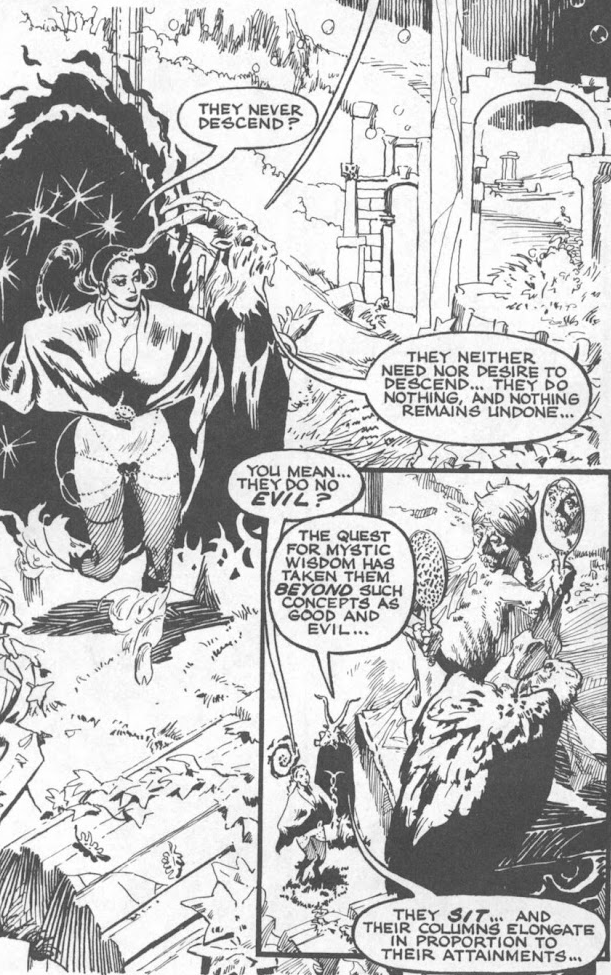
Like the coda, as you described, it gets very meta, but in a cool way. Also has something I found really entertaining where they go to one of the different, like to another hell dimension or something and find these demons that are meditating. And Jaramsheela is like, well, they don’t do anything evil? And the goat headed demon is like, no, they’ve gone beyond good and evil.
And it just…This is sort of funny to me. It’s like the demons found Buddhism on their own, essentially. I don’t know. I thought it was clever and interesting and something I’ll probably try to steal someday for something.
Yeah. So let’s say a little bit more maybe on A1. That was Gary Leach, who drew the early Marvelman stories and was the art director of Warrior, A1 came out as a perfect bound, but otherwise like a normal comic book size. Had a lot of North American creators in it as well as British creators. And I don’t know if it sold any better than Warrior did, but they made it six, I think they always planned it to be six issues plus the Bikini Special. And they did it and then they came back later with some other stuff. That is a bit of a spiritual successor to Warrior in that it’s Gary Leach and also the Bojefferies Saga continues through those. I think it’s in…
John (29:50)
And Zirk as well. We get Bojefferies comes back, Zirk comes back. The other guy that ran it with Gary Leach was Dave Elliott. And it was Atomeka Press. And the only other thing that I had ever been familiar with with them is they did a Simon Bisley and some other creators did this thing called Monster Massacre. There was a special.
John (30:14)
And the only reason I know about it is because there was a James O’Barr story in one of them. But that was probably, you know, they kept all this stuff alive. They kept all these series. And if you look at the creators, especially on the Bikini Confidential issue, you see a lot of names from Warrior. You’ve got Brian Boland, Gary Leach, Alan Moore, Steve Parkhouse, John Bolton, Alan Davis.
John (30:38)
All of those guys worked on Warrior and then you have a few other big British names on there with them from the next generation, but pretty cool stuff.
Klint Finley (30:47)
Yeah, you said Dave Elliott. He also ran Tundra UK. So that was the the UK wing of Kevin Eastman’s comics company. And I’m not sure if Gary Leach was involved in that as well. But it seems like Atomeka basically just became Tundra UK for a while. Got flooded with. Yeah, it got flooded with money. And you can kind of see that that overlap of creative people that there’s a lot of
John (31:05)
Interesting.
Klint Finley (31:13)
people who did work for Tundra in the A1 anthology. And then obviously James O’Barr did the Crow at Tundra and ended up in the later Atomeka/Black Ball story. So there’s some interesting continuity there.
And then another fun fact is that the founders of Boom Studios were actually got their, well, they had originally worked at Malibu Comics in, I think, marketing, and then took a break from comics for a while and came back to it, essentially helping restart Atomeka with some Keith Giffin projects. Keith Giffin encouraged them to start their own company. They started Boom Studios. So there’s this interesting continuity where you can go from Warrior to Atomeka to Tundra to Boom. So in a way there’s a, you know, it kind of lives on but in America? With people who weren’t even around yet for Warrior. But I don’t know. Maybe I’m kidding myself there but I don’t know. I like to think that the, you know, the torch kinda keeps getting passed in some way.
John (32:10)
Haha. Yeah.
Klint Finley (32:21)
There was also another kind of Warrior coda in Comics International. I didn’t write down the year or the…
John (32:29)
I got it. It’s issue 67 and it was the warrior 1996 spring special. So it was a flip book. It was Comics International, just their regular publication. But if you flipped it on the back, they had the Warrior special, and all it really was was stuff that he Dez Skinn had in a drawer that hadn’t been printed. It’s the second half of Grant Morrison’s Liberators story.
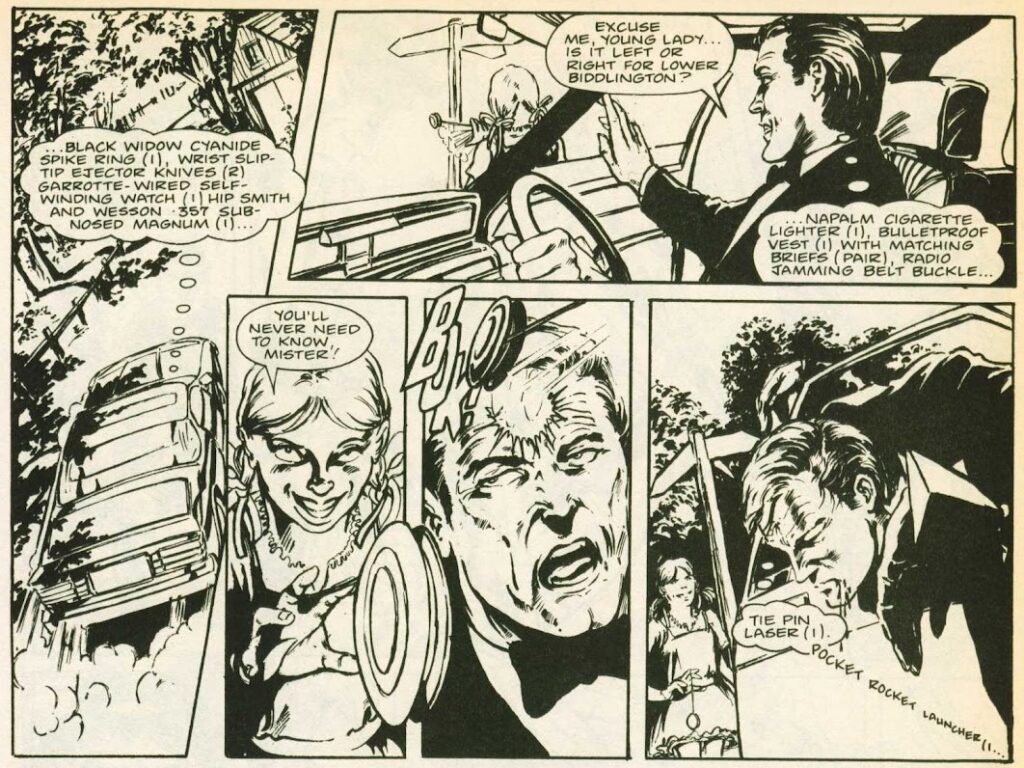
And then another Big Ben story that was in the drawer. Can I just talk about how terrible Big Ben is? So Big Ben was like one of the things that I thought I was going to like in the second half. I was really looking forward to it. And it’s absolute garbage. Like it’s probably the worst thing in the whole magazine. Like it’s it’s poorly written and poorly drawn. And I thought that we were going to get some like kind of a cool little like James Bond kind of thing or whatever.
John (33:18)
And he doesn’t really resemble the version of the character that appeared earlier in Miracleman. And then who, I guess, appears later in the Miracleman continuation. Like that other version goes on and becomes the British Bulldog and he’s his own character. But this version of Big Ben is just, I don’t know, man, like they could they could have just told like a James Bond story, but instead they they have this really convoluted kind of storyline, and then they reveal that he’s an alien, he’s like a shape-shifting alien, and I don’t know how that ties into the whole cosmology of the Warrior universe.
So I guess I should mention, I mentioned this in the last episode, but I guess it’s worth mentioning again. In issue 14, there’s piece that talks about how all of the Quality stories kind of appear in the same universe, and they make them appear kind of far enough part on the time scale that they don’t have to do crossovers or anything but ostensibly all these things are happening in the same timeline so like V and Marvelman and Pressbutton are all like in the same world. And I just hate the idea of this like Big Ben thing that doesn’t seem to actually even fit with the version in Marvelman and yeah I don’t know it was a huge miss for me I was glad I like Shandor because I didn’t like Big Ben at all.
Klint Finley (34:34)
Yeah, Big Ben was a disappointment. I don’t think I hated it as much as you did. But it is really like, Dez Skinn just didn’t seem to be able to decide what he wanted to do because it starts out and it’s like a parody of kind of those old British spy stories like James Bond and Danger Man…
John (34:51)
Actually have a reference to the Prisoner in it. There’s a, there’s a issue that has,called “Dai the Death” D-A-I that, ⁓ that villain is, it’s Patrick McGoohan from the Prisoner. I mean, he looks just like him. He dresses just like him, quotes the show. Which I hate because I love that show and I hate this strip. And so it like makes me like it even less because I’m like, oh man, you’re quoting something good, but I don’t, I don’t like that you’re doing it.
Klint Finley (34:53)
Yeah. Yeah. Yeah, so it starts out and he’s, it seems like it’s trying to be a parody of that stuff, but it’s not funny, mostly. Actually the very first one I did like the bit of like the guy is like going through his inventory of like all the all the weapons he’s got. And then like a little girl knocks him out with a yo-yo and he’s still thinking about his inventory as he blacks out and just like he had all this stuff and it didn’t help him at all. Yeah, I thought that was, that was a funny gag. And so I was like, okay, I could, this could be, this could be okay. And then it’s not.
John (35:34)
Well, I guess there’s that.
Klint Finley (35:44)
It’s not okay. But then it turns into like a Miracleman knockoff where it starts to be about like, all that British spy stuff was actually like false memories or like memories that he was using to try to not get his mind read, that was a little unclear to me. And yeah, it seemed like he was really wanting to pull an Alan Moore there, but not, not really pulling it off and that was too bad. yeah, Liberator, I didn’t really understand it either. The first part was written by Dez Skinn and then Grant Morrison took it over and maybe, you know, it just never got enough, never got enough material off the ground to make any sort of assessment of it, but it didn’t seem very good.
John (36:30)
It had nice art.
I can say that about it. Liberators had decent art.
Klint Finley (36:34)
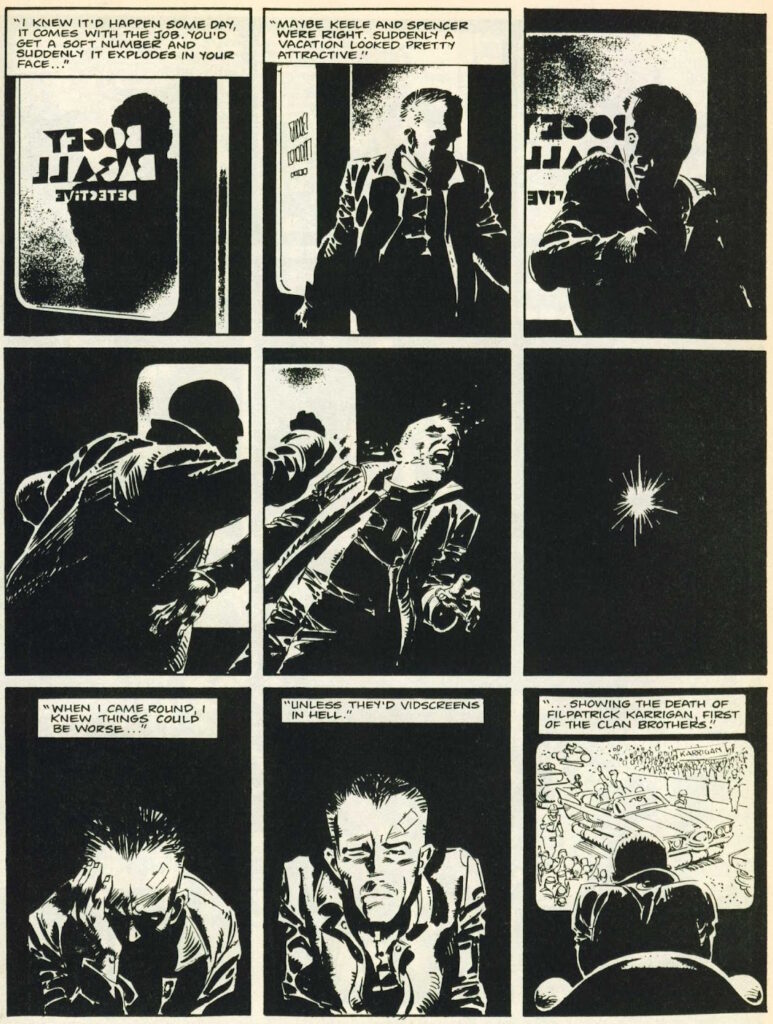
Yeah, yeah, Big Ben could definitely have been better. Yeah, there’s also one other noteworthy thing in that later run was a story called Bogie. And I think that’s probably a reference to Humphrey Bogart because he’s a private detective in the future, even though it hardly matters at all that it’s… The first one, I guess it kind of matters that it’s the future. And then after that
Klint Finley (36:58)
it doesn’t matter and it barely even seems like it’s the future. But I really like the art in it and the stories are okay. I didn’t hate them. But what’s actually notable about them is that a lot of them were done on a nine panel grid or a six panel grid. And that was a big influence on Dave Gibbons doing the nine panel grids in Watchmen, which was a total surprise that that ended up being, y’know, that the Bogey of all things out of Warrior has one of the biggest lasting impacts in comics. It was right there. Yeah, pretty surprising and kind of cool.
John (37:40)
There was a lot of stuff in the second half that I liked, even though I didn’t feel like it was as strong. There’s one of the issues that Dez Skin mentions that he kind of felt like by year two, it was getting a little too standardized for him that he didn’t just want to keep running the same four strips. He wanted to bring in different creators and new blood and new stuff. And I don’t really necessarily know how successful that was because I think that those early strips were by and large the better ones. But they did bring in a few kind of interesting things and some of the stories got to kind of go in different directions. And the ones that did keep going like Shandor, Steve Moore even had a chance to do a Jaramsheela solo story in the middle there. And I laughed because it’s credited, the script is credited to Steve Moore and Pedro Henry.
And I’m like, he must have been feeling very schizophrenic when he wrote that one. He’s like, there’s a little bit of both of me in this one. In that one, he starts making references to Sazok Greymind, who’s this like, sorcerer that’s behind everything, which in the A1 special, we get to see the fruits of that. But it was interesting flipping back through to see that he’d referenced that that early on. So he had been kind of thinking about that some.
John (38:48)
I did like the sweatshop talks features. I thought they were pretty interesting. I understand that for them it was probably just kind of a cost saving measure to have a thing to fill up your magazine with and not to have to have more drawn stories. But it was actually kind of cool to see all those profiles of the different creators, many from Warrior, but also some earlier ones. There’s one of a creator that I hadn’t heard of that was an earlier interview done by David Lloyd and Dez Skinn with a guy named, was it Frank Lloyd? Let me see here. but anyway, the, the, the sweatshop talks were really, were kind of interesting to me. They did one with, John Bolton and they did one with, Gary Leach and like most of the guys got, got time to talk about their careers, you know, where they’d been and where they were headed.
And then just some of the some of the singles were kind of interesting. I guess I should also mention Tony Weir, who’s a who’s an artist that was an influence on David Lloyd is brought in. don’t know if David Lloyd personally asked him because he liked his art or what, but they brought him in to do a couple of little segments in V. And so in the 20th issue, there’s a silent story called Vincent about this doorman that the kind of takes out some guys in the building.
And then as he’s charging the door, the doorman just chooses to open it for him and let him out rather than try to stop him. And it kind of shows that the common man is kind of turning to these side in this in this fight. But, I thought that story was interesting and the art was, was good. And, we’re also did a little bit of the art in the last issue as well. I thought the final V appearance in Warrior 26 was interesting, because it ends at a pretty crucial point in the story with a big reveal. And like whether or not you’ve read V I don’t know but you’ll you’ll get to that part and eventually but these….
Klint Finley (40:34)
Well, read it before, but I haven’t read the DC issues since 2000. But I do know what you’re talking about. OK, yeah.
John (40:44)
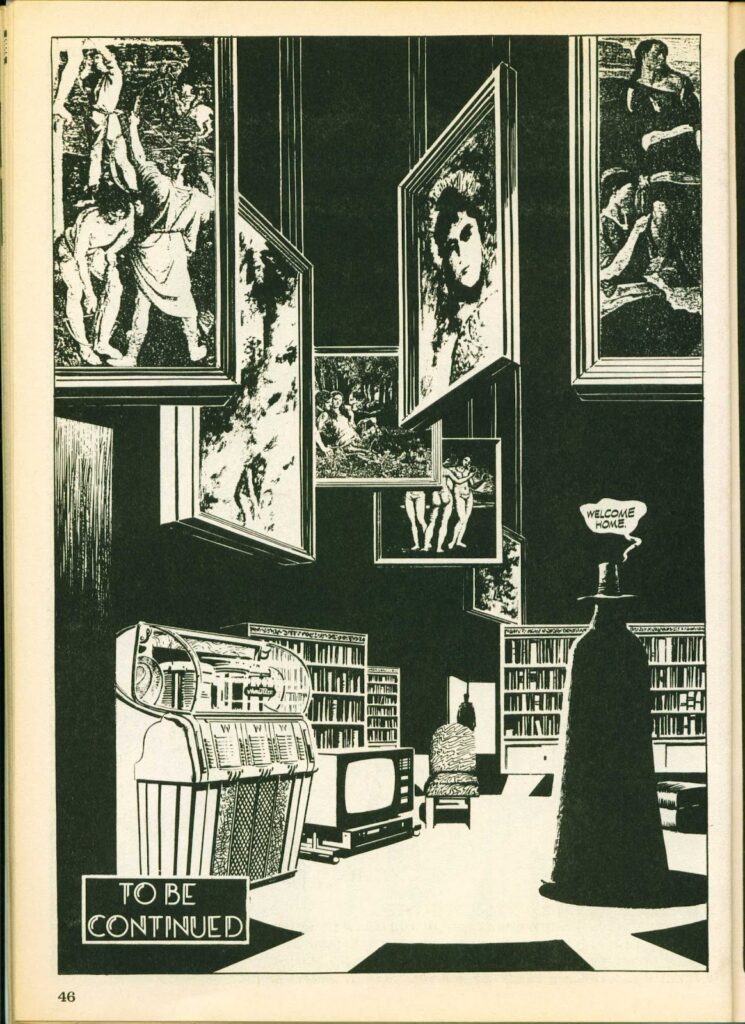
Right, right. And I kind of meant for readers too, without like, I mean, I don’t know how much we can spoil a 30 year old thing, but V’s last line in Warrior 26 is “welcome home.” And I think that that’s really kind of interesting that it’s the closing of a magazine, it’s the closing of a chapter, but it also for that strip, you know, know that there’s more like after that. And I picked up the Absolute V for Vendetta and just started reading it like right at that point. I didn’t bother reading the other stuff, even though it was in color. And it was really interesting to see the story keep going on from there. Anyway.
Klint Finley (41:19)
Yeah. Yeah, I just picked up the deluxe edition. It’s a little bit small. I think it’s supposed to be the same as the Absolute Edition, but a little bit smaller. It’s bigger than a normal comic size, not as unwieldly. It’s cheaper and not as unwieldy as the Absolute edition, but I haven’t started looking at it yet.
I came around a lot on V this time too. Was the first time I kind of wasn’t that into seeing it in black and white. Well, I think as I said before, I appreciated what it was doing in black and white, but I think part of, I had that, my memories of it being in color, and I think that the color made some of the art more clear, even though I think the intention originally was to be, a lot of times, like a little bit, to be very shadowy and sometimes requiring some work to discern what was happening or who was, what was being depicted, I guess you could say. But once I got used to it over the course of the, by the time I got to 26, I was very happy with the story and the art. I definitely got used to it and really appreciate it and can definitely see why that’s one of the longest lasting and most influential strips from that magazine.
Yeah, I don’t think we should worry too much about spoiling V for our audience. I think people who are going to try to listen to two guys talk about Warrior Magazine are probably going to already be familiar with it.
John (42:53)
I think that’s fair.
Klint Finley (42:53)
There’s, probably not too much that we need to say about it anyway, but, yeah, it, I guess though that that last chapter, it, strikes me, something I had read, an interview with, with Moore probably around the time the movie came out, was, he talked a lot about how one of his, his key themes in it was that you know, is anti-violent. Killing is wrong and that the killing people is wrong. But he kind of is offhand because somebody said something about what he did to Evey with like the brainwashing. I don’t know if brainwashing is the right word, but what he put her through, was like, he’s like, well, I could get more behind that than him killing people. It’s just like reading it again. And I don’t know about that. I think maybe killing people is the
John (43:33)
Haha!
Klint Finley (43:35)
is better than what he did to he did to Evey in that in that room. But I don’t know. It’s definitely there is a despite the black and white artwork, there’s definitely not black and white morality in that story. And even today, it’s hard to hard to read it and not be affected by it.
John (43:51)
Yeah, it really, I hadn’t read it in years either. And those chapters in particular, definitely. I mean, when we started, started Warrior, I was pretty high on it anyway, going into it. And y’know, it’s interesting, it was interesting to hear your counterpoint on the first half, but I am glad that like you kind of came around to enjoying the later, later parts of it, because it is one of the more enduring pieces.
The artist from Sweatshop Talk for whose name I was searching for was Frank Bellamy. The interview that they did with him was in 1973 and he died in 1976, but I actually thought that was pretty interesting and it kind of makes me want to check out some of his art as an influence on these guys who then of course went on to influence a lot of the others. And having Dave Gibbons in an interview interests me because I’m interested in Gibbons and his contributions, you know, and his, the people that he’s influenced later on.
Klint Finley (44:45)
Yeah, I really just skimmed most of the sweatshop talks. Was there anything else in those that you thought was notable that we should go back and look at?
John (44:52)
There’s just a lot of info in there. There’s one with John Bolton that’s kind of cool. I don’t know. I also I didn’t, I didn’t deep dive on all of them. I skimmed a few of them too. So I wanted to make sure that I got all the actual sequential strips in. So that’s probably one of the things that when I sit back down with this, you know, like I power through it once and now I kind of want to go back to issue one and read through the whole thing again and get all the little the little missing pieces.
There’s also a not in Warrior, the same Irish writer that did Poisoned Chalice did a six part Steve Moore interview, which was really good that I would recommend to anybody. It was called the Hermit of Shooters Hill.
And there’s a printed version of it too that you can get through Lulu that I might. But I really enjoyed that. And then I kind of, after the fact, realized that he has done a ton of interviews with Alan Moore and is kind of one of the foremost Alan Moore guys. But that’s not how I came around to it. So now, of course, I’m going to go back and read his interviews with Alan Moore as well.
I’m gonna, I know I’m gonna butcher his name cause it’s Irish, but it’s a Pádraig Ó Méalóid. I think that, I think that that’s correct, but perhaps not.
Klint Finley (46:02)
I think you got at least the first name right. I have no idea about the surname. Yeah, he wrote Poisoned Chalice, the Miracleman book. So if you’re just listening and trying to take notes, you can find his name by searching for Poisoned Chalice, Miracleman book. And you can kind of go from there. And yeah, The Hermit from Shooters Hill, easy to find. I think I read that in 2010 when I listened to the Unearthing audiobook, which is Alan Moore’s sort of biography of Steve Moore. But I don’t really remember a whole lot about it at this point, so I should revisit it. Especially now that I’m a little bit more familiar with Steve Moore’s writing.
John (46:41)
That’s the one that Alan Moore wrote about him? I haven’t read that yet. Yeah, yeah.
Klint Finley (46:44)
Unearthing, yeah.
Yeah, there’s a book and a CD It’s more of like a essay length. It’s not like a 200 page book or a 10 hour audio book or anything. I think it’s like a two hour audio book or something. And a book with a lot of photos and stuff.
It’s interesting and worth it. I think it’s worth, even if you don’t like Steve Moore stuff, I think it’s worth it to see, to hear what Alan Moore took from Steve Moore and that influence on him philosophically and storytelling-wise and all of that.
So we’re at a period in Alan Moore’s work where he had not yet become a practicing occultist in the time of Warrior, but Steve Moore already was. And so there’s not a whole lot, I guess, for us to talk about there in terms of Alan Moore. But I think some of what we see in those Shandor stories, particularly where demons come from and some of that may actually be some of Steve Moore’s actual views. But I don’t know. It could just be ideas he had for a cool story. But I don’t know. Yeah, he was definitely a weird and interesting dude.
Something else on the sweatshop talk stuff is that as the magazine went on, something else Dez Skinn started putting more of were more articles and like industry, comics, industry news stuff. I don’t know if he was already doing Comics International by the time he was putting that stuff into Warrior or not. But I think, like you said, like it’s probably it was a cheap way to fill some pages. But there’s also an
John (48:14)
I Comics International started in 1986, if I’m not wrong. So he might have, like when Warrior folded, he might have started doing that in lieu. He might have just gone to all text.
Klint Finley (48:18)
Yeah, that would make sense. But I think there’s a, maybe a little bit of an interesting feedback loop between, warrior and the Daredevils. So the daredevils was a magazine that was, that reprinted, in black and white, Frank Miller’s Daredevil for the British audience. But it also serialized a big chunk of Alan Moore and Alan Davis has run on captain Britain, but it also had.
Klint Finley (48:49)
a lot of essays and interviews and that sort of material by mostly by Alan Moore. And it was something that the way Elizabeth Sandifer had assessed it was that The Daredevils was Marvel’s competitor to Warrior magazine, trying to go after a little bit of an older and more sophisticated comics audience than their other comics, British comics anthologies had been. And it also kind of up doubling as Alan Moore’s fanzine because he was doing a lot of that content for them. There was an essay on sexism in comics. There was an essay on Stan Lee. Steve Moore did one on Japanese comics and then one on Chinese comics. Moore did fanzine reviews in it. So there’s just a lot of stuff. I think it’s possible that Warrior also, that Dez Skinn started wanting to have more of that type of material in Warrior because the Daredevils had that material. And the Daredevils kind of became what it was because of Warrior. There’s that, maybe a little bit of a feedback loop.
John (49:54)
Something else for me to hunt down. I was aware of it because of the Captain Britain stories, but I only have a reprint that has just the Captain Britain portions and not the magazines. Now, after hearing you talk about it, I want to go find those magazines and read them.
Klint Finley (50:09)
Yeah, they’re spendy, but there are scans of it around. Those are interesting to look at too, because you get to see Miller’s Daredevil in black and white. Yeah, and does make me think that he probably was hip to Jose Munoz by the time that he was doing Daredevil. But there’s no like a smoking gun, quote unquote, for
John (50:20)
which seems awesome.
Klint Finley (50:33)
for that, it seems like he may have been already looking at that by that point. Well, we’ve gone on for a while here, John. Anything else you wanna mention before we wrap up?
John (50:45)
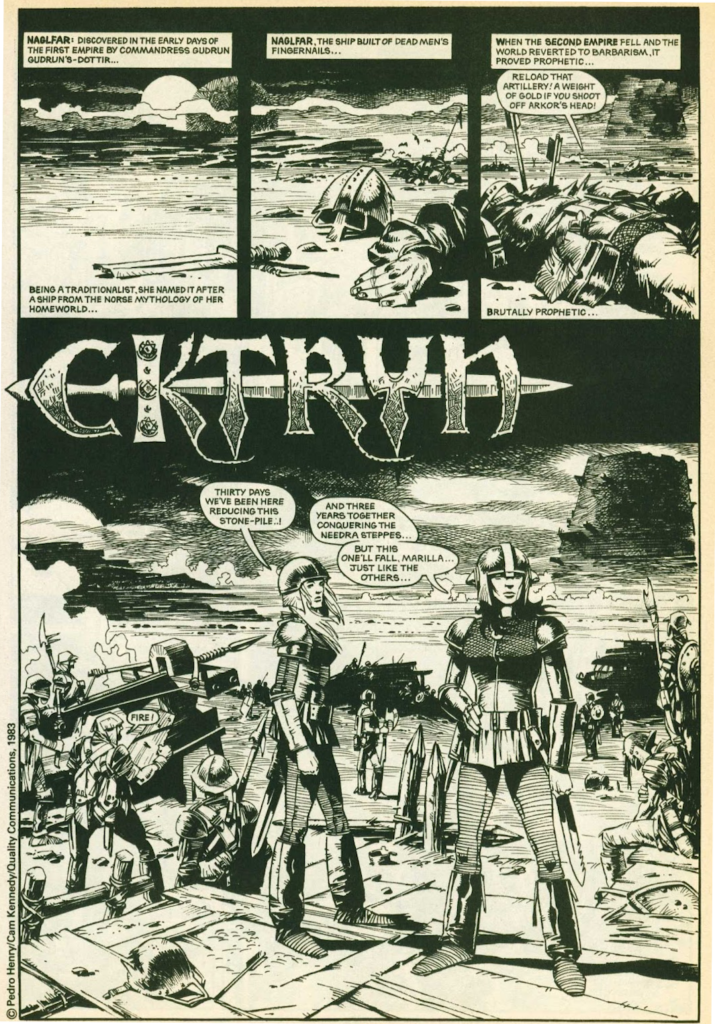
I think the only thing of note that I didn’t mention is there’s, there’s two, Ektryn stories. She’s the, she’s a character from press button that, she’s the character that, Mysta Mystralis is cloned from. and they got Cam Kennedy to come and do two stories. Like he was too busy doing stuff on 2000 AD to do a regular strip for them, but he did at two different points come and illustrate those. And I enjoyed those. thought they had kind of cool art in them.
He’s better known for a Rogue Trooper and his work on Judge Dredd, but just lots of talent in this magazine. And it’s something that I liked enough that I almost want to go back and read through the whole thing again and pick up the stuff I missed and read all the letters pages and read the rest of the sweatshop talks that I didn’t get through. And yeah, it’s pretty great. mean, there are some misses, but I think on the whole it’s a it’s huge.
Klint Finley (51:36)
Yeah, yeah, I’m not sure I would recommend it to normal people. Yeah, yeah, think there’s something. But I think for people that are really interested in comics history, that are really interested in Alan Moore’s work and want to see how it appeared in those early forms, people who want to see Steve Moore’s work, because again, as we talked about, he didn’t do a whole lot in the US.
John (51:41)
Well, but weirdos like us.
Klint Finley (52:03)
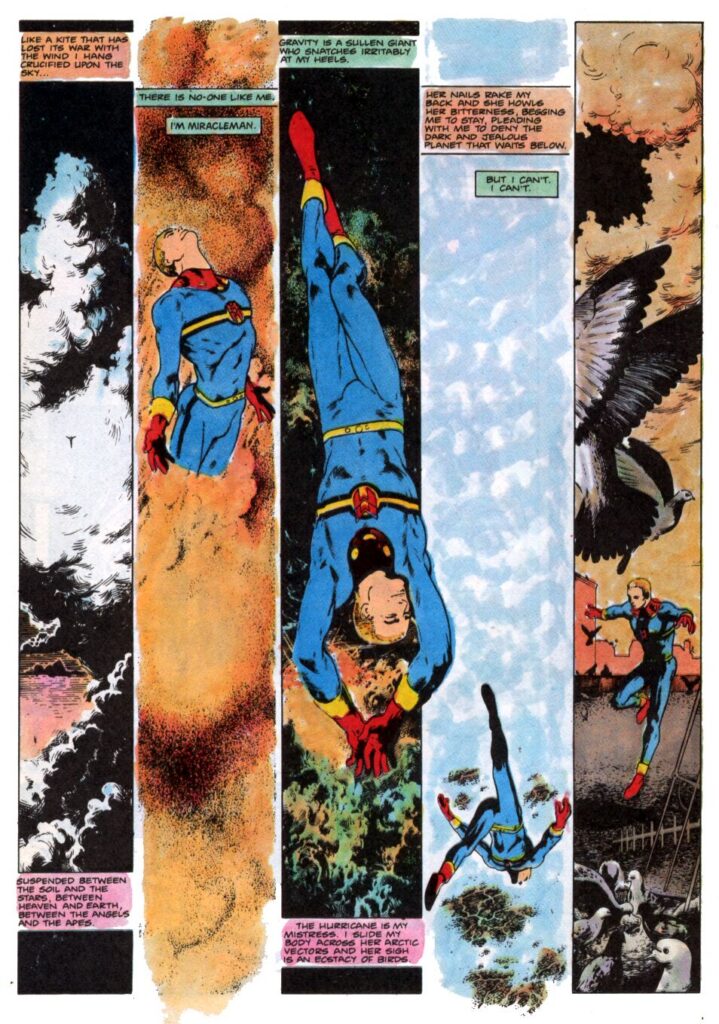
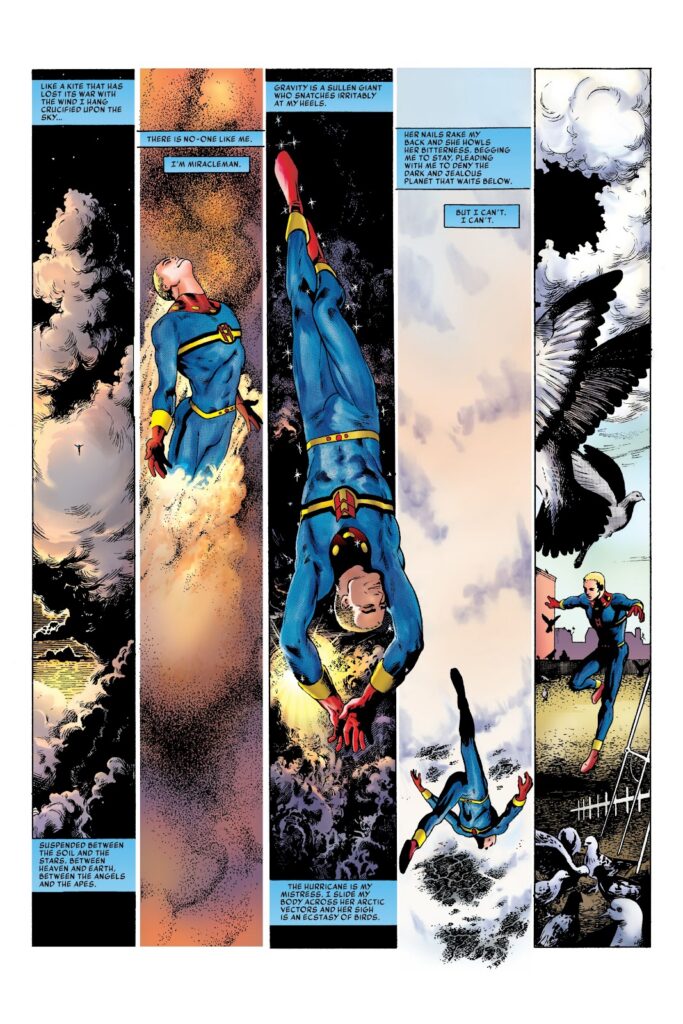
This is some of his main work, some of his main body of work is here. It’s not my favorite stuff, but I can see why it’s important. It’s definitely for the right person, it’s worth seeking out Warrior Magazine and giving it a look. I think most people would probably be pretty happy with just reading the Eclipse reprints of Miracleman and the DC versions of V for Vendetta. think those are the very solid versions of those. I don’t like the color, I think neither of us like the color in the Marvel reprint of Miracleman. But the Eclipse versions are a lot more affordable now that the Marvel version is out. So you can track those down. I think Miracleman does look better in color.
I think for V for Vendetta, I wish DC would do a black and white edition. I think they’ve got, they’ve been doing black and white books, I think they call them the noir editions of things. So hopefully.
John (52:57)
Yeah, I’d like to see that. And I guess it’s worth noting that both for V and for Miracleman, when the stories continued, even though they were being printed in regular sized and regular length books, Moore seemed to kind of hold on to those smaller chapters for a while, like he’d do like a six page or an eight page.
And even in the early Eclipse reprints, sometimes there would just be like, the first half of the book would be Miracleman, and then there’d be something else in the back. There’d be like a press button, or there’d be a reprint of an old Marvelman, or whatever. They don’t actually get all the way up to like a full-size 22-page book until the last few that I think the Totleben ones are like 16 pages instead. So that’s double the eight, but still not as long as a regular American comic.
And then their last issue, issue 16, I think is longer. same thing with V. They did the smaller segments, but they just did more of them together to piece the whole thing together. And I was trying to look at the art in V specifically and see if Lloyd kept the larger size or if he started drawing smaller, knowing that it was going to be produced in a regular size comic.
John (54:14)
It was one of the reasons why I wanted to pick up the Absolute Edition. I got a good deal on it, but also it’s just big. And I thought, well, if these were originally magazine size, I think they might look better reprinted bigger. And it’s kind of hard to tell with his style if he just kept going exactly the same way or if maybe those issues 8 through 12 or 8 through 10, I think it’s 8 through 10, were maybe produced in a slightly different way. But I mean, either way, his art’s fantastic and I really, I really love it. Miracleman’s interesting because like there isn’t one artist. You you’ve got Leach at the beginning and then you’ve got Davis and then you’ve got Chuck Austin, And then you’ve got John Totleben at the end there. And so you’ve got a lot of different collaborators.
Klint Finley (54:56)
So I think what’s next for us is going to be something we haven’t done yet, a full color superhero comic from the United States, The Death of Captain Marvel. So tune in next time for that and let us know what else you’d like to hear us talk about.