Today we’re taking a break from our usual format to talk about the early days of Image Comics. Founded in 1992 by seven comic artists from Marvel to publish their own work, the Image Comics of the early 1990s was very different from the company we know and love today. We reminisce about our early comics reading days, talk about our favorite Image comics and creators then and now, and talk a little about the state of the medium and what’s interesting now.
Subscribe to the podcast feed or find it on Spotify, Apple Podcasts, YouTube, or your favorite podcast app.
Credits:
Hosts: Klint Finley and John Ekleberry
Music: krudler.bandcamp.com
Mentioned in this episode:
The article with Image titles in sequence
The first comics John bought were the X-Men Shattershot crossover
A major portal into the world of comics for me was the Comic Scene Spectacular issue with Rob Liefeld (And yes, that’s why the forthcoming Sewer Mutant print zine is the “Cyberpunk Spectacular”)
Rob Liefeld recently confirmed that there was an issue with Brian Murray’s color guides for X-Force # 4, which is why the colors are so wild in that issue: https://podcastrex.com/shows/robservations-with-rob-liefeld/building-the-studio/transcript
Sarah Horrocks published an appreciation of Liefeld’s work and Murray’s colors years ago
You can check out a before/after of Murray’s color work
Murray also wrote, drew, and colored early isues of Supreme from Image Comics, many years before the Alan Moore run, and they’re surprisingly good.
Youngblood Vault Edition
Return of the superstar artist article
Wikipedia covers the history of 1963
The Road to Independence by George Khoury. He also wrote Kimota! The Miracleman Companion. Coincentally, I bought my copies of Legion of Night from him on eBay without realizing, until they arrived, who I had ordered them from.
I’ve worked on several Wikipedia entries, specifically the History sections, including: Image Comics, Wildstorm Studios, Top Cow, and Deathmate.
I should also mention that Erik Larsen became the publisher of Image Comics for a while
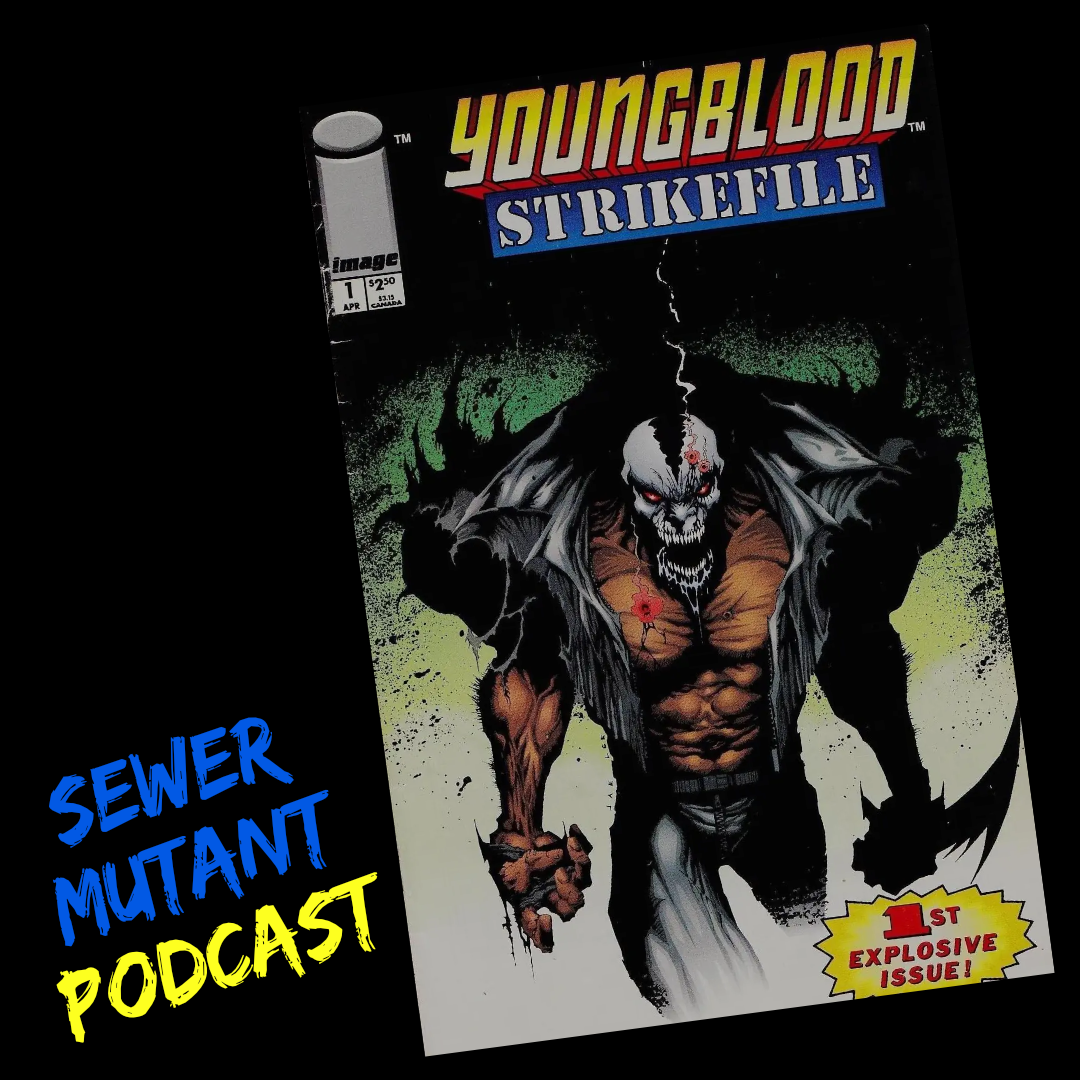
John’s favorite early Image books: Bloodstrikeand Youngblood Strikefile
I forgot to mention two of my favorite OG Extreme Studios artists: Jeff Matsuda and Todd Nauck
My favorite early Image comic: The Maxx
The last issue of the Brigade mini-series shipped AFTER the first issue of the ongoing and spoiled the ending of the mini-series
Barry Windsor Smith began work on what would become Monsters in the 1980s. It saw print in 2021.
I’m reading mostly the Absolute books each month on DC Universe Infinite, specifically: Absolute Wonder Woman, Absolute Green Arrow, Absolute Batman, and (I forgot to mention) Absolute Catwoman. And of course read and loved Absolute Martian Manhunter.
I previously read Ram V’s New Gods (Evan Cagle drew most of it, with various guest artists for specific sequences) and Kelly Thompson’s Birds of Prey (A few artists worked on Thompson’s run, but the first and best was Leonardo Bastos Romero).
Larry Hama has been writing G.I. Joe: A Real American Hero, which resumed from the Marvel numbering, since 2010, first at IDW and now at Skybound/Image.
The two Energon Universe comics I was forgetting are ROM Space Knight and Micronaughts.
Dan Watters is writing MASK.
It’s Joshua Williamson, not Jason Aaron on the new GI Joe. Aaron does Teenage Mutant Ninja Turtles at IDW.
Modern Image Comics I like: Monstress. Phantom Road. Reckless. Death Fight Forever. Not mentioned in the podcast: w0rldtr33 and Exquisite Corpses, both written James Tynion IV. I’m looking forward to M1 Monster Racing and Regicide.
J. Michael Strazinski’s line at Top Cow included Rising Stars and Midnight Nation.
Hoopla is an app for checking out digital comics from your local library.
The AWA and Boom books I was referring to are Ribbon Queen and Damn Them All.
The O’Barr drew the covers of Gideon Falls issue 9 (2018) and Killadelphiaissue 16 (2021).
John recommends Runes of Ragnan from Image (2005).
Rush transcript:
Klint (00:13)
Welcome to Sur Mutant, the comic book podcast for weirdos like you. I’m your co host Clint Finley, joined by my co host John Eccleberry. How are you this fine morning, John?
John (00:21)
I’m always happy to be here.
Klint (00:22)
Yeah, I think we’re both waking up a little bit, but I’m gonna gonna try to power through because we’re talking about something I think is pretty fun today. the early days of Image Comics. We’re taking a little break from our usual format of reading like a specific series or graphic novel and kind of looking more at the the big picture behind this company. for our younger readers, Image used to be a very different company. It was founded in
nineteen
ninety two by seven comic book artists from Marvel to publish their own work. And it was stylistically a lot of it was was much different from what Image Publish is now. before we get into that, instead of our traditional icebreaker, John, I’d like to hear a little bit about your comic book origin story. I’ve talked about how my entry point into comics was the Star Comics Thundercats number one when I was a little kid.
but you mentioned that you got into comics around the the time that the image founders left Marvel or maybe a little bit after. So I was wondering how did you get into comics and and do you remember what your first one was?
John (01:23)
Yeah, it was it was right on the cusp of of them leaving Marvel. So my dad, who you know, I I’ve only really hung out with a handful of times and you know, his basically an estranged father or whatever, he did one good thing. He took me to the local comic book store. And I didn’t buy anything that day. Um, but I saw a copy, I kinda was thumbing through the bins and I saw a copy.
Of X Factor number 70 with this great Mike Mignola cover. And I thought it looked really cool. And I just kind of kept that in the back of my head. And then I went back to the shop myself not that long afterwards. And so it would have been uh March of nineteen ninety-two.
And I started buying the Xbooks. So I I bought the Shattershot annuals and whatever the corresponding, issues. I think it was Uncanny two eighty eight and X-Men number eight. And so this was right when the image guys were jumping off. Jim Lee only was gonna be on those books for another couple issues. And I think Rob Leifeld had already left X Force at that point. And I didn’t really know what was going on in the industry at that time. I didn’t really have any knowledge of that. I just
bought stuff that I thought looked cool. And so it’s funny because they just had laid the groundwork for all the stuff going on in the Xbox, but they were leaving and other guys were coming in. And I became a huge fan of of that next generation of of X creators like Andy Kubert and the new writers, Scott Lobdell took over for Claremont and Baby and Nicyasa took over on XForce. And I just really liked all the all the X stuff. And so
That’s what I was primarily buying at the comic book shop. But back then I didn’t just buy books at the comic shop because we could get books at other places too. Unlike today, uh, there was a thriving newsstand still. And so I would ride my bike to the corner store and buy stuff that I wasn’t getting at the comic shop. And those ended up being some of the image books. I remember buying an early issue of Brigade and early issues of Spawn. And uh so those are kind of what I bought as my like.
supplementary
Klint (03:16)
Yeah.
John (03:17)
reading and I didn’t get all the issues consecutively or anything like that. I just got issues here and there. but those were really my newsstand books at the time.
Klint (03:25)
Yeah. so the Shattershot books, those were annuals. That was like that was that crossover that was like a mojo world event. Is that right? Okay.
John (03:32)
Yes, yep, exactly.
Klint (03:34)
Okay, I remember remember that. Yeah. yeah, it’s funny, I I got a lot of my early image books off the newsstand as well because the comic book store in my town closed not long after image launched. I’ve mentioned before, I think that
My family ended up buying the inventory from the comic shop, but they’re like for new stuff that was coming in. my only place to get was was on the newsstand. And it’s it’s funny to think about in retrospect, like what you could buy as a as a kid, as a child from from like a grocery store or convenience store. stuff like spawn and with the violator ripping people’s hearts out. That’s
was w I think that was actually the the first image comic I got was was spawn number one from a convenience store near my grandmother’s house.
John (04:16)
Very cool. Yeah, I got I didn’t get number one, but I think I got two and three. And then I remember getting the Angela issue. That was issue nine. So that was a year later. But I really I really enjoyed those. And those comics, if you look at in my in my bins, are really beat up. ’cause I I read that stuff a lot back then and I I wasn’t really bagging and boarding or anything immediately when I first started buying comics. I was just stacking them in in bins. But, that’s good. It means I enjoyed them.
And I think it’s worth noting too, this was something I was thinking about and I don’t want to forget about it, is that cover dates. so cover dates on like Marvel comics are in the future. They’re basically like a pull date. They’re like when you’re supposed to be taking them off the stands and putting new ones up. So like those books that I bought in March were dated May on their covers. But the image books weren’t like that. The image guys were just putting dates on the covers that more closely
resembled the release date. So Youngblood number one had an April uh cover date and it came out in April. And Spawn had a May cover date and it came out in June. And so that’s just kind of a neat little little thing to pay attention to when you’re looking at these books. Cause if you’re if you put two books next to each other and they’re both May, but one’s Marvel and one’s image, they didn’t really necessarily come out at exactly the same time.
Klint (05:29)
Yeah, and and to your point about Spawn having a May cover date, I think a lot of the the cover dates on these early image books were aspirational of like it’s like when they were supposed to come out.
John (05:38)
That’s a good good good way to put it.
Klint (05:40)
I think some of them, yeah, some of the cover dates are right in terms of the month that they came out, but I I think a lot of them are actually wildly incorrect. So it’s it’s hard to figure out going back like when did specific image books actually ship.
I I made for us a a list here with with dates that I just pulled out of an article that I will link to in the show notes. some of these dates I’m I’m don’t know are correct. I didn’t fact check any of them.
I I kinda had already knew who some of the image founders were. Actually I probably only Rob Leifeld. is I had so w part of how I got deeper into comics, I think we’ve talked a little bit about this maybe offline, but used to be able to go to places like Sam’s Club and get like a bundle of comics. I think it was like one issue of every series Marvel was publishing at the time.
So I I had I got one of those bundles and that was kind of one of my those were of one of my i big introduction to superhero comics because I had mostly been reading licensed books before that. And New Mutants One Hundred was one of those. So I had kind of seen, you know, X Force and and Liefeld’s work and it was actually kind of off putting at first. It was the sort of the uh grim, aggressive nature of it was a little bit scary and off putting for me as
a nine year old or whatever, however old I was. but then I got a comic scene spectacular issue with with X Force on the cover. And I can’t remember how I got that magazine, but it had an interview with Rob Leifeld in it. And so he was like the first one of those guys that I knew by name. And that made me like get into his work was yeah, reading the interview with him in there and seeing like some of the artwork and sketches. And that was I think where like Young Blood was first announced.
Hank Canals actually did the interview with Leifeld in that article, and he ended up being the the scriptor of Youngblood, which seemed like a a little bit of a uh conflict of interest, but that that’s how it went down. so like back then, like Liefeld was was clearly my my favorite of the early early image creators, and now I got got into all of them you know, because of image, I guess. And
I had had comics from most of them from uh those bundles of comics that that I had gotten. Um so you had mentioned John, I think that that Mark Silvestri is like your favorite of the image creators now. when you were getting into image, did you have a different favorite?
John (07:57)
I think Life Eld probably at the time was also mine because like I would when I was started buying the Xbooks, I started kind of I would buy the new ones, but I would also try to buy some back issues too. And I was like working my way backwards on on the different X titles. And so I really I really liked Life Eld’s X Force stuff. And I think that’s probably the stuff I saw first. And then as I as I went further back, you know, I got into the like Jim Lee and Mark Sylvestri issues of
of X-Men. but yeah and I I liked his stuff then and I like it now, for Liefeld. And you know Sylvestri’s interesting because I I liked his X-Men and Wolverine stuff. but I didn’t really buy like Cyber Force or any of that stuff. I I didn’t get into his image stuff until like the next iteration when they when they started doing Witchblade in the darkness.
and and that stuff. And and by that time I’d kind of stopped reading superhero comics. That was my transition away from superheroes, but I didn’t really want to let go of comics yet. And so, then I was I was reading, horror comics and things like that.
Klint (09:00)
Yeah, totally. yeah, yeah, Liefeld was you know, it’s interesting. I I look at his stuff now and it’s I kind of wonder like how did I ever like this? Like it’s I mean he’s
John (09:12)
It’s great.
It’s great, unapologetically. I dude, modern comics are so boring. When I go into the store and I try to find something to buy and I open it up and it’s just the blandest art I’ve ever seen. I don’t know why anyone needs it to be like the there’s this weird realism thing where everybody’s like, the proportions are wrong or whatever. Well, look at absolute Batman, like the best-selling comic book right now, where Batman’s this hulking guy.
With, a Batmobile the size of a skyscraper. It’s totally ridiculous, but people enjoy it. Like, it’s a comic book. And you know, I loved not only Liefeld’s energy and line work, but some of the people that he brought in to work with him, like the colors. Like, man, there’s a couple issues of X Force colored by Brian Murray that are just like out of this world. And like I would much rather look at that stuff than a lot of the stuff that’s being published now.
And it’s funny you mentioned Hank Canal’s writing Youngblood. I don’t think the dialogue in Youngblood really matters. Like I think I like I
Klint (10:12)
No.
John (10:12)
just got the I just got the artist edition of of Youngblood, which is funny because I ordered it like two years ago and forgot about it and then it did to like just shit. But it showed up and I’m flipping through it and I’m like, this stuff is awesome. Like it’s these big oversized pages of the original art. And like I don’t care what the dialogue in those issues was. The story just tells itself through the images.
Klint (10:33)
Yeah, it’s been rescripted a couple of times, I think, now, right? Like there’s a Joe Casey version.
John (10:37)
Yeah, so so
in yep, in two thousand seven, Joe Casey went through it and he kind of like rearranged the pages and redid all the dialogue and made kind of like a definitive version. And at that point, Liefeld also drew a new conclusion to it because originally it was just issue four ended on a cliffhanger, and then ChapYap did like the
the finisher on the back of one of I think it was a flip book with brigade. And I actually like that issue fine. I thought it was a fine end. But Liefeld went back and did his own his own take. And it doesn’t mesh really perfectly ’cause I feel like his style at that point wasn’t really the same as, you know, it was previous it y you can’t really go home again, right? It’s like an
even the crow that we love, I don’t love the new pages that are added to the special edition the way that I love the old pages. But I’m still happy to have them. And so those new Life Hub pages are cool, but they’re you know, they’re they’re just not the they’re not the original thing that was done at the time.
Klint (11:35)
Yeah, i I I think that’s like all on the point on point. Like I was gonna say, you know, I I I look at that stuff now and there’s like s a part of me recoils from it, but I also you know it w what what appeals to to somebody when you know, when you’re nine or ten is very different sometimes from from now. And I can you know, there there was like a manic energy to to life I was working to the other image founders that
has been missing in mainstream comics until fairly recently. And I think the absolute line really has captured that. And then and and a few other creators like Daniel Warren Johnson uh is kind of the credited with kind of bringing back the superstar artist idea. And he you know brings a lot of more style and flavor. Um yeah, I mean I would be like you I would picked up a lot of comics and that have
They almost look like the artwork that you would find in a an airplane safety guide, that what to do, uh how to put on your oxygen mask. these just like ex it’s like competent art, but ex with with no style or flavor. And uh the the books might have cool covers, but the interior art would just always be like these, yeah, just this this really bland stuff and
I think that’s actually partially because of what happened with the image guys, and how they amassed a lot of power and influence and then left Marvel and started their own thing. I think that Marvel and DC after that wanted to have maybe a more uniform look to their artwork and not have artists that were that were so special that they could kind of command.
big salaries or or leave the company and bring their their readership with them. And things became a lot more writer based, which now you know, it’s starting shift to be a little bit more equal between writer and artist, but even as recently as a few years ago you would see
popular artists or popular writers, um, kind of having to s like say, Ed Brubaker, you know, having to like speak up to like, yeah, you know, Sean Phillips really is like an equal partner on this. Like I he’s not just drawing the pictures, like the the artwork is part of telling the story. you would see this over and over again, I think, with with with
creators
where the the writer would be like the the top build essentially for for works and but when we were kids it was like the exact opposite. It was all like almost like the writer didn’t matter to a certain point because the artist
John (13:56)
Well, I th I think the
two the the two big breaking points that that this brings up for me is that of course Claremont being forced off X-Men, right? He’s been on X-Men for 17 years, and then the editor sides with Jim Lee and pushes him off the book. And then Jim Lee only hangs around for like six more issues and then leaves. And so
You’ve now alienated and lost your your writer that has built the entire framework of what this property is and not only what it was up until that point, but still like until now, any X-Men property that you see, whether it be animated or film or whatever, is drawing from Claremont’s ideas. And then the other one would be
When Brian Michael Bendis started writing New Avengers, I think there was a real shift there towards writers being like the top build. because you no longer saw artists stay on books anymore. Like artists might be on like a one arc of a book and then they just move on to another artist. Like
They’re real I’m trying to think of a book that actually had had somebody where they let them stay. I guess when Bendis and Malieve did Daredevil, they did a whole bunch of issues together before they switched artists. But I feel like now they don’t really they just do a season. They do like a paperback or whatever, and then they they move on to the next thing. And even if the same writer stays on the book, they cycle the artists in and out. so I I I don’t know, I think that I think that’s probably
where I noticed it for Marvel first because and also Bendis became an architect of their their entire line wide storytelling too because you can you can track his big events over the years and that kind of from probably like 2005 to 2012, you know, that kind of builds out the main Marvel universe. Like even if you didn’t read all the books from Marvel, if you just read like the Bendis event books.
and the things that he set up, that was that was Marvel at that time.
Klint (15:53)
Yeah. Well I I think there was another thread we can pull on too and it actually type takes us back to image, which is Alan Moore. And DC really started to make a an effort to keep their popular writers even you know going back to Alan Moore’s exit. So they they really made an effort to keep Neil Gaiman and Grant Morrison in the uh at DC after Alan Moore left. And so you can kind of s so you know, there there were some
celebrity writers, I guess you could say, even back during this period, when the artist was was more important, generally, to a title. But the image guy started to realize relatively early on that maybe they needed more help in the writing department than they had initially anticipated. Uh as you McFarlane brought in uh
a a bunch of creators, Alan Moore, Neil Gaiman, Dave Sim, and Frank Miller to do a sequence on Spawn. And then like Alan Moore kinda did a bunch of different stuff for Image and the Image guys like fought over him. He did nineteen sixty three there that became this whole whole can of worms for everybody involved, it seems like. But that was I think the the very beginning of a shift back towards the writer being
really important. I I think another instance flash fast forwarding a few years though was Kevin Smith coming in to write some stuff. I think first Green Arrow and then Daredevil. And that was a an instance of somebody who was kind of a a celebrity from outside of comics coming in to do a comic. And that brought some focus back to writers as well.
John (17:24)
Absolutely. I guess I’ll I’ll give a free plug here before I forget about it to there’s a great book from tomorrow’s press called Image Comics The Road to Independence by George Corey that I read a whole bunch of before we talked about this. And anything you wanna know about like the founding of image comics, like it’s a it’s a fantastic chronicle of all of that.
Klint (17:46)
Yeah. Uh
yeah, I relied on that a lot. So I um most of the history section of Wik the Wikipedia entry for Image Comics was written or edited by me and I relied heavily on that book for for reference for for putting that together. So um
John (18:02)
That’s
awesome. I l I love that you went in and did a bunch of work on the wiki article for that. That’s really fun.
Klint (18:07)
Yeah, it was a it was a couple of years ago that I remember just reading it and being like, this is a mess. this needs some work. And so it’s I guess a almost like a secret sewer mutant article. so I worked on the Wild Storm entry, the the Top Cow entry, the Deathmate entry. Those are some of the ones that I’ve that are relevant to what we’re talking about today that I that I put a lot of time into uh sprucing up. so if there’s any uh errors in those,
Yeah, you can blame me for that too.
John (18:31)
So we talked about our favorite artist then and now for image. Let’s talk about the guy that never stopped doing it, Eric Larson. he’s the he’s
Klint (18:38)
I was gonna say
John (18:39)
the one that just kept going and he’s still doing it now. And he has that big Jack Kirby energy style. he doesn’t draw like he doesn’t draw boring pages.
Klint (18:48)
Yeah, I I think he’s probably my favorite now, if I like thinking through it. it’s and his social media presence is really off putting and I don’t know, I haven’t read Savage Dragon in many years, but I I still go back to some of those early I’ve got like the the trade paperback of the first Savage Dragon miniseries and I I go back to that a lot when I’m I I’m not like an
an artist or anything, but I like to doodle and sketch and I’ll still pull that out and copy from it. ’cause I feel like that’s my own it influences my own style quite a bit. like his kind of angular uh approach to doing comics. And yeah, like you said I it’s I I have to respect that he he stuck with it. You know, he’s done some other stuff in the interim, but he’s just kept doing
Savage Dragon and every month for for years and years. Uh there was some stretches where he was late with it, but he didn’t well they all at some point kind of except for uh Wills Protecia who uh left early on and was never actually a partner in in image comics. And then when he came back, he was basically just an artist.
Well, he he had his own creator own book, Wetworks, but he was always just part of Jim Lee’s Wildstorm Studios. where all the others ended up forming their own little imprints with their own um stable of of characters and talent. And Larson did that a little bit with Freak Force and Vanguard and Super Patriot, but he kind of scaled that back at a at a certain point and but he never let
Savage Dragon go, the way uh Todd McFarlane eventually, farmed out Spawn to other people and you know, has come back every so often. But Larson has just been the single driving force for Savage Dragon since the beginning. And Savage Dragon’s always been, you know, his main thing where Lightfeld has bounced around. He was doing uh Evangeline and
all these other books, that he was drawing at different points. but but Larson’s really kept a s a singular focus on that character.
John (20:51)
Absolutely. Yeah. some of the characters have come and gone. Youngblood has had several resurgences. I think the current one is volume seven. and sometimes he brings in other writers and artists, and sometimes he does it himself. you know, life auto maybe like illustrate one issue or whatever at the end of the thing. Or he’s he’s doing the new ones. I mean, he’s been illustrating the new ones. So like if if we look at like career output, I I didn’t I didn’t check the numbers, but I imagine that Larson’s probably got
the highest number of pages. Liefeld might be second. I think he’s got over five thousand career pages. So that’s a that’s a lot. and he still does interiors. a lot of these guys only do covers now.
Klint (21:27)
Yeah, well that’s that’s the thing Larson is still doing still doing interiors every month. so that’s I mean it’s pretty impressive. I’m sure he has an assistant or something, but yeah, he is stuck with it. yeah, I I imagine it’s gotta be uh that Larson’s gotta have the most career pages at this point. but I don’t I don’t know. going through some of these guys, Valentino is interesting because he was the one yeah.
most of these guys were you could call like kind of superstar artists and like Valentino was the one that was the least known of them. He was doing the original Guardians of the Galaxy series. Well not the original, ’cause that was, you know, going further back to like the sixties or seventies, but he was doing the the version of them that was before the the version that became a movie. Like it was a whole different set of characters, like set in the far future.
so he was doing that at Marvel. And before that he had been like a a weird indie underground cartoonist. He did a bunch of autobiographical comics called Valentino. so he was a little bit of an outlier in that group, but then he did Shadowhawk, which was very much of the image style and very different from anything he had done up to that point.
It’s another one that looking back, it’s like, ugh, the w what was going on with this book that’s about this guy that breaks criminals’ spines. But you know, at the when it came out, it was it was super exciting at the you know, the foil cover and this guy breaking spines, uh, he looked cool. And there was this whole gimmick of like they didn’t reveal who his secret identity was. So that was like a reveal a few issues in. Did you did you read Shadow Hawk at all?
John (22:54)
not when it first debuted. So a lot of these books ended up in the dime bin after a few years and I picked up a lot of image books out of the dime bin later. And so I read Shadowhawk and I read a bunch of issues of Brigade and Bloodstrike and stuff like that. But you know, it wasn’t when they were being released, it was probably a year or two later.
Klint (23:14)
Yeah,
yeah. any other earlier titles what was your well yeah, what was your favorite? was was it Youngblood or were were there other ones from the from these early days that you that you liked?
John (23:24)
I think my favorite early image book is Bloodstrike. That’s the one that I’ve read all of and held on to and thought about the most and revisited, a couple of times. I think the concept’s neat. And obvious a lot of those characters, are kind of aped from earlier designs. Like I mean, Cabots definitely cable, right? But like they’re a little different.
And the art’s cool in them and Dan Fraga’s art in the original Bloodstrike comics was really cool. And then like Keith Giffen came onto the book for a while. And you know, they they just they did some interesting stuff. There were some cool Jay Lee covers. I don’t know. It just it had that it it embodies the whole ethos of the whole whole image thing for me.
Probably those first three issues of Young Blood Strike File Two stand out to me. The ones that Jay Lee illustrated. those were really cool. They were like a flip book with the Jay Lee book on one side and a Liefeld book on the other side that was like set in the past and it was kind of like his version of the like World War Two era, like Young Blood type characters. and those those stick out to me too. Those were those were definitely very cool.
I didn’t really get into it’s funny because as much as I loved X-Men, I didn’t buy like Wildcats or Strike Force from Sylvestria Lee. Like I just didn’t buy those at all. I mean, eventually years later, I picked up Wildcats trilogy just because it had J Lee art in it. But I don’t I don’t know anything really about those other than they had an X-Men crossover that I picked up at one point.
with Wildcats and X Men, but I largely don’t know a lot about those books because I was buying Marvel books at the time.
Klint (25:00)
Yeah, I’m I’m glad you mentioned Strikefile because I yeah, I’m kind of thinking back of like what what were like what was my favorite and like what holds up now. And so like Youngblood was, you know, an early favorite, but I was yeah, I was also really into spawn. but kind of looking at the that what what holds up, I I do think those the Jay Lee stuff is at least
Graphically, v visually, it really does still look very cool today. Um and then the the Lightfeld side of the of the strike file flips with some of it it it was some some prime life in in there. Like the there’s like a double splash of die hard punching a guy that is you I I’ll just never forget it. You know, it’s just one of the one of the
it really in your face Liefeld images that that is that was iconic for him. an another of those old books that kinda stands out for me. it it was and more like definitely more so now we talked a lot about it. The Max you know we have our our Sam Keith episode. I I I think I got darker image and the max number one and then
I missed a bunch of it and then picked it back up at at some point and then started reading it every month for a while. And it was j you know, it’s just such a fun series and and Sam Keith you know, his work holds up better than uh a lot of these other guys, I mean can still look at these at at this old stuff.
And appreciate it for what it was, appreciate it for why I liked it when I was young. But the Max is something I think that that really holds its own today in a way that that the other books don’t. And I also it’s it’s one of those another one of those wild like I bought darker image off like off a newsstand too. Like how did how was that comic like available for for kids just to pick up off the newsstand? I I have no idea.
John (26:45)
I l I loved that book, when it came out. I loved the Max part of it and I love the Lifelb part of it. It’s this like super over the top Blood Wolf story that like just is something I I won’t ever forget reading and have revisited a whole bunch of times. This is another weird instance where like the other third of that book is Jim Lee. It’s a Death Blow story. I couldn’t tell you anything about that and don’t care about it, but I I love the Lifelb story in there and I love the Max story. And
I had that book for, my book is so beat up, my copy of that. I’ve flipped through it so many times. But it didn’t necessarily lead to me buying, you know, those other books, like because I didn’t buy Death Blow and I didn’t buy Max initially, but that was another one where I I got some of them out of the dime bin later. Uh the Max for me was really the cartoon. Like I watched the cartoon on MTV when it came out and I loved it, but I didn’t get the actual comics other than an issue here or there until later.
Klint (27:38)
Yeah. and to go back to to Bloodstrike, that’s also one like the first issue at least was really I I think it was actually really well drawn. just even f you know, from a craft perspective, like looking at it, it was just one of the more uh so I I mean so I I guess like so for me I my issue with a lot of that early stuff, particularly the stuff that was coming out of Extreme Studios, which was Rob Liefeld’s imprint, was that
A lot of it looks sloppy. it’s not just that there’s like exaggerated anatomy. A lot of it just looks like they were rushing the book out the door and just not not putting a lot of care into it. I I felt that way about
John (28:13)
Well, I I think
I think some of it is guys learning too though, right? Because like
Klint (28:17)
Sure, sure.
John (28:18)
if if if you look at something like Brigade, that first Brigade miniseries is so rough. Marat Michaels was Leifeld’s friend and assistant. And that first series doesn’t look very good, but he’s like he’s learning as he goes. And by the time you look at Brigade Volume Two, which was the ongoing that crossed over with Bloodstrike, his art’s like
phenomenally veteran. It’s only a year later. And so, they’re making strides there as they go along.
Klint (28:43)
Yeah. With with Frega there’s like a drop off between issues one and two of of Bloodstrike though. I have no idea how much time anyone spends on anything, but it looks like issue one, like he put like a lot more effort into it, and then issue two, like a lot less. like for all I know it’s the opposite, but there there was just something about that first issue that seemed a lot tighter.
Than than the later issues. but yeah, I all speaking of the that crossover, that was that was really memorable too. Uh the Brigade Blood Strike, Blood Brothers crossover. I reread it a few years ago and then it’s just has just such an abrupt ending. And just like, this is kind of a letdown. Because I’d never read the ending of it uh before. So it’s like all these years later I’m finally finishing reading it. And yeah, it was a bit of a letdown, but it opened like the
the the start of it is with the Brigade ongoing number one is I was such a kick in the face at the time. It was also really emblematic of the problems it image though. the the first issue of the ongoing shipped before the last issue of the miniseries and kind of spoiled the ending of the miniseries.
John (29:44)
Yeah, yeah. And I think the last issue of the mini series was the one that was the flip book with Youngblood. So that was like a cleanup book. It was the the last issue of the Brigade Mini and the last issue of the Youngblood mini, just yeah, we didn’t finish either of these storylines. Here’s a here’s a book that ties them both up. But at least we got it, right? At least it just didn’t leave it on a cliffhanger and never release the the finisher.
Klint (30:08)
Yeah, yeah. and it’s funny it’s like a few months feels so much longer when you’re a kid. Um when you’re, you know, eleven, twelve, or or even older. And now I I look at like it was four months late and then I think about something like Barry Windsor Smith’s monsters that took like decades to come out. So just sort of like four months, that’s not that bad, is it? But uh you know, back then it felt like a four month delay felt like a you know
Five years back then.
John (30:33)
Well, you see this in other media now too, right? Because if you watched a TV show and you watched it every week when it came out, you know, you you got to think all week about that past episode and you had the anticipation for the next one. And you know, maybe that episode didn’t come out for some reason. It got pushed for whatever, and then you had to wait another week. But like everybody just binges everything now. And same thing for comics. Like anybody reading any of this stuff now is just gonna sit down and read it as like a
a graphic novel format. They’re not gonna have to wait, for an issue to come out. And they’re certainly not gonna have to worry about a a weird thing where one issue ships way later than another one, because it’s already and I don’t even know that people consume comics necessarily that way. even people that are currently buying comics, I have to imagine a lot of them either subscribe to one of the digital services or they just buy the graphics when they come out rather than buying the floppies.
I don’t know, somebody must be buying the floppies ’cause they still make but certainly not at the scale that they used to.
Klint (31:31)
No,
because there’s now there is the other option of of waiting for the trade that I’m I’m sure that has cut into the sales of the floppies, but also increases the sales of some floppies. I don’t know, it’s it’s a whole thing. Um but people are definitely still buying buying single issues, and reading them month to month. There’s you know discussions on Reddit every every week about all the all the comics that came out that week. I I still read
singles month to month, week to week, but I I I subscribe to DC infinite and there’s a one month delay. So I’m always a month behind what every what everyone else is talking about. Um but that way it’s I can read everything for one lump sum and I have less stuff stacking up around me. so no.
John (32:13)
One month’s not bad. ‘Cause the the Marvel app used
to be a six month six month delay. I don’t know if it’s less now. But I guess it didn’t matter to me, ’cause in the at the end of the day, when I was still s especially towards the end of the time that I was buying floppies, they would kind of stack up before I got to And so like, what was you know, what was the difference? I mean, certainly when I first bought comics, I would just voraciously devour them when I very first got and then that was it, you know.
I’d have to wait till the next month. But in the in the probably like mid two thousands before I stopped buying all together, like I would buy and just kind of throw them in a pile and maybe I’d get around to them and maybe I wouldn’t, you know, or maybe I’d wait till the whole series was out. And then I kinda thought, well, why am I why am I doing this then? Like I could just buy the the the paperback. But the funny thing is I’ve completely rejected the paperback at this point now. Like I do have a bunch of collections that I’ve bought previously, but I really only
wanna buy single issues if I’m gonna buy as a collector now.
Klint (33:09)
Yeah, we talked about that a little bit in the first episode. but do you do you buy trades of like newer books at all or do you even follow it? Yeah.
John (33:15)
No, I usually just read
I I just read that stuff digitally really. anything that came out after mid two thousand and one, I really just have have gone to digital, I think, for the most part. I don’t necessarily need to own it. I would love it if a book came out that I was really super excited about, but there hasn’t been anything in a while. You said you said you read D C Infinite regularly. What DC titles are you reading?
Klint (33:37)
mostly absolute stuff at this point. So absolute Wonder Woman, Absolute Green Arrow, uh, those are the main main things that I I read. and and I s I still read absolute Batman. I keep thinking like I’m this is ridiculous. I’m gonna stop reading this. And every month though I still just keep going back to it. It’s it does have the feel of an early image book of like you said, of just like the ridiculous proportions, like the ridiculous uh
accessories and everything. all the absolute books, th they’re all very different from each other, but they all bring a certain zane zaniness isn’t necessarily the right word, but like they they all bring like something to the books that you know that that are that’s unusual for a normal mainstream comic. And I think that’s why it’s been so successful is that you know they’re breaking out of that mold that
mainstream comics have been in for so long. and just being willing to experiment and just do stuff that’s just cool. Like our Wonder Woman with a gigantic sword. And you know, I I saw the ads for like when it was starting out, I was like, this looks awful. Look at Batman’s legs. Look at this ridiculous sword that Wonder Woman has. But in reading the comics, they’ve been, you know, they’re great. Like that it’s a they’re they’re all a ton of fun. even the ones I don’t read.
I have a certain appreciation for, particularly the Green Lantern with the manga style art. I don’t know, they’re they’re all just pretty cool. I I read The Birds of Prey, but that’s that’s over now, that that Kelly Thompson wrote and there was the the Rom V New Gods. Here I’m I’m doing it like where I can’t remember the artists’ names. I just remember the writers, even though the
Both of those books had amazing artists on them too. Um so I don’t know. I I I’m just trying to keep up with a little bit of like what’s happening in mainstream comics. so you know, I do so much writing about the past, like excavating old comics, and um I don’t want to kind of lose a connection to what’s happening now.
there’s there’s great stuff coming out. new stuff un including underground stuff, creator own stuff. so yeah, it’s it’s it’s fun to stay plugged into it.
John (35:35)
I think we can segue that into image today versus image then. So image today looks very different than it looked in the nineties. it’s a lot of creator owned still, but different, more of an indie kind of feel to it, less superhero stuff. still a really great deal for creators if you want to keep your rights but have a big publisher behind you. probably the best deal in the business, maybe.
Klint (35:58)
Yeah, that’s what creators tend to say is they they have the best deal. I think the the catch is that they rarely put any kind of like marketing or promotional money behind anything. you’re kind of on your own. It’s it’s almost like being a self publisher, but you get uh a lot of the benefits of the scale of image comics. So you you’re getting cheaper printing and they they probably put up the the the print to costs, so you’re not paying that out of pocket, but
I think in a lot of cases, if you’re a writer and you want you you have to pay your artist their page rate or work out a deal with them, for for royalties or whatever the case may be. image comics isn’t funding titles, essentially. And so that’s why creators do go to other places where the deal might not be um the ownership level might not be as good, but then they’re getting maybe money up front to work on it, or they’re getting, um
more marketing muscle behind it, that sort of thing. But then they have to give up, say, uh, some percentage of the royalties if there’s ever a movie or um maybe have some some co-ownership with the company or or some arrangement like that.
But um
John (36:57)
Yeah, and
and and there’s the different kind of fiefdoms still where the original image founders have their own little stables, at least the ones that are still going on. And but you’ve got the different eras, right? Because you’ve got the original era with those original creators, and then you’ve got like I guess maybe like the Robert Kirkman era when Walking Dead starts coming out, and then eventually Robert Kirkman became a partner. He was the first time they ever added a new person as a partner.
And he has his own label, Skybound. And so you’ve got all of his stuff coming out of there. You’ve got Invincible and Walking Dead. And uh he does ch he does Transformers now, right? And some stuff based around that. G.I. Joe does he have G.I. Joe too?
Klint (37:39)
Yeah, yeah. It’s it’s a bunch of licensed books from from the cartoon cartoons and action figures of our of our youth. there’s also Void Rivals, which is an original series that Kirkman writes. I think Daniel Warren Johnson writes Transformers and he drew the first few issues and then handed it off to another artist. And he still, as far as I know, writes it. And then there’s a bunch of there’s G.I. Joe and like a bunch of spin off G.I. Joe things. I think Larry Hama is back writing.
a G.I. Joe series that I think he actually even goes back to IDW, but I’d have to check. Uh now there’s masks.
John (38:11)
Yeah, he picked he picked
up from his where he left off at Marvel, and they just said, ignore the old IDW stuff, ignore the devil’s do stuff, just s pick up where you left off. And he I think it’s still going, but he picked up even the original numbering from where Marvel left off. I think it was issue one fifty five. And so with one fifty six, he just writes he keeps going. I I was actually I did a Larry Hama deep dive the other day. I was looking at
A bunch of this stuff. But anyway, I digress.
Klint (38:39)
Yeah.
Yeah. And then and now there’s a mask book, if you remember uh if you’re not not the mask, the the Jim Carrey the thing that became a Jim Carrey vehicle, but the the the Saturday morning cartoon from the eighties that they’ve they’ve got bad at Skybound now as well. And I I I think there’s one or two other properties that they’ve picked up, but I can’t remember which ones or if they’re out yet. And they’ve all been
seemingly really successful. It’s part of my my whole thing of this being the the new cycle of the of the dark age or golden age. that you know that that we’re back we’re back to that type of cycle with you know big big wild artists and suddenly like yeah the the comics have brought me into into comics like Transformers and G.I. Joe are are
The hot books again.
John (39:26)
I don’t think I ever watched the mask cartoon, but I really enjoyed the toys. I I had a couple of them and and really, really liked them and held on to those for a really long time. Maybe I’ll have to pick up an issue of Kirkman’s mask or whoever’s writing it.
Klint (39:41)
Yeah, I can’t remember who’s writing it. but it’s somebody note noteworthy, I think, in terms of like modern comics. of the they he’s been I think Jason Aaron is who he brought in for G.I. Joe. so like current popular writers are brought in for for a lot of this stuff. yeah, I I was the opposite on The Mask, I think. I watched the cartoon, but I don’t think I ever had any of the toys.
we’ve gone from the the early days up to the the modern incarnation of image. I I guess we can mention Valentino again. he was pretty instrumental in making image what it is now. Um bringing in a lot more uh indie artists and stuff. though he wasn’t alone in that.
Jim Lee had brought I think a few people over to his homage sub label of Wild Storm. and that included I think Jeff Smith’s Bone and uh it included Strangers in Paradise and Gru actually came over to Image fairly early on, I think in ninety three and he came over from from or Sergio Aragonis came over from Marvel.
to do grow at image fairly early on as well. So you can see that that starting pretty early. And Sylvestri’s label is still putting out Witchblade comics today. So there’s some of the the early uh and we’ve we’ve said Savage Dragon is still coming out, Spawn is still coming out. So the all those a lot of that early stuff is still around in in some form, but there’s just more
different types of stuff coming out from from image now. Monstres is a a s a creator owned series that I that I really like. I’m several trade paperbacks behind on it at this point, but it that’s a great current ongoing image series.
John (41:17)
Yeah, I’m trying to think
of it of any image books that I bought off the stands as they were coming out that were off the beaten path. there was a book called Rising Stars that was kind of cool for a while. And in fact, J. Michael Strazinski had kind of his own little it wasn’t like a a label label the way that these big stables are for the other ones, but he had a couple of different titles he did. There was one called Midnight Nation that I remember pretty fondly. but yeah, like
It they always had a good a good alternative. I couldn’t tell ya a book being published right now by Image that like what’s the last image book that you bought off the stands, do you think?
Klint (41:54)
As single issues or as a trade?
John (41:57)
Yeah, either either or.
Klint (41:58)
either way, I’m I’m just looking over at my bookshelf trying remember like what I might have to throw something in the show notes because I know there’s the there’s stuff that I’ve read and then I I check a lot of stuff out of hoopla as well. but somehow like I’m besides Monstrous, I’m looking over and I’m just seeing like stuff from like AWA or Boom. Um
And not from not from image. But that’s you know, I again like if we want to talk about the the legacy a little, like you know, now there’s so many different places that that artists can go and get some and do creative uh creator own books and and have some backing. And when the image guys set out, there there was some of that. Like Frank Miller had been doing creator own stuff at Dark Horse. Uh you can go back to Eclipse and first and Pacific.
and and that there were there were avenues to pursue, but image I think really uh set the the model that you can do create your own books and be and be very successful at it.
Jeff Lee Meyer’s some of his stuff that that’s come out from Image, like Phantom Road, is that’s some of the other kind of that’s it’s that’s a few years now, I think. Been out a few years now, but that’s another one that I was and that I was really into. Deathfight Forever. I got that off of Hoopla fairly recently. It’s very much like a throwback to nineties
Comics, video games, and action movies.
John (43:17)
I think the last couple of image books I bought off the stands were just because I wanted the covers. They were James O’Barr covers. There was an issue of Gideon Falls and then there was an issue of a book called uh Killadelphia. And I I haven’t read either of those books. I don’t know if they’re any good, but you know, just a couple of creator owned titles that have come out in probably longer ago now than I would think. Pri maybe like ten years ago now.
Klint (43:42)
Yeah, Gideon Falls is is is getting up there in the in the years now. I’ve read the first Gideon Falls trade paper back a couple of times. because I I keep wanting to keep reading it and then I did sidetrack and start reading something else and then I gotta go back. I don’t remember what happened in the first one, gotta reread it. Now I’m I’m kind of like n back to I’ll probably have to reread it again when I finally get to
to move forward with it. that the first one, the first trade paperback’s really good and I do really want to pick up more of it. And then Gideon or Phantom Road is pretty good too that he did.
John (44:13)
I read the first several issues of Saga when it first came out and I think I bought maybe the first thirty or forty issues of it and then kinda fell off. But I just I checked the other day and that that book is still it’s on hiatus, but it’s still not done. So there’s they’re still making
Klint (44:28)
Yeah.
John (44:29)
new things and maybe maybe eventually they’ll cap that off and I’ll go back and read the rest of them.
Klint (44:34)
Yeah, I’m kinda waiting for that to be finished. I read the first trade paper back and liked it. but yeah, I I kinda wanna wait until uh I know there’s gonna be a conclusion, I guess, before I invest too much time into into finishing it. Though uh I don’t know, there’s a bunch of stuff like that. also a lot of the Brew Baker books. I’ve picked up a number of those, particularly Re the Reckless books. I like those are
uh other newer image books that are still coming out.
John (44:59)
yeah, well okay. So I I guess that’s true. I have picked up a lot of the Brew Baker and Phillips stuff over the years, criminal and all of that. And so those are those are image as well. So I I do have some of those in my box. I’ll read anything by them and and I’m so far behind now because they’ve done probably four or five series together that I haven’t read yet. So I will have to get back to that for sure.
Klint (45:21)
They’re really prolific. Yeah. Yeah. It’s part of why I’m having trouble remembering stuff is I I don’t necessarily think of these a lot of these things as as image books. b that’s probably one downside to their diversification is there’s not necessarily like a cohesive brand of what makes an image book. as much as Eric Stevenson, th who’s the the publisher now says that he wants
wants people to be able to pick up a book just because it has the image logo on it. I don’t think that’s really the case for me. it needs to be something I’m interested in. And there’s so many different types of of of comics that they publish that it could be anything, which is great. I think it’s great for the medium, that that they publish so many different types of books, but for me it makes it it it makes it hard to like think of it as like a cohesive thing anymore. But
Because it it could you know, it could be a romance comic or it could be a horror comic or it could be a kid’s comic or it could be a very adult erotic comic. Like there’s you know, just anything can come out of them now.
John (46:17)
Which is mostly a plus, I think.
Klint (46:18)
Yeah,
yeah. It’s a it’s a plus. It’s just the only the only downside is yeah, that it is that from a branding perspective, you just don’t know what you’re gonna get. Which it’s part of why the I guess there’s imprints and sub labels and stuff to to try to guide you towards specific things or you have to or you you have to know the specific creators that you’re interested in.
John (46:36)
I used to uh I used to belong to a old pro message board and the guy that founded that wanted to break into comics and he eventually had a four issue mini series published through um Jim Valentino’s Shadowline in print. It was called Runes of Ragnon. And that was a cool little series and it had some really great art by an artist, Josh Madorz that’s no longer with us.
And I was able to meet him at a convention and buy some original pages. And I I would recommend people check that out if you want to do some weird little indie deep dive for some book that no one’s ever read, Rune Runes of Ragnon. It’s only four issues and it probably doesn’t cost anything. You can probably still find those issues somewhere. The first issue came out from a little company called Silent Devil, I think, and then issues two, three, and four were from Image.
Klint (47:26)
All right. I think we can probably leave it there. Um, so I think we’re gonna try to do one more episode this year. Um maybe uh like a wrap up episode since we’ve been doing the podcast all year of twenty twenty six and then take a little break before we get back to it in twenty twenty seven. so as always just tune in next time to see what happens. thanks for for talking to me today, John.
John (47:47)
Absolutely. And everybody else, thanks for listening.