Sewer Mutant Podcast, Season 2, Episode 2: Alack Sinner
Sewer Mutant is back and we’re delving into the pre-history of the Dark Age of Comic Books with a look at Alack Sinner by Carlos Sampayo and José Muñoz. First published in Europe in 1975, this private detective/noir series laid the groundwork for Frank Miller’s Sin City and practically every other modern crime comic from 100 Bullets to Criminal.
Subscribe to the podcast feed or find it on Spotify, Apple Podcasts, or your favorite podcast app.
Credits:
Hosts: Klint Finley and John Ekleberry.
Music: Krudler
Editing: Klint Finley
Show notes (Scroll down for complete transcript):
My primary sources for information about Carlos Sampayo and Jose Muñoz were:
Metabunker’s interview
The Comics Journal’s interview with Muñoz.
The Crib sheet’s article on them
Thrilling Detective entry on Alack Sinner
4:04: 1) I found out after recording that Muñoz lived in the UK before moving to Spain. He worked as an inker for the British comic book publisher IPC (Now best known as the publishers of Judge Dredd and 2000AD) in the late 1960 and early 1970s (some of that work is collected here). 2) I say “fled” here, but Sinner # 1 (Fantagraphics) quotes Muñoz saying that he and Sampayo left Argentina for personal reasons, but: “The political situation has since deteriorated so badly in Argentina that it’s impossible for us to return there. We’ve become political exiles.” Thompson notes that the situation had improved by the time Sinner’s publication and that Muñoz had visited in 1984, but that the two had permanently settled in Europe.
4:45: I’m actually seeing copies of the first IDW collection of Alack Sinner for around $100 on Amazon and eBay right now. Still expensive, but not quite as steep!
4:58: The Fantagraphics Sinner series was published from 1987-1990. Prime Cuts # 4, also from Fantagraphics, reprinted the Alack Sinner story “Memories.” The British comics anthology Crisis serialized “Viet Blues” in color in 1990-1992, issues 52 to 55. According to Wikipedia, it was colored by Steve Whitaker, who also colored V for Vendetta for DC.
5:38: I did actually end up finding pirated scanned copies, so they are out there.
6:18: For example, in Comics Interview issue two, published in 1983, Miller says he’d been looking at “the work of Moebius, Bilai [sic] and all from Europe.”
10:44: Serpico came out in 1973.
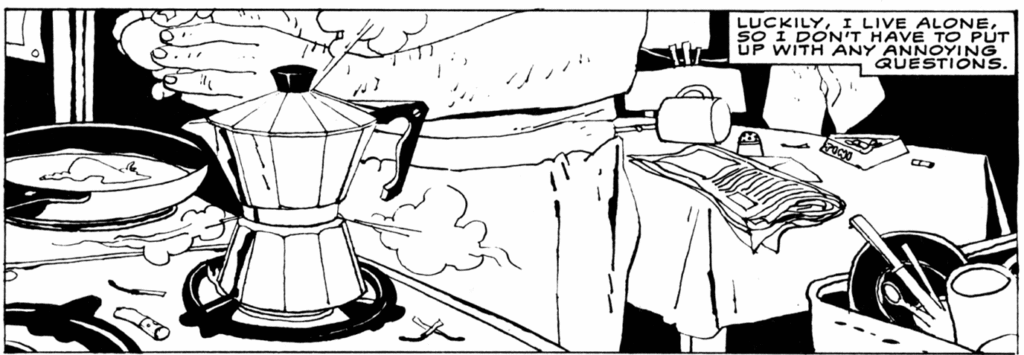
14:48: In Sinner # 1, Ken Thompson describes Alack’s neighborhood in New York as being “Latino.” I didn’t pick this up reading it, but if so, he might have learned to use moka pots from his South American neighbors.
15:51: The last story in IDW’s first volume, (Age of Innocence), was “Encounters,” serialized from 1981 to 1982. The first story in the second volume (Age of Disenchantment) was “Nicaragua,” originally published in 1988.
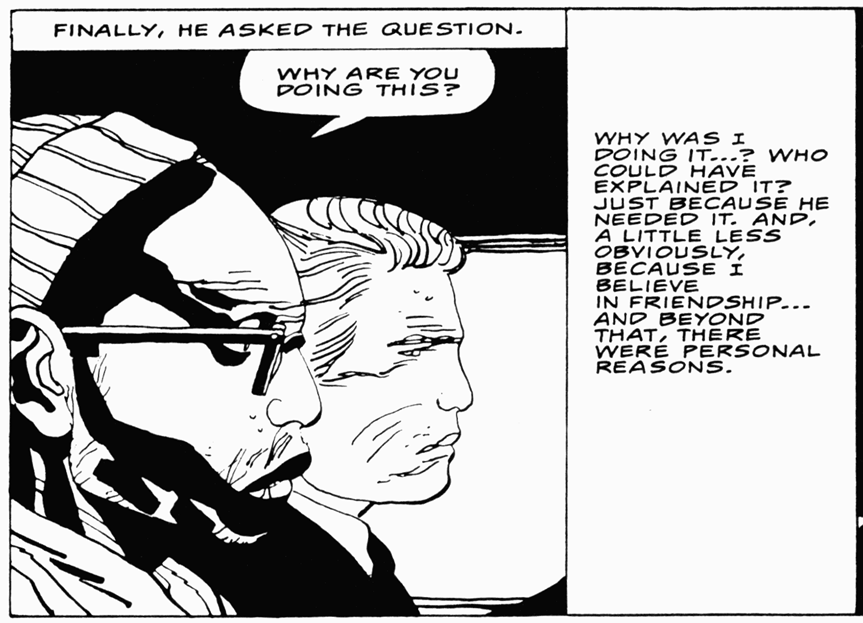
17:24: I can’t actually find a line where he says that he doesn’t believe in anything besides friendship, only a line in “Viet Blues” where he says that he’s helping because he believes in friendship.
18:20: I can’t find my source for Muñoz saying that they introduced Alack’s daughter after they became parents themselves.
19:52: Joe’s Bar was published in English in North America by Catalan Communications in 1987.
19:57: Muñoz and Sampayo’s Billie Holiday graphic novel was published in North America by NBM in 2017.
20:53: The Comics Journal covered Giffen’s swipes in issue 105 (February 1986).
21:20: It’s not just me, Lars Ingebrigtsen was confused too.
23:19: I meant “thought bubbles” not “word balloons.” As we’ll discuss a little later on, David Lloyd asked Alan Moore not to use any thought bubbles or sound effects in his V for Vendetta scripts.
24:30: It was only after recording that I came across John Palmer Jr.’s claim that Ted McKeever was influenced by Muñoz. Same with this interview with Phil Hester where he describes Muñoz as an influence.
25:04: John is referring to “An Accidental Death” artist Eric Shanower here.
26:27: Again, there’s a Joe’s Bar collection that was translated and published in North America, it’s just long out of print. RAW vol. 1 issue 3 published “Mister Wilcox, Mister Conrad, A Bachelor’s Friendship.” The Alack Sinner story “North Americans” was published in vol. 2 # 3.
27:13: The company I was thinking of is Clover Press, which was not founded by Eastman or Kitchen. It was founded by former IDW CEO Ted Adams and IDW co-founder Robbie Robbins. They’ve published Kevin Eastman’s Totally Twisted. As far as I can tell Kitchen’s only involvement was writing an intro for the The Spirit: 80th Anniversary Celebration.
Transcript
Klint Finley (00:13)
Welcome to Sewer Mutant, the comic book podcast whose tagline is still a work in progress. Our music is by Krudler and I’m your host, Klint Finley. I’m joined by my cohost, John Ekleberry, who you can find at jamesobar.wordpress.com. And of course you can find more Sewer Mutant at sewermutant.com. How are you doing today, John?
John (00:32)
Doing great. Happy to be talking about comics again and happy for Sewer Mutant to be back.
Klint Finley (00:37)
Yeah. So today we’re going to to continue our history of the Dark Age of Comic Books by taking a look at a little bit of the prehistory of that era by looking at a book called Alack Sinner. But first, John, I wanted to ask you a question. Is this kind of based on some of the stuff we’ve talked about offline recently of something that I realized is maybe a difference in how we approach comic books. Would you consider yourself a comic book collector first and a reader second or equally both or how would you?
John (01:07)
Ooh, that’s an interesting question because I think I started off definitely as a reader. I was just voraciously consuming things and then kind of, I don’t know, a little bit in the middle there, I maybe started becoming more of a collector and I was starting to hoard stuff and not necessarily read it. I was just collecting things that I thought that I would want to read down the line.
And that’s one of the things that I love about what we’re doing right now because we’re reading again. You know, I’ve got long boxes in the closet and I’ve got piles of comics on my desk next to me here. And I went for a long time without reading anything. And now we’re reading again and we’re delving in. And it’s funny because we’re continuing to accrue stuff because we’re not necessarily reading stuff I already had on hand. But that’s okay because we’re really going into the directions and the genres that I really appreciate. And it’s been really, it’s been excellent. And there are things that I have on hand that I do want to read that we’ll be covering in future episodes that we’ve talked about. So yeah, I would like to say that I’m a reader, but there’s definitely a part of me that’s a collector. I’m a librarian by trade. And so that’s kind of in my DNA, I bit I think to catalog and collect and make spreadsheets and all of that.
Klint Finley (02:24)
Yeah. It was something I was thinking about because of, yeah, you were asking me like about long boxes and like bags and boards and stuff. And I was like, I don’t know, just, I’m totally improvisational about storage. Like a lot of stuff is just stacks. Like I am definitely more a hoarder than a collector.
But I didn’t think of myself as a collector at all until about 2019, which is when I first started on this whole Outlaw Comics kick. And I just so happened to have a little bit of a windfall that spring around, I think, the same time that the Comic Book Kayfabe episode on outlaw comics came out. And it inspired me to spend some money on buying comics, not because I wanted to read them necessarily, but because I wanted to have them. So Caliber Presents number one. I never owned that before, but was like, that’s a meaningful book to me. So I wanted to have it. Same with like Comico Primer number two, which is the first appearance of Grendel. I wanted that. So I started to actually buy things from that collector’s point of view. More than that, yeah, definitely hoarding things that I plan to read or have read. But yeah, the collecting side is just something that, kind of new to me in a way.
Yeah, so to get into it with Alex Sinner, we’re looking at the collected editions of this. The original run by Carlos Sampayo and Jose Muñoz was from the mid 70s mostly in this book. I think this collection has one story that was serialized in 1981 and 1982. These were originally published in Italy and France, but the creators are Argentinian. They fled Argentina in the 70s and settled originally both in Spain and then Muñoz moved on to Italy and started this detective, private detective comic that was serialized in some magazines and then went on kind of, then it was kind of stop and go for quite a bit. That’s the stuff that was collected in the. the second edition, we’re going to talk mostly about the first edition. Or not the first edition, the first collection.
So I’ll have to apologize to listeners. This one’s a little hard to track down because the trade paperbacks are now out of print and they sell for a lot on eBay or Amazon or wherever you might be able to find a copy for sale, like $400 or something like that. Sort of ironically, there was an earlier reprint in the US of some of this material under the name Sinner from Fantagraphics in the late 80s, early 90s. And those used to be very expensive before the trade paperbacks were published. And now those, if you can find them, are a little bit more reasonably priced. So that’s probably the most accessible way you can find it. John, I think you found yours at the library, right?
John (05:12)
I did, which was great. So I live in Michigan and work in Michigan and we have a statewide borrowing system for books. And there was one library in the state of Michigan that had a copy and I was able to borrow it. And I was really glad because otherwise I was just going to bite the bullet and buy one, but they’re pretty pricey.
Klint Finley (05:29)
Yeah, yeah. Yeah, and it’s hard to even find pirated scanned copies, which surprised me, given the weight of this work. So had you heard of this before I asked you to read it?
John (05:42)
No, it was the very first, when you brought it up to me, was the first time that I’d ever heard of it. But having read it now, I can see how it’s an influence on a lot of things that came later.
Klint Finley (05:50)
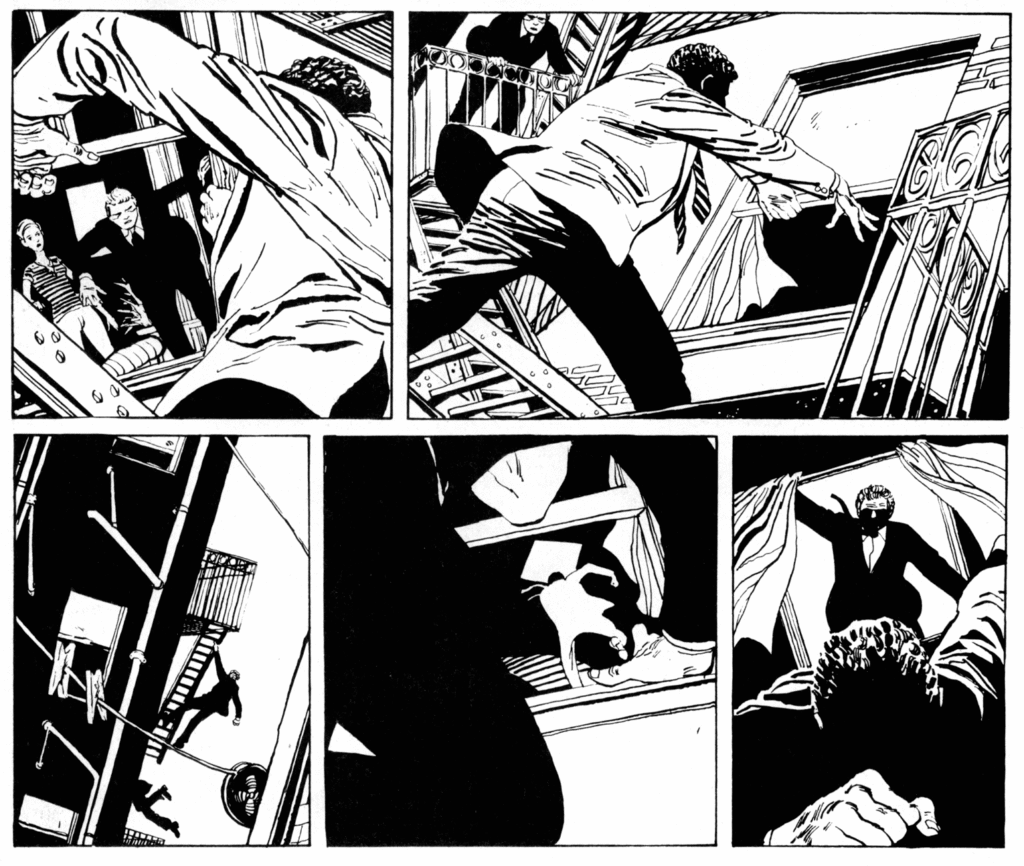
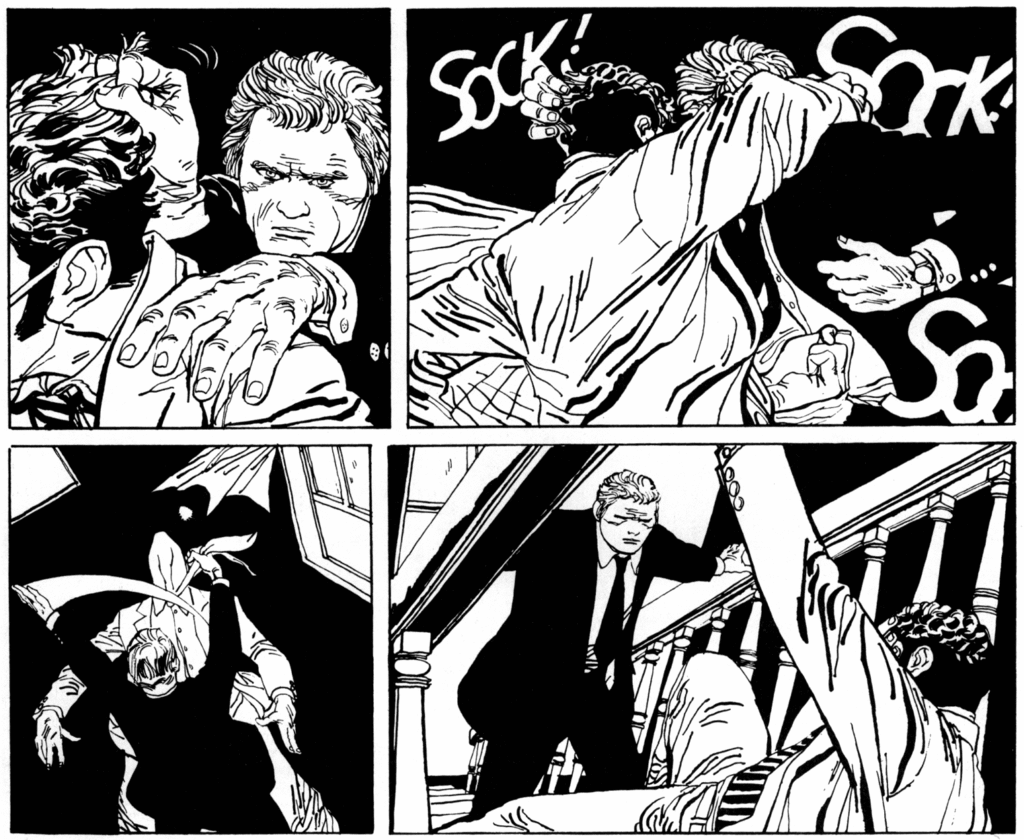
Yeah. So the reason I wanted to get into it is for a couple of things. Like one, the most obvious is the apparent influence on Frank Miller and Sin City in particular. But I think you can see elements of it even as early as Daredevil possibly. Oddly enough, I haven’t been able to find any interview with Miller where he specifically cites Alex Sinner as a, or any work, by Jose Muñoz as an influence. He just kind of talks generally about European comics. But I mean, looking at this, it’s hard to imagine that it wasn’t something that he was heavily influenced by, particularly when he was doing Sin City. I think you mentioned that Alack Sinner, the character even looks like Marv. And then there’s obviously the name Sin and Sinner. It just, just seems like too, too much of a coincidence for this not to have been something that he was really engaged in.
And then the other part of it is just the, it was more from the storytelling perspective. So, you know, I had been seeing, I guess, mostly because of the, potential influence on Frank Miller, I think I’d just been seeing individual panels from Alack Sinner online for years and years. And it was something that was just so inaccessible because you either had to buy the volumes in Spanish or French or Italian and read them, which I don’t read any of those languages. And or you had to shell out for the Fantagraphics reprints, which were back then, I think, like a couple hundred dollars per issue. And now they’re like $10 per issue or something if you can find them. And so I was really excited when IDW did these reprint volumes and so I snapped them up right away when they came out.
And what surprised me about it was I was expecting something from the writing and storytelling perspective to be kind of old fashioned because these came from the mid 70s, which was a period of comics where, you know, lot of what you would see is a lot of omniscient narrator captions that explain everything that’s happening in the in the art. Like a lot of not really trusting the artist to convey things or not trusting the reader to understand what they were seeing on the page. And sometimes with good reason, some of it just fills in stuff that definitely isn’t being illustrated, that isn’t being shown on the page. So you would see a lot of that. Thought bubbles kind of explaining things. Or the thing that I hate the most is when a character is just speaking out loud saying what’s happening, which just seems really silly.
John (08:11)
Mm-hmm. Yeah.
Klint Finley (08:15)
And so I had you know, attributed the shift away from that in more modern comics, largely to Watchmen and to The Dark Knight Returns. Seeing it on, seeing in Alack Sinner, it’s mostly first-person narration, just like you would see, know, Rorschach in Watchmen or obviously Batman in The Dark Knight Returns. There’s not very many thought bubbles. And usually they’re they’re used not to convey essential information but to make little jokes or little asides Which is also how Frank Miller uses thought bubbles for the most part in Sin City. So it’ll be something like just some character thinking about how much he hates his life for just like making some like little little observation or something but not to try to like explain what’s happening on the page
And so, mean, I don’t think that that Sampayo and Muñoz necessarily invented this approach to comic storytelling, but it was definitely not common in North American comics in the mid-70s. So to see just how far along that they had come with how comics work was expressed in 1975 was really impressive to me.
John (09:27)
Yeah, thought that was really, Muñoz’s work in particular is really interesting because it starts out kind of conventional. And I do like the illustration in the early stories. I maybe even like it better just from a taste perspective. But as it goes on, it becomes more and more expressive and more and more almost kind of nightmarish when you’re looking at it.
The line work becomes a lot looser. And the expressions on the characters faces become a lot more interesting. It definitely has a lot of hallmarks of noir films and noir fiction. And they go down pretty far down that road, I think, as the stories go along.
The stories in the volumes that we read were presented chronologically from the characters perspective, although for the most part, when I look at the list, they also are fairly close to the publication order, with the exception of that first story at Joe’s Bar that’s kind of like a origin story, I guess, that kind of sets him up as a hard-boiled detective that was once a police officer, but the force was too corrupt for him. And then he, you know, it’s a little bit of a cliche, but, um, in, in a good way, I think for this story, um, because it hits all those, those noir notes.
Klint Finley (10:44)
Yeah, we have to remember like Serpico was like still a fairly new movie when this came out. think Serpico came out in the early 70s, so this was already around. yeah, the cop fighting against the corrupt police force trope was maybe a little bit less trod at that point and maybe a little bit more subversive even at that point in time when, I mean, Dragnet was like two decades before this, guess,but I still feel like that was kind of like the major representation of the police in mass media was that kind of like more noble view of police officers. So doing a story that did have a more skeptical view of police power was probably a little bit edgy in 1975, even more so than now.
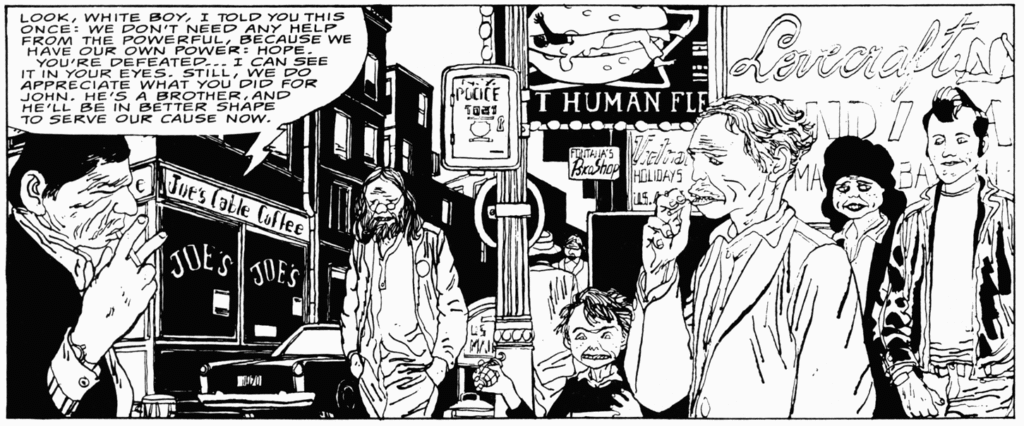
Yeah, mean, you’re talking about also how the artwork, it becomes more expressionistic, more cartoony as the years wear on, more experimental. One of the other interesting things about it is to me, it starts to focus less and less on Alack Sinner himself. And really, he was never I think in a way never really the focus of any of the stories. It was really, well, occasionally it’s kind of more about like him and his relationships, but it’s always like, he’s just kind of almost, you know, a bystander to what’s going on. He doesn’t actually close very many cases looking through the stories. He’s, it’s not that he’s a bad detective. It’s just like the stories he chooses to narrate, it seems, are the ones that like haunted him or stuck with him. And the outcomes are often either that he doesn’t solve it in time or he decides not to solve it or something along those lines each time. As it goes on, even, there’ll be like stuff like, well, there’s dialogue going on. He’s like, Muñoz is just illustrating what’s happening on the street. So the characters are inside a building talking and you’re in the, they’re showing the word balloons coming out of the windows or whatever.
But it’s a street scene of characters who have nothing to do with the story. And there are just these nightmarish, ghoulish people on the street. And I wonder if some of that’s reflecting also just Alack’s increasingly disillusioned view of the city and him just finding… I wonder how much of his view of the world is becoming more…
John (13:13)
I do think we’re seeing the world through his eyes in these stories and also through the eyes of these two creators who are basically doing their kind of version of New York, even though they’re not from New York, right? And so this is their, through their European lens, their idea of what New York is like.
Klint Finley (13:27)
Yeah, did read that Muñoz said that they had not even been to New York City when they were first starting Alack Sinner. It was much later that when they finally did visit, he described Alack Sinner’s New York as an idealized version of Buenos Aires. That kind of leads to funny things to me of like Alack makes his coffee with what’s called a moka pot, which is a, it’s like a really common way of making coffee in Italy and in South America and probably some other parts of Europe. So but it’s not very common in the United States. I think when I asked you before, you said you hadn’t even heard of heard of them, of moka pots. Yeah. So I’m just a little bit of a coffee geek as well as a comic book geek. So I was kind of like excited to see him using one in the stories and then kind of realized like, yeah, this is like normal in Argentina. It’s normal in Italy. It’s probably normal in Spain. And they probably just didn’t really realize that it’s not really a thing that like a white New Yorker would probably ordinarily or like, yeah, like native white native born New Yorker would probably use. So I kind of just have it as head canon that he had like some Italian neighbors or something that he learned about mocha pots from. There’s other like minor characters use them too though so it does seem like just a, I don’t know, just a funny detail to me.
John (14:51)
Yeah, I like that though. That actually adds some flair and some flavor to it. I wouldn’t want it to be otherwise. I like the idea that we’re seeing their version of this character in this world. It’s New York, but it’s Alack Sinner’s New York. It’s not real world New York. This is its own kind of encapsulated world. And I was reminded of you know, other noir films that I’d seen, you know, I was reminded of Sunset Boulevard for sure. And also of, I was also reminded of Psycho in that first story, the Webster case that really kind of strongly like hit some of those notes as well. But yeah, it’s, it’s a, it’s a pretty interesting and great work. You, I think you read both volumes. I read, so the, two IDW volumes are like phone book sized volumes that reprint the entire thing. And I read the first one. That was the one that I could get my hands on. And I really enjoyed it. And that covered all the stories up through, I think, like the late 80s. It may have even gone into the 90s stories. I’d have to look and see where the break off is.
Klint Finley (15:57)
I think it’s the last one is 1981 and then there’s not another story until like 1989 and that’s where the second volume picks up, I think.
John (16:06)
Nice, yeah. They did them further and further apart as time went on. They even did one that was kind of a reaction to 9/11 later on. But I would like to read that second half at some point. I’ll try to get my hands on one of those volumes. But I liked all that early stuff. And even within that first volume, you see a lot of progression in the art and in the storytelling.
One of the things that I liked was that even though it’s kind of a dark world and some dark cases that he takes on, I like that you said maybe these are the cases that haunt him that we’re seeing. We’re not seeing everything out of his everyday life, but we’re seeing the darker side of it. But for the character himself, at least in the first volume, his life is kind of okay at the end of it. It’s not tragic. And I kind of thought that I might be heading into a tragedy reading through these stories. But for Alack, I was happy to see that his life is OK.
Klint Finley (17:02)
Yeah, he has an interesting character in that, you know, on the one hand, he has a little bit of that hard boiled detective affect to him. I mean, he really is, this is really the case, I think, for a lot of hard boiled detectives, like he has just a heart of gold and is just really wants to do anything he can for his friends. There’s a line in it. I think it’s in Viet Blues where he says that the only thing he believes in is friendship.He has no other cause like religious or political belief. Like friendship is the only animating force in his life is how I interpreted that. And I mean, that does seem to bear out in the stories that he goes above and beyond for people. A minor spoiler, he actually stops being a private detective at one point and becomes a cab driver. And there’s a whole story where he just picks up a guy in a cab who stiffs him on the fair and he still just ends up becoming fast friends with this guy and sticks his neck out for him in a pretty big way and gets another friend of his to help too. So it’s just, yeah, I feel like it really is just a story about friendship at the heart of it.
And I guess, you know, it’s also Muñoz and Sampayo, a bit about their lives too, from what Muñoz has said. Another minor spoiler is that Alec ends up with a kid eventually, and that’s reflective of them becoming parents in their own lives. So I don’t get the impression that it’s autobiographical in that sense, but just that I think it really is a lot about their own kind of relationship and their views of the world and their lives and their experiences.
John (18:44)
Yeah, that’s kind of beautiful. And I think that like Alack’s view of the world and his, his governing line about friendship, you know, that extends to, really anyone. Like it’s clear in some of these stories, both culturally at the time, but also in Alack’s New York that racism is a factor and things like that, but not for Alack, like Alack is happy to, you know, have friends of different ethnicities and to associate with everyone. And the bar is kind of a good analogy for that too, because everybody can come together there. He’s putting on the jazz. Jazz music is like a good connecting thread too in this. There are a lot of allusions to that as well. But yeah, he’s a good character. He’s a force for good in his world that he lives in.
Klint Finley (19:35)
Yeah, the bar you’re talking about is Joe’s Bar and that, they, I guess it was more after Alack Sinner started to wind down the original run of it in the seventies, they started doing a Joe’s Bar serial instead and, or in addition to, and I guess that’s actually what they’re better known for in Europe is Joe’s Bar. Whereas in it’s definitely Alack Sinner is what they’re known for here. That and their Billie Holiday biography comic that they did. And that’s actually probably the easiest thing by them to get. I think it’s also out of print, but more reasonably priced.
John (20:06)
I guess Alack shows up in the Billie Holiday comic. I mean, it might just be a cameo. I haven’t read it yet, but I read that and then it kind of made me want to track it down.
Klint Finley (20:12)
Yeah, Alack and Joe’s bar are in that too. It’s been a while since I’ve read that. It’s more than a cameo, it’s not really like, it’s not a full, it’s not an Alack Sinner story. It’s more like, he listens to her music and with obviously being a big jazz fan as he is, that that would be a part of his life.
Yeah, so, I to of touch on also just the impact that this did have. Obviously there’s Frank Miller. The other biggest, most known impact or influence is actually on Keith Giffin, who got called out in the Comics Journal in 1985 or sometime in the mid 80s, for swiping directly from Alack Sinner for, of all things, Ambush Bug. Very tonally different, completely different type of comic. But I guess he was just swiping from Alack Sinner left and right on that. Muñoz and Sampayo actually, in one of the stories that’s in the second volume, there’s one called Over a Few Drawings, where they address the whole Keith Giffin thing, but I can’t make heads or tails of the story. I can’t tell if they are trying to say it’s no big deal or if they are really trying to call Keith Giffin out. It’s a strange little story and I won’t go into it since you haven’t read that one yet. And I don’t know. If anyone listening has read it and has any interpretations, please let me know. Cause I’m, I’m really curious about what they were trying to say in that story. I do think probably they were trying to like say that it wasn’t a big deal because like the Keith Giffin analog in it like lives in a mansion and he’s super rich and like got really wealthy off of swiping the character in the story’s work. If Keith Giffin was wealthy at all, it wasn’t from Ambush Bug.
That was like one of his defenses when he got called out for it was like “My popularity went down and I was swiping from them.” Basically like that. People didn’t like it. They wanted him to go back to his like Legion of Superhero style when he started drawing like them. But but yeah, it’s an odd thing. That like much later, I realized that that was actually probably the first time I ever heard of Alack Sinner was when he got asked about that in a Wizard magazine interview, like years later. But I had no idea what it was, who they were, what comic the interviewer was asking him about in that case. Yeah, just kind of, they were just well, not well known, but they were known for years and years in the US, even though their work wasn’t really available.
In terms of other people they influenced. I couldn’t find any, I found an interview with David Lloyd where he said that he was not influenced by continental comics until later. So he was probably drawing more on like Steve Ditko, I would imagine. But I see a lot of similarities in like just the noir and just the use of white space and stuff. And also the decision to not use any word balloons in V for Vendetta, I guess actually came from David Lloyd as a request to Alan Moore as kind of a stuff formalist challenge.
An artist who did cite Muñoz as a big influence is Dave McKean, who is best known for doing a lot of Sandman covers, but also for his own work, Cages. And I can definitely see a similarity in Cages.
The British artist De’Israeli who did Lazarus Churchyard with Warren Ellis, some coloring on Miracle Man, and some inking on Sandman and Grant Morrison’s Kill Your Boyfriend, also cited him as an influence. Eduardo Rizzo, the artist of 100 Bullets, who’s also Argentinian, cites Muñoz as an influence.
Oscar Zarate, who drew Alan Moore’s A Small Killing, was actually the guy who introduced Muñoz and Sempoyo to each other. This was a nice little connection there. Kind of makes me think that maybe the British invasion, or there was, in addition to the British invasion, there was an Argentinian invasion of comics, like very quietly happening at the same time.
And then more recently, Ed Brubaker and Sean Phillips cited Muñoz and Sempoyo as a big influence on their work on Criminal and other things. Makes a lot of sense there.
John (24:33)
Absolutely. Yeah. Brubaker and Phillips was, it was definitely something that I thought about, then I went back and was looking at some early Brubaker stuff. There’s a, there’s a few shorts in Dark Horse Presents that I hadn’t read that I really enjoyed. And then I think I’ll probably move on to, there’s one that he wrote and drew himself and the name is escaping me. But that’s the next thing on my Brubkaer list.
Klint Finley (25:00)
Yeah. Are you, are you talking about Lowlife? The thing you did for Caliber?
John (25:04)
Lowlife, yeah, I think Lowlife is the one that’s after that. Because the ones in Dark Horse Presents he did with another artist who I wasn’t familiar with. And then I thought, I wonder what that artist went on to do. And that artist went on to do other stuff too. But Brubaker drew some of his own early stuff, just like some of the others. We’ll talk about Alan Moore drew early stuff. Brian Bendis drew his early stuff, but then became more known as a writer later. Bendis was another one that came up through Caliber. But yeah, and also did crime comics. I mean, maybe like Torso and some of those early ones that he did were also influenced by Alack Sinner. I don’t know. I don’t know if he was influenced on him or not.
Klint Finley (25:46)
Yeah, aka Goldfish. Yeah, I imagine, yeah, he probably was. But yeah, I didn’t come across anything about him specifically. But, you know, you never know. And then, you know, obviously by osmosis or secondhand, I guess, because of the influence on, you know, Miller and Giffin and McKean, you know, a lot of people would have picked up those influences secondhand through them. So pretty big impact for artists that are just not that well known in the US, unfortunately. And yeah, I really hope that somebody picks up and reprints, does another printing of these volumes. I would also really love to see Joe’s Bar and some of their other work translated and published over here. One of the only other instances of them being published in the US that I know about, they had some work in a couple issues of Raw Magazine in the very early 80s. And that also would have been a chance for Frank Miller maybe to have seen some of their work around the time that he was doing Daredevil. But yeah, who knows.
John (26:50)
Well, maybe we need to start a letter writing campaign to Dark Horse or somebody else to pick up these licenses and reprint these things again.
Klint Finley (26:55)
Yeah. so the, mean, I think part of what happened is the guy that worked, that ran the Eurocomics sub-imprint of IDW, left IDW. And he works now, I think with the company that Kevin Eastman and Denis Kitchen started more recently. The name of that of that company escapes me. So maybe he’ll try to bring Alack Sinner to that company now. I don’t know.
John (27:24)
I mean those are two pretty big names close to my heart, Denis Kitchen and Kevin Eastman. So I mean that’s pretty cool that they’re doing, I didn’t even know they were doing something together.
Klint Finley (27:27)
Yeah, maybe it’s not a Denis Kitchen, but yeah, Kevin Eastman.
John (27:38)
So Kitchen was doing an imprint for Dark Horse a few years ago, and I don’t know if he still is, but I picked up a few of the volumes from that. There’s a couple really interesting ones. There’s a ballpoint pen drawings one that’s just all stuff that Kitchen did, but then there’s also one that’s like reprints of underground comics that he did, some in collaboration with Marvel in the 70s, but yeah going down a whole other road. But yeah, that’s that’s stuff I’d be interested to look at too. Not so much connected to the Dark Age, which is what we’re talking about,
Klint Finley (28:04)
Yeah. Yeah, well, mean, Tundra was definitely a big deal for the Dark Age, obviously published the last bit of The Crow. So probably something we’ll touch on at some point.
John (28:21)
And some Alan Moore stuff too. So we’ll be hitting that for sure.
Klint Finley (28:22)
Yes, yeah. Yeah. And Madman, which I don’t know if we’ll get into, it’s kind of almost like dark anti-Dark Age stuff, but I don’t know if you’ve ever read any of that, but it started out darker than where it ended up. So that could be interesting to look at.
John (28:40)
I feel like IDW is a very different company than it was until, you know, up through 2020 and to what it is now. What was the main guy’s name? Was it Chris something?
Klint Finley (28:52)
Chris Ryall I think. There’s been like an almost complete, almost a complete turnover of major staff there over the last few years. Dean Mulaney is the name of the guy though that did the Eurocomics imprint at IDW. And he was actually a co-founder of Eclipse Comics. Like, if you look, I don’t know if you still have your library copy, the Eurocomics logo on the Alack Sinner cover is like the Eclipse Comics logo. Yeah.
John (30:07)
It is similar, yeah, I noticed that when I had it. I’ve since sent mine back. I kind of wish I still had it in front of me.
Klint Finley (30:12)
All right, well, we’ve kind of gone a bit far afield from Alack Sinner. So we’ll probably wrap this up. You have anything else, any other thoughts on Alack Sinner before we close out?
John (30:25)
No, I would just recommend it. I mean, if people can get their hands on it. I thought it was pretty interesting and I want to get my hands on that second volume now. You know, and maybe I’ll touch on that in a later episode or something when we’re talking about something else that’ll come up. But I think it’s definitely a worthwhile work and something that I was really happy that you introduced me to because I’d never heard of it or read of it or anything before you mentioned it. And I’m happy to have to have been exposed to it.
Klint Finley (30:53)
Yeah, it really became one of my favorite comics of all time. And I think it’s just because of the strength of Alack as a character. It’s one of those comics that had, it’s more than the sum of its parts.