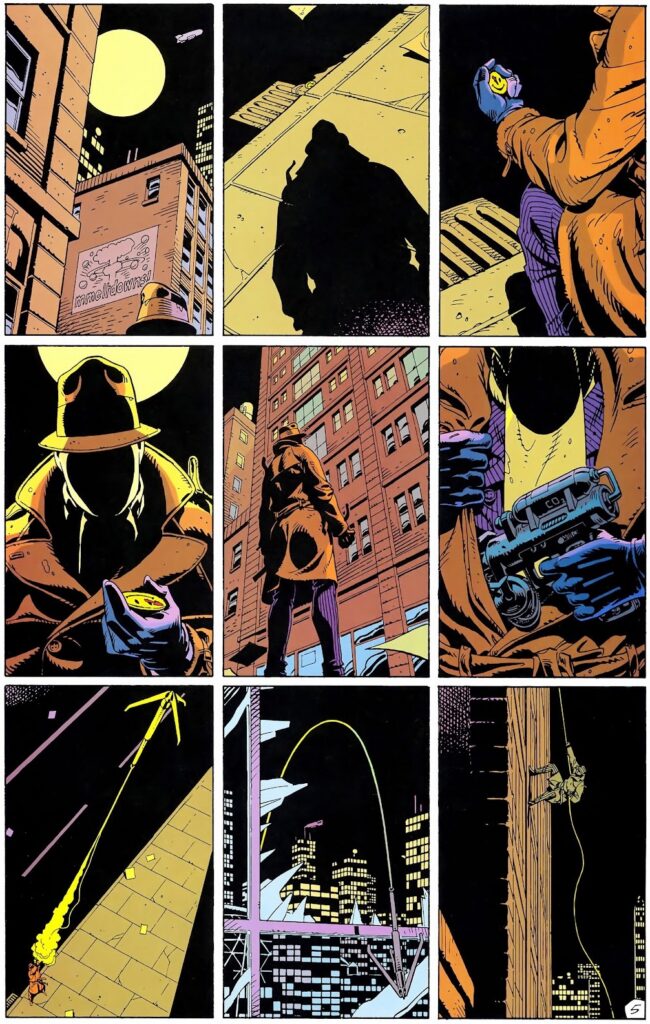
One of the most distinct features of Watchmen is artist Dave Gibbons’s use of a strict nine-panel grid layout. I always thought the grid layout was inspired by Steve Ditko, whose Objectivist politics and characters The Question and Mr. A informed Alan Moore’s portrayal of Rorschach.
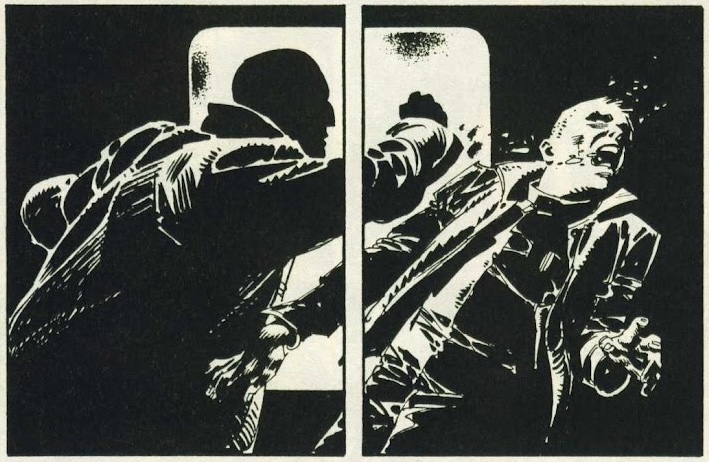
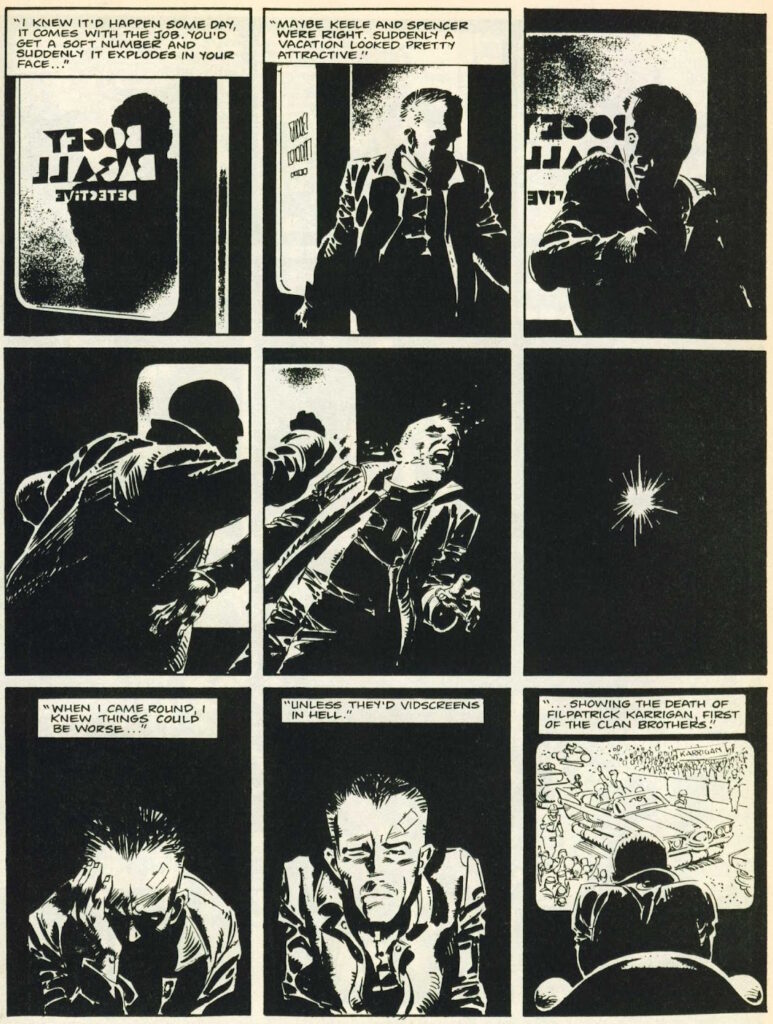
But in a 2007 interview, Dave Gibbons revealed a more obscure and surprising inspiration: the Spanish sci-fi private investigator comic Bogey, written by Antonio Segura and drawn by Leopoldo Sanchez Ortiz.
Bogey was syndicated in a number of places over the years, including the influential comics anthology Warrior magazine. Gibbons contributed to the first issue, and it’s best known as the original home of Marvelman and V for Vendetta, both written by Alan Moore.
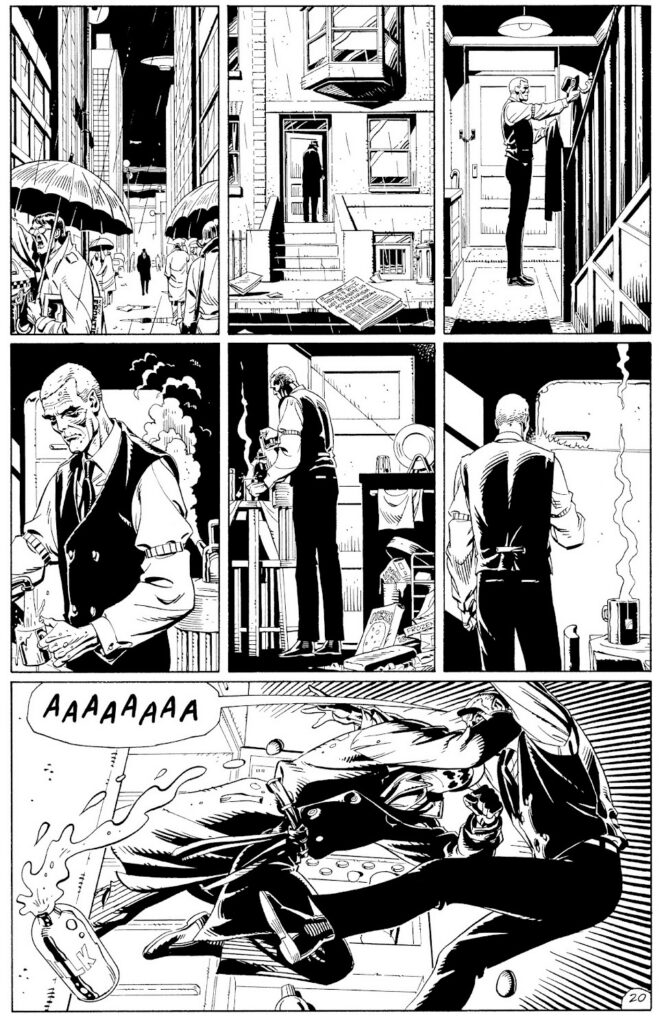
In a 2007 interview, Gibbons confirmed the influence of Ditko (plus Harvey Kurtzman and EC Comics), but also talked about Bogey:
Via the magic of Google Translate:
There was also a series called Bogie by a Spanish artist, Leopoldo Sánchez, which was also published in Warrior magazine . It was in black and white, and although it was a very complex and densely illustrated story, the simple grid system he used seemed to simplify it.
I simply think I liked the sense of authority that the nine-panel grid gave you as an artist. It’s like watching something on television or in a movie, the idea of a proscenium arch, where you have a single, fixed viewpoint from which things move. I remember proposing all this to Alan, and I used a nine-panel page I had done previously to illustrate my reasoning.
It’s just another way that Warrior, and the European comics scene of the 1970s and early 80s, continue to shape comics decades later.
See also: Frank Miller, Keith Giffen, and other comic book creators influenced by Alack Sinner.