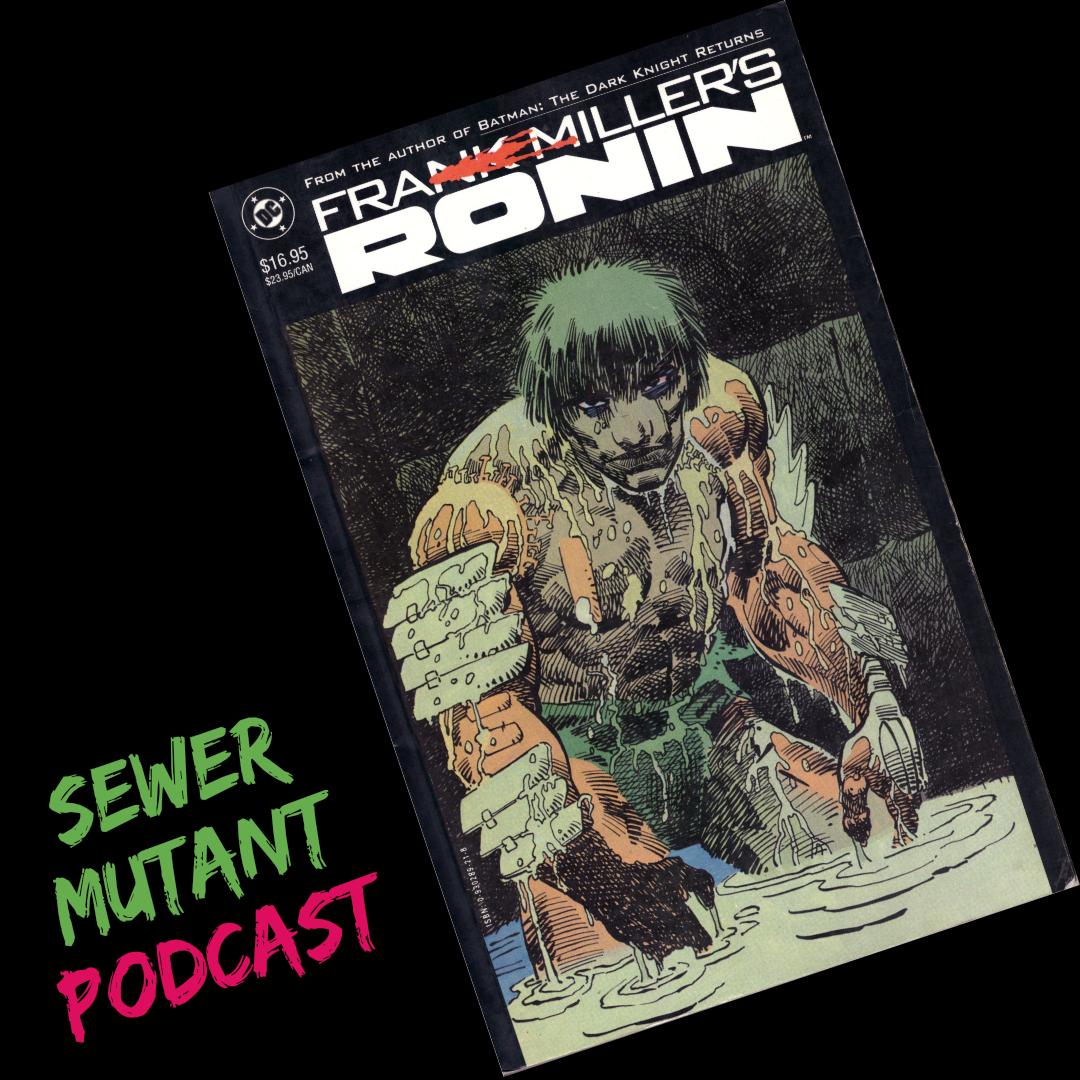
We’re finally diving into Frank Miller’s Ronin this episode. Love him or hate him, you can’t really talk about the Dark Age of Comic Books without talking about Miller. His work on Daredevil and Dark Knight Returns are two of the most important touchstones for the emergence of the period. But Ronin is arguably more important. In this episode we discuss:
- How Miller added his fuel to the creator owned fire
- How Ronin influenced on the founders of Image Comics
- How Lynn Varley’s colors on Ronin influenced pop culture
- Jenette Kahn’s role in bringing Ronin to DC
- Ronin as a bridge between Daredevil and Dark Knight Returns
- How Manga and European comics came to the US
Subscribe to the podcast feed or find it on Spotify, Apple Podcasts, YouTube, or your favorite podcast app.
Credits:
Hosts: Klint Finley and John Ekleberry
Music: krudler.bandcamp.com
Mentioned in this episode
Absolute Ronin: I haven’t seen this, but both the Ronin Deluxe Edition from 2014 and the Frank Miller’s Ronin 2019 Edition available on DC Universe Infinite look, to my eye, consistent with my 1990s printing of the original Ronin TPB, though the colors in the new editions are a bit brighter than mine (which is to be expected).
Jenette Kahn
Lynn Varley
The Women of the Dark Age of Comic Books
Grant Morrison’s Supergods
Samurai Jack
Rush transcript
Klint (00:13)
Welcome to Sewer Mutant, the comic book podcast for weirdos like you. I’m your host, Klint Finley, joined by my co-host John Ekleberry. How are you today, John?
John (00:21)
Always great, always happy to be here.
Klint (00:23)
So today we’re finally diving into Frank Miller’s Ronin, but first we’re gonna do our usual icebreaker. So today, John, I was wondering if you’re a sports fan and if so, what teams you root for.
John (00:36)
not really a big sports guy. I suppose I would root for the Detroit teams. I do occasionally watch the Detroit Tigers play baseball, but unless somebody’s in the the playoffs or something that year I don’t usually watch.
Klint (00:47)
Okay. Yeah, I think I I just figured you probably weren’t because usually Midwestern people let you know right away what teams they like if they are if they’re sports fans. but I I think I saw a photo of you like at a baseball game. So I was like, maybe maybe he is into into sports.
John (01:05)
I I did go to a Tigers game recently. It was my daughter’s first game and we had a good time. And funny enough, when I was in college, I needed to do an internship and I ended up being a sports reporter at a local newspaper, which is just funny ’cause I’m not really a big sports person, but I ended up covering a lot of high school hockey at that time. And so for like a year I kinda got into hockey, but I I didn’t really stick with it.
Klint (01:29)
Yeah, I’m not a sports fan. I d I have a hard time like knowing who to root for, like picking picking anyone. I guess you know, for me it would be instead of baseball, it’d be football and it would be the the Dallas Cowboys because I grew up for a while in Texas and I don’t know, it’s just that’s just what you do. So if I ever happen to see a Cowboys game on the on TV, like if I’m out somewhere.
I’ll kind of pay attention a little bit and and root for the Cowboys, but that’s that’s about it for me. so we’re talking about a comic that has nothing to do with sports, Ronan, first published in 1983. I think this was probably DC Comics’ first creator-owned comic, which is a big part of why we’re talking about it. and we just can’t talk about the dark age without talking.
about Frank Miller. He was one of the biggest creators that in terms of creating the Dark Age, of of cause of bringing it into being, I guess, along with Alan Moore and a few other people. Ronin is a cyberpunk story about a Japanese Ronin who finds himself thrust into the cyberpunk future and pursued by a demon that had killed his master in the
I think the Edo period of Japan. Or at least that seems to be what’s going on in the beginning of the story. it’s a lot of people have pointed out it’s similar to the plot of Samurai Jack, but again, not everything is necessarily as it seems in this comic. Yeah, so John, we’ve been we’ve been talking about doing this for a while. It took you a little bit to to get through it. Did you what did you think of it? Did you did you like it? was it like a struggle to get through?
John (03:05)
I started it a couple of different times and then kinda put it down to to read other stuff. And then this time when you finally lit a fire and said, Okay, we’re gonna we’re gonna do a podcast on it. I I read it in one sitting and it it was pretty good. I mean, I don’t think that it lands in every respect for me, but having read Frank Miller’s earlier stuff and later stuff and not having read this
before.
it it does really feel like a huge bridge that I was missing. There’s a lot of stuff in there that comes up later, I feel like, in his stylings and Dark Knight and and other stuff. so artistically it’s a it’s a big thing for him. And one of the big things that I noticed was that they let him be the editor on it. So like he he got to just do whatever he wanted. You know, he wa he had done a bunch of stuff for Marvel and then this was his move to DC.
Yeah, so I mean Frank Miller and then you gotta talk about Lynn Varley, I guess, too. both of them really kind of experimented here and you know, figured out some different things that they would use going forward in later works.
Klint (04:05)
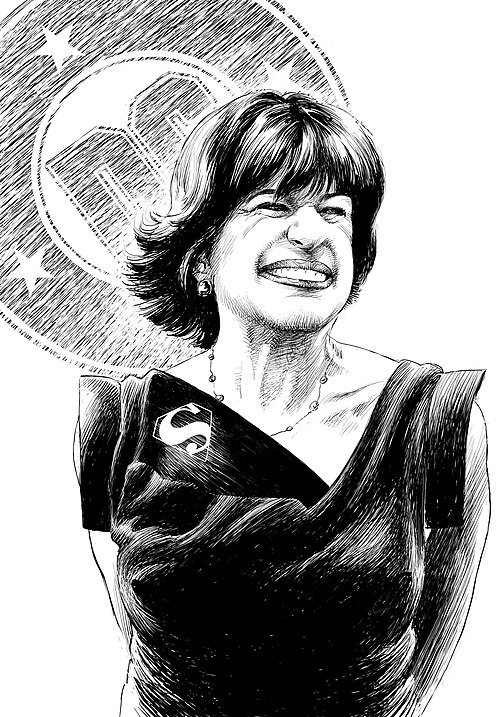
Yeah, for sure. And the other major player in all this, I think is Jenette Khan. So this is a another chance to talk about some of the the women of the dark age of comic books. And so maybe we can start a little bit with l like you said, Miller had done a lot of stuff at Marvel. well, I guess by a lot of stuff, he’d done Daredevil and Wolverine and like some and then some just other random stuff like a fill-in issue on Spider Man. He’d actually done, I think, a little bit at DC before that.
And you gotta start it at Golden Key on like the Twilight Zone comic book. so he’d done a few things, but it w Daredevil really just he he took that book to an another level. At one point it was selling more than Spider-Man, which is just kind of crazy. Like for a book that had been near cancellation, sudden suddenly was like you know, Marvel’s top selling book alongside X-Men. And it was also kind of wild that X-Men
in that time period had jumped to being a top book past the Fantastic Four. So you know, Miller and John Byrne were just yeah, I I don’t want to necessarily say they were the first superstar artists because there was Kirby, there was Neil Adams, Jim Strenko, but Miller and Byrne at this time were really kind of taking the whole idea of of there being like sort of rock star comic book creators to a new level. And Miller could kind of write his own ticket at a certain point.
And speaking of Neil Adams, Neil Adams was his mentor and had been really trying to push the idea of creators’ rights a lot and was encouraging Miller to you know, to to try to do something more creator-owned, I guess. I just read Miller’s book, Push the Wall. That was his memoir slash kind of advice book on creativity.
And the way he explained it is that he just announced that he was doing a book called Frank Miller’s Ronin and he was taking he was just taking meetings, taking proposals for who who would publish it. And so you had found I think through Wikipedia an interview with Jim Shooter, where Jim Shooter had said that it was going to be at Marvel, probably for the epic imprint.
the the kind of sort of in my view the gym shooter of DC, where even though she was the publisher slash president, not the editor in chief, she was in kind of a similar role at that time of really shaking up the company and and and pushing the edge.
pushing the limits of what was what the company could do for creators.
And in the book, he describes having lunch with Jeanette Khan and they kind of bonded over their mutual love of samurai films. And and Khan was pretty much like, What would it take for you to do this at DC? And he said, Complete creator control, it’s gonna be a limited series, and it’s going to be perfect bounded on nice paper. So the prestige format that was pretty new at that point. I think the Camelot 3000.
was a limited series and on nice paper, I don’t remember if it was per I don’t know if it was perfect bound. But that’s that’s kind of how it all came together. he just leveraged his his status at the time to just jump into doing this thing. and so a lot of the credit has to go, I think, to to Khan for recognizing that you know that that DC needed to essentially like try something different and
try to capture some of the the talent from Marvel and give them and that one of the ways that they could lure over some of that talent was by just letting somebody like Miller just do whatever he wanted on a on a a book like this.
yeah, and then you mentioned Lynn Varley. Let’s yeah, I we we talk a lot about the about color. it’s interesting, like this is one of one of those books that I don’t think has ever been recolored. Like no one really messes with Lynn Varley’s colors on anything very much.
John (07:31)
Yeah, that’s interesting, ’cause we do talk about things being recolored over and over, but I don’t know that this ever ever has been. I know they did do an absolute edition of it at some point, but perhaps that just tries to produce the the original colors as close as possible.
Klint (07:47)
Yeah, and since it was always published on or printed on better paper with like the a better printing process, there’s not that that gap between the you know the the low quality four color printing and then having to translate that to like modern printing or even though this this would have been pre-digital pre-press.
So there would be some adaptation necessary, I’m sure, but I I don’t know that much about printing. But it it’s not a situation where they’re having to go from like a super limited color palette to you know, the the much bigger possibilities of modern printing.
John (08:21)
So the cover
dates for for these issues are July eighty-three through August eighty-four. So right after he he left Marvel.
Klint (08:31)
Yeah.
John (08:31)
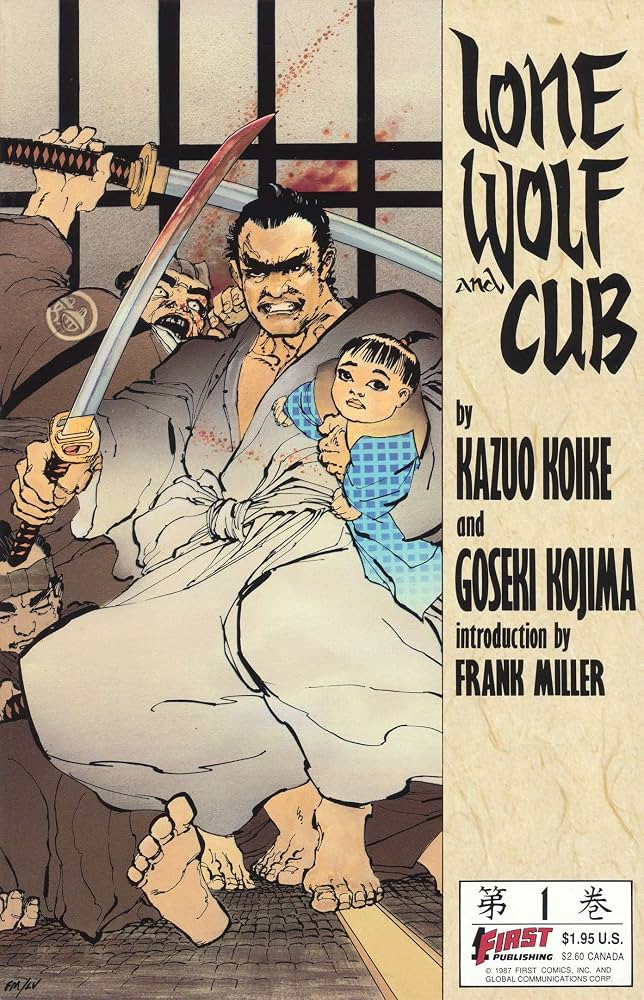
and before some of the other stuff, you know, like stuff that influenced him, Lone Wolf and Cub, I guess he just saw non-translated versions of those and just had to look at the artwork, you know, because those hadn’t hadn’t come over here yet. Now later on they did.
You know, First Comics brought it over and did some of the issues and Miller himself did covers. And I’ve I’ve really loved Lone Wolf and Cub when I read it later. But he’s just, you know, taking a look at these foreign comics from an artistic standpoint and trying to replicate some of that. And then of course French comics like Mobius and we we covered Alex Center. I don’t know how much that focuses really into this particular one, although there is some
In in the later part of the series there is a little bit of Sin City styling, I feel like, in the later issues. But
Klint (09:17)
Yes.
John (09:17)
Yeah, go ahead.
Klint (09:18)
yeah, so I mean that’s one of the interesting things is he uses different styles in different scenes. So like the scenes with the Ronin, like especially like the the flashbacks but then like the urban scenes, those are done in more of the lone wolf and cub style. And then there’s a lot of scenes that are in the Aquarius complex, which is the this giant complex in New York City, run by this huge corporation.
and an AI called V Virgo. the a lot of the scenes there are done in more of like a European like Mobius style. and it seems like those are the scenes that are in wider open spaces with like executives. But then like you mentioned towards the end, there’s a bunch of scenes that seem to be in these more like claustrophobic and dark spaces. And those tend to be more with like the the working class
employees of the company. Like there’s a a scene at a bar. there’s a scene that it is with more of like the executives, but they’re in like a a holding cell or something. And those one looks those ones look very Munas inspired. especially that bar scene. and and yeah it and also similar to Sin City. So it’s it’s it feels like almost every style that Miller would use later you can see that here in Ronin. Like it
it he he does a a lot of different experimentation with layouts and all kinds of stuff and all that ends up being stuff that you would return to later in different forms in different comics.
John (10:43)
What did you think about just the storyline generally? Did you feel like it it flowed pretty well for you and you know, all kinda made sense in some sort of way?
Klint (10:53)
it was okay-ish. I mean, I I don’t think it holds up very well by modern standards. And in terms of making sense, not quite. there’s you know, this is my third time reading it, and one thing I’ve noticed is it just never sticks. Like every time I’m reading it, it’s like the it’s like the first time. for for whatever reason the story just never really sticks with me.
Even the twist at the end. I’m it’s like, I know there’s a twist, can’t remember what it is. so yeah, it I I don’t think the story is great. I think that if you look at it for the time period, you know, it’s it’s another one of those things that you know, Marvel and DC were we’re just not telling stories like this. We’re not doing stuff like this. So I think that that it stands out in that sense, like for the for the time period. But
I can see why people are not that excited about this this comic today. Like I just don’t hear that much about it ever. even when people talk about like the history of creator owned comics, you know, I I think American flag I feel like it comes up more often than than Ronan does in that context, even though this was I think like a a pretty big deal and I think a little bit before American Flag and
I mean, it it’s a little bit of a a predecessor to the to the whole image revolution of the idea of a superstar artist just deciding that he’s gonna do whatever he wants on his own creator own book. but yeah, and I I just can’t quite follow some of the elements of the story, like McKenna and the demon, like what is actually going on there. it doesn’t quite make sense.
the ending feels super abrupt, but again, you know, it’s it it is what it is and
What about you?
John (12:28)
yeah, I mean basically the same. I I do think there’s some of some things in there, some story elements that would seem kinda problematic now that it’s funny seeing them here because they show up again in Dark Knight Returns. And they fell a little off in Dark Knight Returns too, but like all of the like Nazi stuff and racism that he decides to to add to some characters that don’t seem to really need it,
particularly like it doesn’t really push the story forward very well. and the whole kind of twist of the samurai stuff just being kind of a a fabrication of the of the psychic character. I don’t know. I I’d like to think that maybe maybe as the reader you can go both ways on that. Like you can you can choose to believe that maybe that that is a real
part of the history of that world. but I guess it doesn’t matter that much in the end as far as the the way that the story the story ends. There is a there is a Ronin II that came out in twenty twenty four, but I haven’t read that and we’re not gonna talk about it. But it’s you know a latter day Miller idea
Klint (13:36)
Yeah, yeah, it’s an on the the problematicism side, like that’s I guess we you know Frank Miller himself is is now somebody who is a little controversial. I think that’s a little bit why you know a lot of his stuff doesn’t get talked about as much anymore. I think it’s twofold. Like he’s you know, with with holy terror and some of that stuff, like alienated a lot of people and then
his work just doesn’t hold up as well as Alan Moore. So I mean I mean when you and I were kids, like it was always Alan Moore, Frank Miller. Like you could hard you could hardly mention one without mentioning the other. And now like Frank Miller is more of like he’s more than a footnote, but he just isn’t like given the the same regard that Alan Moore is today. And I think that yeah, some of it’s the problematicism, some of it is i again like it like the story just it it’s
This isn’t Watchmen. You it’s just it’s just not as good as even as as Miracle Man, I don’t think. and that you know people don’t you know, there there’s just so many good comics now that you don’t really need to read this, I guess, unless you’re just really into Miller or like really into Cyberpunk samurai stuff, which if you’re really into both of those things, this would be really fun to to read.
I didn’t really actually think like the racist characters were that problematic because they were all the bad guys, basically. But I think that the what struck me as like probably the most problematic thing about this book was the it’s the way it treated the character with disabilities, Billy, and kind of making him into the villain at the end. maybe though, like it’s actually maybe Virgo’s the villain, it’s hard to tell. but again for the
the confusingness of it. I did actually try to read Ronin two this morning, just to jump into it. And it makes I only read the first issue and it makes even less sense than anything in this first volume.
John (15:22)
I felt sympathetic for Billy throughout. I didn’t really feel like he was a villainous character. but certainly that’s one of those things it’s up to interpretation for the reader.
Klint (15:31)
Yeah.
yeah, and I I think yeah, I was disappointed, I guess, that it’s that the samurai stuff is probably not real. But yeah, I mean that’s a pretty wild twist, I guess, especially for that for that time period.
John (15:43)
Well, and it makes it
it it it kind of it helps the aspect of the story. The the story is a little bit thin. It it’s its depictions you know, of the different cultural stuff are pretty surface. And that’s okay if later on you realize that Billy just came up with this stuff based on like movies he’d watched or whatever.
You know, it’s it’s not that not that it doesn’t look go that deep like culturally or anything like that.
Klint (16:12)
Yeah. Yeah, that is it it’s a little bit of a workaround for that, I guess. though I I mean Miller supposedly did some research on the culture and stuff, but we just don’t get that much of it because it just jumps into the future pretty quickly.
So in in terms of the the influence stuff, I wanted the there’s something else that was cool in in Push the Wall, which I’ll say isn’t is not a great book, but he Miller does talk about how he first came to read European comics and Lone Wolf and Cub. and what what the inciting incident for all that was the opening of the comic book store Forbidden Planet in Manhattan in nineteen eighty one. I guess they were importing stuff.
foreign comics and selling them. And so this was like the first time that American audiences saw this stuff. And so I guess he and Walt Simonson and Howard Shaken were all sharing a studio space called Upstart Studios and just really geeking out to all this imported comics material that they were getting their hands on for the first time. and in the the towards the very end of the book
Miller actually does specifically mention Jose Munoz. So that’s the that’s the first time I’ve ever seen him specifically acknowledge Munoz as an influence on on his work. I specifically he actually did say Ronan. So I feel very confident saying those specific scenes were were Munoz inspired, but I think also obviously Sunsetti as well.
John (17:34)
It looks like I guess Forbidden Planet is still around. Well, forty eight years is a long time for a retail chain. It’s it’s funny, I happen to notice that their founders are named Landu Luckman and Lake, and in Wolverine there’s a there’s like a law firm with that name that obviously is a homage to them.
Klint (17:51)
wow, I had no idea. that’s cool.
I mean and that’s another interesting thread to to think about the the dark age and its emergence is the again, like the role of the direct market in comic book stores and how yeah, the the decisions that that retailers make about what’s gonna be on the shelves has a huge impact on you know what actually got out there to people.
John (18:13)
Yeah, I also checked dates
Klint (18:13)
So
John (18:14)
on American Flag. So American Flag started in October of eighty three, so it was a contemporary of of Ronin. So Chaiken was working on that right around the same time that Miller was working on Ronin.
Klint (18:25)
Okay. And I I imagine that that may have had some influence on the decision to let Miller kind of do what he wanted as well, because some in in that interview with with Shooter he’s briefly mentioned man, I don’t know how to s I’m not sure how to say his name. the the creator of Gru, Sergio
John (18:42)
Argonne’s? I yeah, I don’t know. I don’t think I’ve ever said it
right. That’s how I’ve always said it when I’ve read it, but I haven’t heard anybody pronounce
Klint (18:47)
Okay.
John (18:48)
it.
Klint (18:48)
Yeah. but he had been talking to Marvel and then he went to Pacific Comics and but there were a number of instances of of of Mar of Marvel talent basically doing creator own stuff at Eclipse and Pacific and other places and they wanted to keep that talent in house more.
John (19:07)
Well yeah, it’s a big thing when you see other creators going to smaller companies to get that kind of freedom, but he can write his ticket to do it at one of the big two. And that seems
Klint (19:16)
Yeah.
John (19:17)
to be a real cause he ’cause even later when they made the push, you know, Image and and Bravura and and all this other stuff that came out, they were going to other publishers, you know, and and and later he would take his work to Dark Horse.
So yeah, guess it’s interesting to look at the timeline of him him working for both major publishers. I guess the really big names have have worked for both mostly, but they always end up in the in the creator owned space if they do it long enough.
Klint (19:45)
Yeah. Yeah. And I mean DC, I mean actually really both of eventually fell off of doing creator own stuff and then kind of of come back around to it every so often. but like with you know, Marvel had Epic and then they shut that down and then they they came back with icon at a certain point, and then the whole reason for that was they wanted to have certain creators
as exclusive talent so they you know they created the an imprint where those creators could could be exclusive to marvel but still do creator owned work and then dc had pretty much stopped doing creator owned stuff after vertigo shut down but now now they’re doing it again so you know they’re doing vertigo again but they were had already started doing creator owned
creator own stuff again with like nice house by the lake. So it it seems like it always comes around that they if they really want the talent, they’ll you know, they’ll find a way to make it happen.
so in terms of like the the impact that this had is well we can g circle back a little bit to to Lynn Varley. but a a quote here from Grant Morrison. this is really more about Dark Knight Returns, but this she used the same style in in Ronin. and
Morrison wrote, that Varley replaced the traditional rainbow palette with somber blues, naturalistic greys, washed out yellows, and shades of brown that perfectly evoked a dirty, crime ridden city in high summer and inspired the look of every dark superhero and fantasy film of the early twenty first century, from Lord of the Rings to Harry Potter and the Order of the Phoenix and Twilight. So just yeah, I mean you can see how the how color in comics really changed a lot.
in the dark age and that’s really that’s varley’s color palette. I mean I you can probably credit a few other people as well but you can really see that on display here in one of the the first really major instances of it. I guess this was not a huge commercial commercial success. Miller described it as selling well but not meeting expectations and
That was part of why he went back to work for higher work for a while on Batman and Daredevil and Electra. it took him a while to get back to doing creator owned work after this. But like I said, I I think you can s
John (21:53)
Well it probably would have been a pretty
expensive book at the time too, since it was prestige format and on nicer paper. It was probably
Klint (21:59)
Yeah.
John (22:00)
far more expensive than anything else on the stands.
Klint (22:02)
And there were no ads in it, so they they only made money from selling it. And it was direct market only, so yeah, their the ways that they could make money off of it were were considerably more limited compared to what they were used to doing or what like how Daredevil was sold.
John (22:19)
But as a test bed for Dark Knight it seems to have worked because Dark Knight was published that way too in those perfect bound editions and was a huge hit for them. So
Klint (22:27)
Yeah, and and DC kept doing those prestige books for basically forever. So yeah, they it it didn’t discourage them from doing it. I mean he like he said, he said it’s it sold well, but just it didn’t meet that meet expectations, which I think were very high given that this was Frank Miller and he was he was a hot shot at that that point in time. And you know, maybe fans just weren’t quite ready for this yet, weren’t quite ready to spend
whatever the cover price for these were and weren’t quite ready for something that wasn’t a a cut and dry superhero comic yet. But you know we it it really paved the way for so much more that that came later. And you know, like I said, I think this is like the template for the image revolution that came much later.
John (23:08)
Well and the comments that you made about Lynn Varley’s colors are interesting too because it kind of reminded me of listening to Alan Moore talk about like Watchmen and he didn’t really expect the next thirty years of comics to be kind of trying to replicate that and to make everything grim and gritty. And she probably didn’t expect the entire color palette of comics to, you know, go to more browns and greys and and go dark, like it did.
Klint (23:32)
Yeah.
John (23:32)
But
Klint (23:33)
And for that to become such a big thing in film as well.
do you have any other any other thoughts on on Ronin or should we call it a day?
John (23:41)
I’m just glad we finally read it because I do think it is an important stepping stone, like in the history of both Miller’s career and the just general progression of creator owned comics. I suppose I probably will read it again at some point. it it has a lot going for it. It just the the parts didn’t add up to be a big thing for me in the end when I read it. I wasn’t like blown away when I when I got out of it, but it’s hard to say that about something that’s
You know, thirty years old. If somebody watched The Matrix right now, like would they think that it was like a big deal? Like as big of a deal as I thought it was when I watched it, you know, when it came out? Probably not. And so it’s it’s hard to contextualize if this was like a giant thing for some people at the time. It it very well may have been. but having read, you know, lots of other comics and things, it didn’t it didn’t really strike me as something that I’m gonna have to revisit a whole bunch.
Klint (24:29)
Yeah. it’s something I I like I said, I I come back to it every so often for whatever reason I’m never sorry that I when I do, it’s just that yeah, it’s just not my favorite. I guess one last thing I would wanna point out is I I think that four armed rat man that he fights in the beginning is really cool.
John (24:48)
Kinda random too, just like out of nowhere.
Klint (24:51)
Yeah, yeah. and that’s well and that’s that I mean, I feel like that kinda tells you a little bit of what you’re in for in this comic is like there’s for with no explanation, there’s a a giant rat person with four arms, and also two legs. just yeah, what a trip.
John (25:09)
Well and that kinda reminds me of the Ninja Turtles connection too, because I feel like people largely know that the Turtles are based on Miller’s Daredevil run, but I feel like there’s elements of Ronin that are in there too.
Klint (25:20)
Maybe, yeah. yeah, the the giant rat for sure and just yeah, j I mean just like ninjas becoming such a big thing in general. that really kind of traces back to in a l in a big way to Miller. though I I’ve not watched either the new version of Shogun or the original, but I guess that was part of where
Part why he and Chris Claremont wanted ninjas in the Wolverine miniseries. But there were already ninjas in Daredevil before that that happened. But my point being that he wasn’t the sole vector for ninjas in pop culture, but you know, he and Larry Hama and then obviously the Kevin Eastman and and Peter Laird all carry a lot of responsibility for that.
John (26:00)
Most definitely. I I watched the the newer Shogun just the first couple episodes. And I’m I’m sure it’s great and if I watch more of it, it would probably go deeper in. But I felt like it and again, Shogun, the original, is older, and so it was probably more revolutionary at the time than it seems now. But when I was watching it, I thought, okay, I’ve seen a lot of this in other in other things now. And so I didn’t feel super compelled to to keep going. I think in the very first episode somebody
commits Sepaku, you know, reachable suicide. And that we’ve seen that now in a bunch of things. We we actually see it in Ronin and we see it in Lone Wolf and Cub and we see it in, you know, different samurai films and things. But probably back then nobody would have known what that was. They thought they would have thought that was like a super outlandish like idea that was being introduced to them.
Klint (26:47)
Yeah. you probably recognize that scene being recycled in in the the Ronin scene th that you’re talking about, being recycled by Rob Liefeld and New Mutants One Hundred.
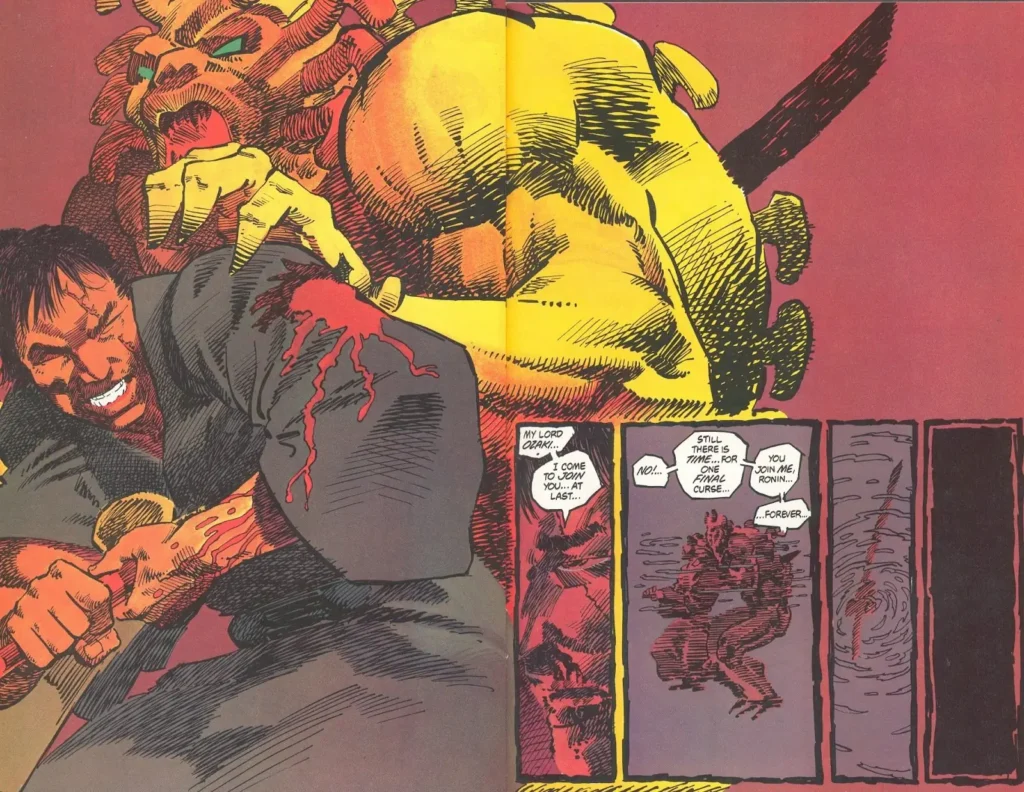
John (26:58)
yeah, the shot where he
s he stabs himself through the chest. Yeah, that that’s great. That exact page is Yeah.
Klint (27:02)
Yeah.
And somebody else. Yeah. Yeah. so again you can re you can definitely see the like the the influence this this had on on Lifeline the image image guys and if yeah
John (27:15)
Although I I do think
that that scene played really well in Ronin because he has that scene on the road with the mother and the baby that I guess was supposed to be a longer segment, but I read in one of the interviews that Miller realized that the story wasn’t moving along and he needed more pages somewhere else, so he cut that down. But the idea that the sword needs innocent blood
And you think, my god, he’s gonna kill this baby and then in like one page he’s
Klint (27:38)
Yeah.
John (27:39)
like, No, I’m not gonna kill the baby, the baby’s too small. Like I’ll I’ll figure out something else and then of course he he ends up using his own blood when he when he runs himself through.
Klint (27:47)
Yeah. Yeah. yeah, that was that that was a good scene too. And it did yeah, it did seem like it was gonna be something even more horrifying than what actually happens.
awesome. Well, yeah, let’s let’s wrap it up and we will be back in the future with another episode. probably the second part of our elf quest conversation, but you never know what’s gonna happen on Supermutant.
John (28:10)
Sounds great. See everybody next time.