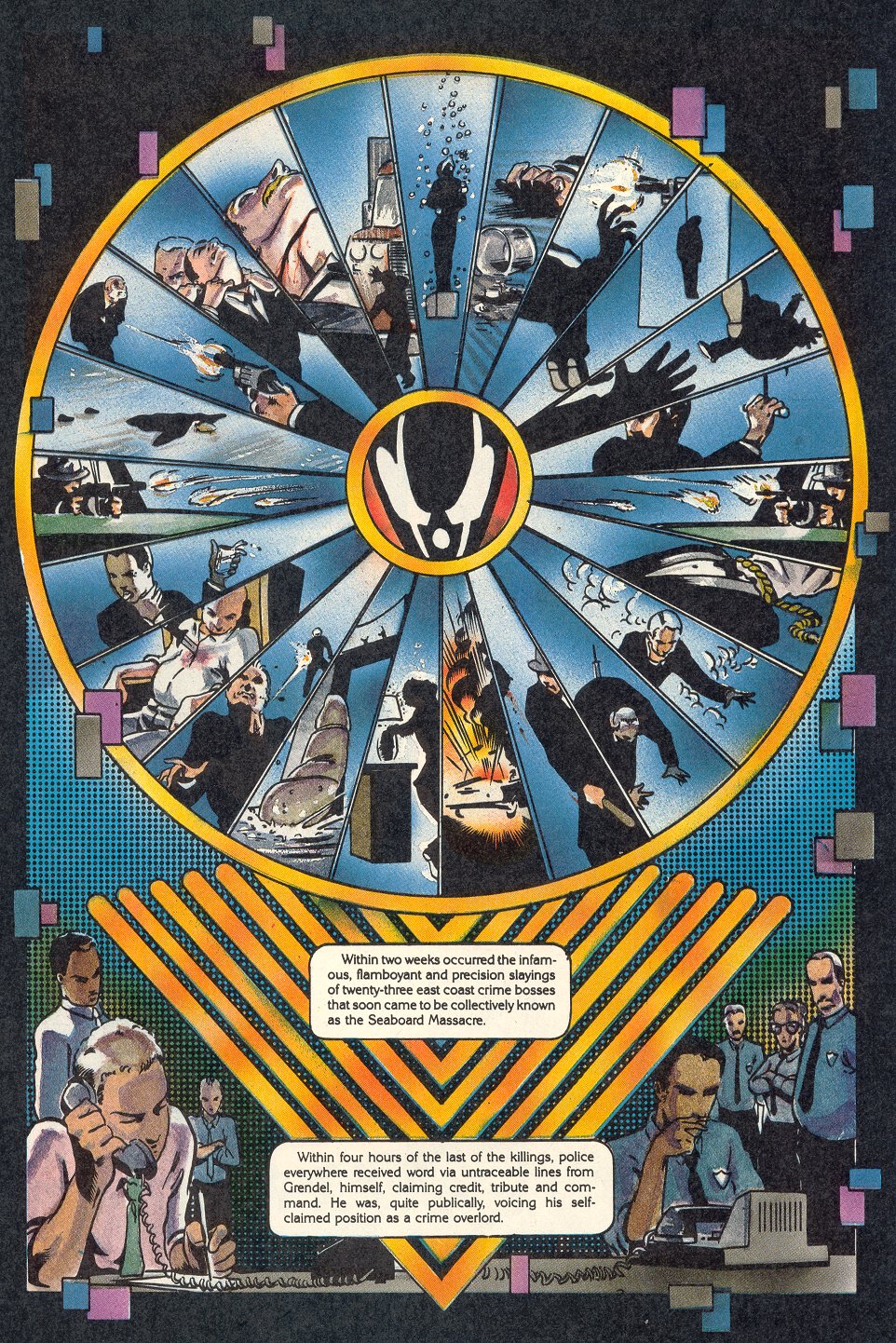
We couldn’t help it. We weren’t going to read Grendel so soon, but irresistibly drawn to Matt Wagner’s masterpiece. Once he started reading, he couldn’t stop. Klint was soon sucked back into the world of Grendel too. In this episode, we look at:
- The first appearance of Grendel in Comico Primer issue 2
- The original black and white Grendel series from Comico
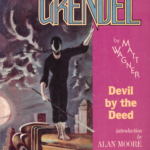
- The classic Grendel: Devil by the Deed graphic novel, first serialized in Mage
Also: The Sewer Mutant print zine is coming! The theme is cyberpunk. I’m working on an article on OMAC and Deathlok. John’s working on articles on Death’s Head and John Bergin’s Golgothika. And we might do a tie-in episode on Machine Man. If you’d like to contribute an article, artwork, or short comic, email me pitches at klintfinley at gmail.com. The deadline will be August 15th, with a goal of publishing this fall.
Subscribe to the podcast feed or find it on Spotify, Apple Podcasts, YouTube, or your favorite podcast app.
Credits:
Hosts: Klint Finley and John Ekleberry
Music: krudler.bandcamp.com
Mentioned in this episode:
Grendel Archives (2007)
Grendel: Devil by the Deed Master’s Edition (This is very different from the original, with apparently completely redrawn art, additional text, and some of the existing text re-written)
Newsarama interview: This interview covers an enormous amount of ground (and includes many spoilers). I didn’t find this until we’d already recorded two interviews, Wagner addresses a lot of what we talk about, including the idea that Jacosta was a Grendel host and Hunter Rose’s questionable relationship with Stacy. He was either intentionally making Rose’s relationship a bit creepy or was at least very aware of the implications: “Does Hunter have such a hatred of pedophiles before he takes on Stacy as his ward? Or is that a side-result of longings for which he feels ashamed and for which he can find no outlet? In some ways, Hunter even views Stacy as Jocasta’s reincarnation, which is why he never doubts or suspects her dedication to him and which ultimately, of course, leads to his downfall.”
The correct pronunciation of Comico is ko-mee-ko, like Coleco. We get it right in the next episode!
Rush transcript:
Klint Finley (00:13)
Welcome to Sewer Mutant, the comic book podcast for Weirdos Like You. I’m your co-host Klint Finley, joined as always by my co-host John Ekleberry, and thanks to Krudler for letting us use his music on the show. You can find more of his work at krudler.bandcamp.com. Today we’re talking about Matt Wagner’s Grendel but first we like to do a little icebreaker to help us get to know each other better and help you get to know us better as well. So this time around it’s John’s turn to ask the icebreaker.
John (00:39)
Alright, this is a perhaps a controversial one for some people and not for others, but Star Wars or Star Trek?
Klint Finley (00:46)
⁓ can I say neither?
Yeah, I’ve seen a lot more Star Wars and Star Trek stuff. that’s, you know, if I had to pick one, it would be that. I just haven’t seen that much Star Trek stuff. When I was young, it seemed a little boring and hard to get into. And now as an adult, it’s more like the problem is that there’s just so much of it to watch. it doesn’t know that the older ones are I want to start there and like they don’t. they also kind of don’t feel modern.
And so it’s just not really what I tend to reach for when I want to watch some TV. Whereas like Star Wars, you know, it’s like, it’s just the movies, they’re like big events. So, you know, I tend to see all of those, but I haven’t seen all of the prequels from the, you know, like the late nineties, early aughts. But I’ve seen most of the Star Wars stuff. I like it. You know, it’s not, not huge for me. I’m not a big space opera.
fan for the most part. I like some stuff but it’s not my you know my main thing I guess. And how about you?
John (01:43)
I I’ll tell you that if it’s just the original trilogy, give me Star Wars. I love the original trilogy. But if we’re talking franchise, I’ll take Star Trek all day long. ⁓ I think as somebody my age that did watch Star Trek as the sequel series were coming out, like because I started with Next Generation in the late 80s and then
Klint Finley (01:54)
Hmm.
John (02:03)
watch Deep Space Nine and watch some of the other spin-offs. And it does seem kind of daunting now if you’ve never watched any of it to go back, because there’s just so much of it. But the original series is enjoyable, and Next Generation is really enjoyable. And Deep Space Nine is great. I would recommend that people watch that one, too, maybe even more so than some of the others.
Klint Finley (02:24)
Yeah, that’s the one I always hear recommended. And that’s what I’d like to watch. I have that, you know, the kind of bug of like, I got to watch like a bunch of stuff from before that before I can get to Deep Space Nine, even though that’s probably not entirely necessary.
John (02:37)
You don’t, you don’t. You can just watch it on its own and you’ll be fine.
Klint Finley (02:40)
Cool. So speaking of things that are sprawling and expansive and maybe a little bit intimidating at times, we’re diving into Grendel. And so start off with just a little bit about why Grendel is important. This is from a website that I really like called Suggested for Mature Readers. And it lists off some stuff that Grendel was either first or like very early to do.
Owning your own costume character a decade before the image mob. Creating a legacy character where the name and iconography survives, but the heart of the story is different. Gender swapping the lead character. Using different teams of artists for each story in a monthly comic. Creating a regular series of mini-series. Collecting each arc and calling it a graphic novel. Using full painted color in a monthly comic. Working with other creators to build a universe around your comic.
I might push back on the legacy characters thing, and then I would also add that a pretty early example of an American comic with an anime slash manga influence to it.
John (03:37)
That’s true, especially with the early Comico issues.
Klint Finley (03:42)
Yeah.
John (03:43)
Yeah, I just we were we were reading Frank Miller’s Ronin, which is good but I was in the middle of reading and I think I just read issue three and We had talked about Grendel before and I don’t know what possessed me, but I really do I Just got the itch and I had to had to dive into it I don’t know why I had always thought the design of the character was really neat and when I was a kid, I even drew some little comics of my own with
you know, using that kind of style of the character. But I don’t think I ever read really any, certainly not any of the early ones. And I was just interested in going back and seeing those. And it’s a really neat progression because they’re all very different. You know, the original stuff is a
you know, little indie black and white thing, and then it becomes something else entirely. And then the books after that are very different and in each arc has its own artistic thing to offer.
Klint Finley (04:39)
Yeah, like we were saying at the top, the series has different artists for different story arcs. It starts off and it’s Matt Wagner, but he starts bringing in other artists. And then we’d see that quite a bit in like Vertigo series later or other comics. But like that website pointed out, that was not a normal thing to do back then. You switched artists sometimes, but you wouldn’t…
necessarily, it was because the artist quit usually or got fired, not because you planned to have a story arc that started, that ran a certain number of issues and had an artist specifically for that storyline that you wanted to do. And then a different story, a different artist for a different story. Yeah, it’s a, it’s a, a wild story. It’s the sprawls, you know, spans the centuries of, of story time.
But today we’re just going to stick to the humble beginnings. So what we read specifically was Comico Primer Number 2, which is the first appearance of Grendel from 1982. And then the three issues, Black and White Comico Series from 1983. So these are not reprinted in the Grendel omnibuses, but they were reprinted by Dark Horse in a volume called Grendel Archive.
which I think is out of print, but you can find it online for, I want to say like $30. So that’s, that’s a lot cheaper than getting them, um, the originals, which I did. And it still set me back two or $300, even though I got like some, water damaged copies that were much, much cheaper than anything else I could find. so if you just want to read it, Grendel archives, a good way to go. And then, uh,
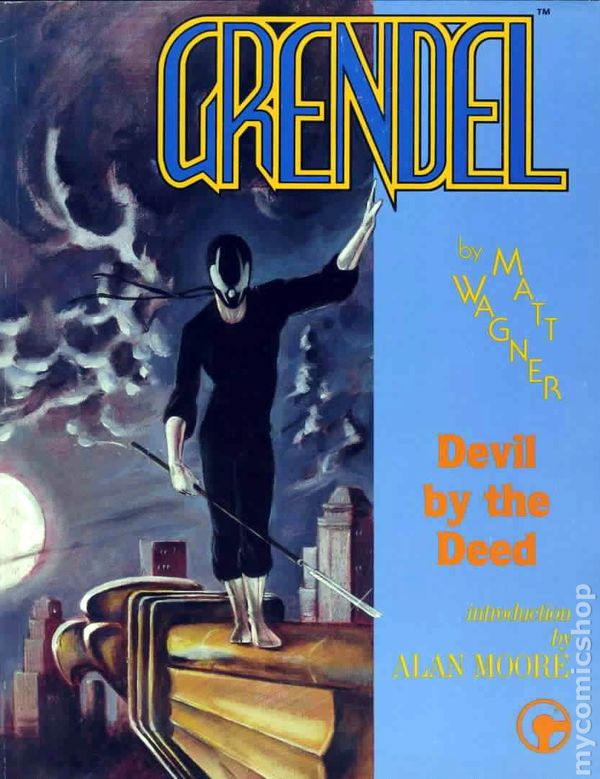
Grendel went on a break for a while while Wagner focused on his other creator-owned series at Comico that was Mage. And then Grendel returned as a backup series in Mage in 1985, and that was collected later as Devil by the Deed. The 1986 edition of Devil by the Deed has an introduction by Alan Moore, so that’s worth seeking out. It’s been recolored a few times. The one in the Grendel omnibus is
black and white and red, which, yeah, we talk about color and recoloring here a lot, but I mean, I think this really does a disservice to the original material, which was drawn to be in color and subtracting all the color, but red just doesn’t seem right. And just a note to the listener as well, the current Dark Horse Master’s edition of Devil by the Deed.
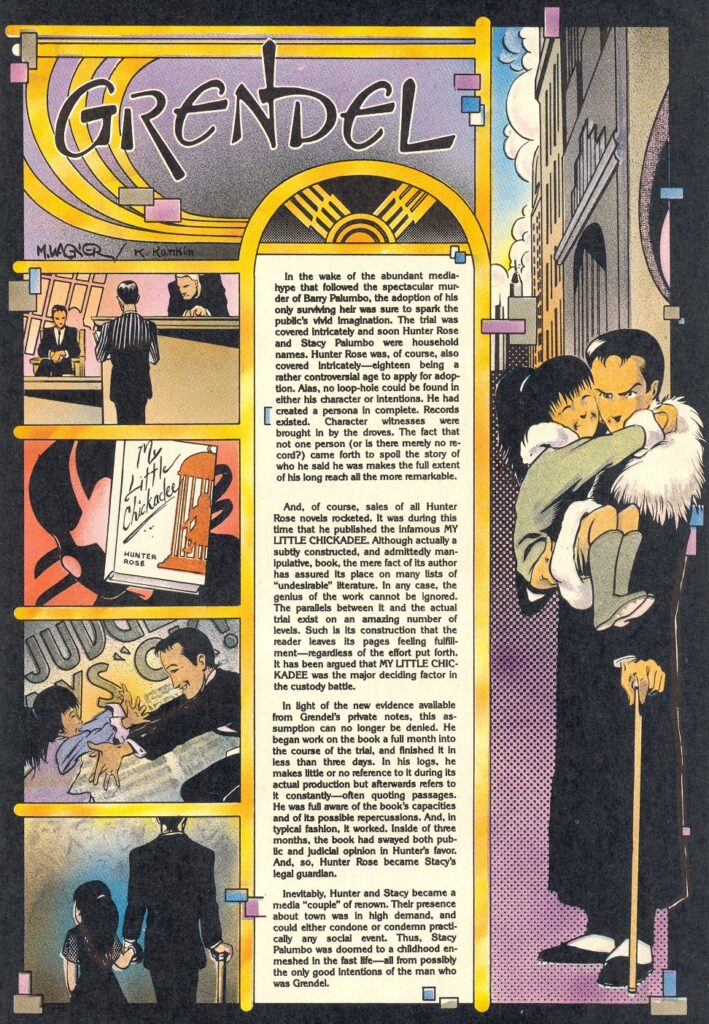
is entirely redrawn and it’s much expanded. It uses a lot of the original text, but it changes some of it and then adds a bunch of new text. I think all the illustrations are redone entirely. So I would recommend getting the Comico version because that one you get the Alan Moore intro. It’s magazine size, like European graphic album sized, which is kind of what all graphic novels, perfect bound comic books back then.
tended to be sized that way. And I paid 12 bucks including shipping on eBay for mine. So, you know, it’s not a bank breaker to get that version. Also mentioned that Omnibus is, if you want to go that route, they are on Hoopla, which you might have free access to through your local library. So if you don’t know about Hoopla, check that out. And it’s on Global Comics, which offers a sort of like Netflix for comics type, all you can eat subscription. So,
So a lot of different ways you can find and enjoy this material.
John (07:57)
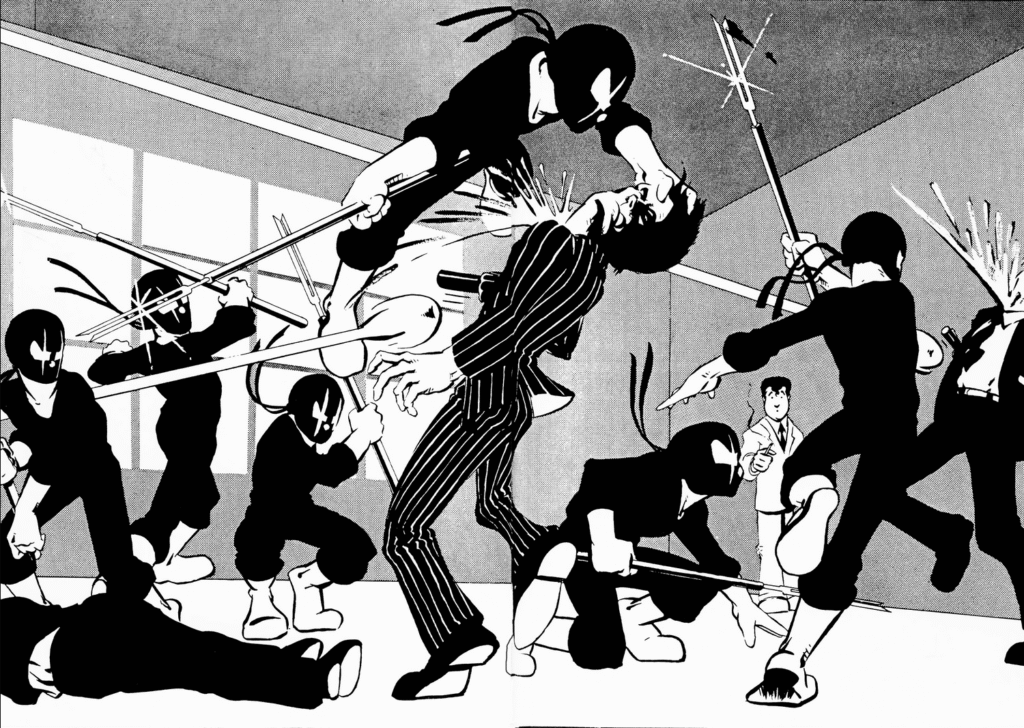
I of course like reading things in publication order if I can help it. And so I know that a lot of places online would probably suggest just reading Devil by the Deed first and skipping past the other stuff, but I thought it was important to read that Comico primer issue, the first appearance, and then those three black and white issues. And I actually like those issues, even though they were abandoned and not completed. I like them. They’re a little bit cartoonier.
than a style I would normally like, but you could kind of see that anime influence there. And they do tell the same story. And I was happy to have that background going into reading Devil by the Deed. And then I read them as backups in the mage issues. I did pick up the collected edition like you did for the Alan Moore intro. And mine was also super cheap. So I mean, these are out there and they’re super available. It’s
Not hard to get this. There’s a couple of printings of it. There’s one with kind of a magenta on the side. That’s the first print. And then there’s one that’s teal. That’s a second print. And as Klint said, I think it’s a whole can of worms to open up the new version, the remastered version. I’m going to read that eventually, but that didn’t come out till like 2023. That’s like way down the list for me.
And so I’m really just trying to read these things chronologically. And we did the first 20 issues of the ongoing series. So that’s a lot of material to bite off. And there’s a couple of different story arcs in there we’ll talk about. But I really enjoyed all of it that we’ve got through so far. And I’m really looking forward to the next half, too.
Klint Finley (09:25)
Yeah, yeah, I agree. I really liked these and so i’ve read the the whole ⁓ grendel saga at least through the the kamiko issues before This time so this is my second time going through the whole the whole thing And ⁓ I think I liked it even better the second time and I I liked it the first time. ⁓ Those three black and white issues they go down real easy. And they’re just they’re better than they have any business being like they’re ⁓
John (09:50)
Agreed.
Klint Finley (09:50)
Like the artwork is just really simple. The story is really simple, but it’s just really well done for what it is and easy to read. Just ⁓ a pleasure. So yeah, like you mentioned, it’s a little… I mean, Wagner’s style has a little bit of a cartooniness to it even today, but his earliest work was definitely a lot more cartoony. And so you’ll see that in these.
I found a comics journal interview where he said he was influenced by primarily on this by anime, Frank Miller and Will Eisner. And I think you can see all of those influences pretty clearly in this stuff. I feel like I can also see some of Vaughn Bode, who was also a big influence on Sam Keith and James O’Barr. And a little bit later in his work, I think you can see some Harvey Kurtzman, who was also an influence on a lot of people.
I noticed this time through that, like Wagner and Keith actually have a pretty similar style. And especially in those earlier years. So I can see why Wagner chose Keith to ink him on mage. And I actually, I can see why, or how Keith got the Sandman job now. Cause Wagner was doing some stuff at DC. He did a demon mini series. It was a spinoff from Alan Moore’s swamp thing.
really early on in the rise of the pre-Vertigo era, like proto-Vertigo stuff that was happening at DC at that time. So I can imagine that, you know, they reached out to Matt Wagner after that and asked him to do Sandman and that he said, no, go get Sam Keith instead. I haven’t seen any story, you know, any interview where Sam Keith or anyone else says that’s how it happened, but
⁓ It ⁓ seems pretty believable that that would be the way it went down. And then of course, Sandman followed that same template that Grendel does of different artists for different story arcs and collecting the story arcs in trade paperbacks, which wasn’t particularly common back then. Seribus was doing it, but not that many people were doing it.
John (11:49)
Yeah, and this, as we mentioned, was presented originally in nine parts, but when you see it presented together as a whole, it’s really seamless. ⁓ Yeah, doesn’t, ⁓ it doesn’t seem, it seems like it was meant to be one thing. It was just broken up to be published that way, but it’s not like in a show or a comic where you’re like hitting a cliffhanger every so many pages and then you go to the next issue. This was all just like one chunk. I think one of the
Klint Finley (11:58)
yeah, double by the deed, yeah.
Right.
John (12:16)
One of the big things, Alan Moore talks about this in his intro. We’ve talked a lot about in our episodes about kind of experimental ways of doing comics and how like David Lloyd, you know, didn’t want to use captions or whatever in V for Vendetta. And Mage, Alan Moore points out, and I haven’t read Mage yet. I want to read it. But Mage apparently only uses word balloons and no captions.
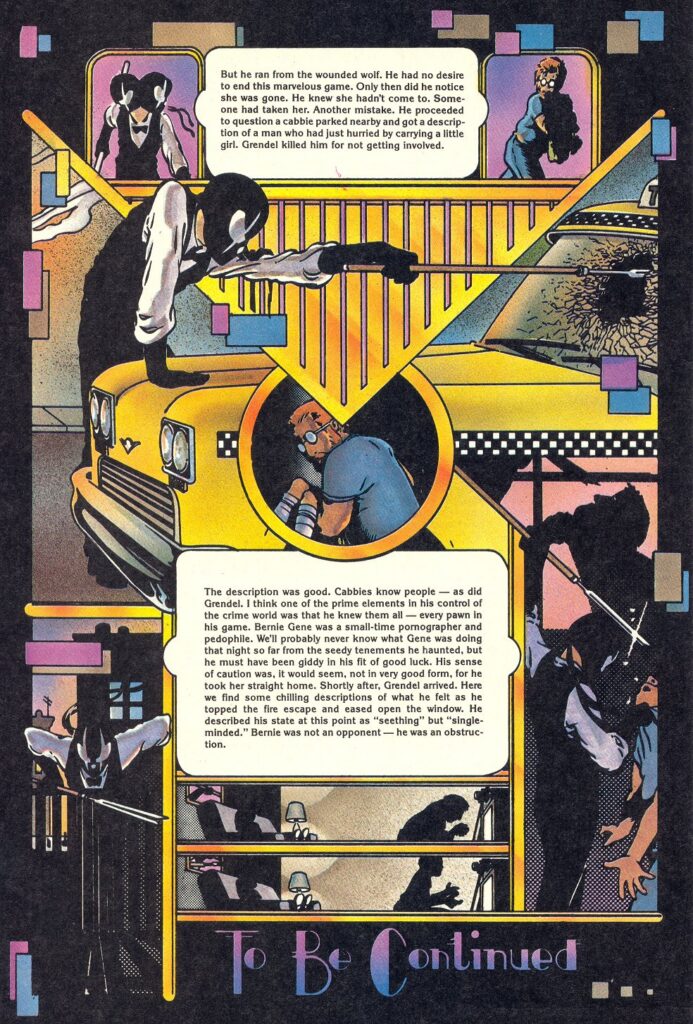
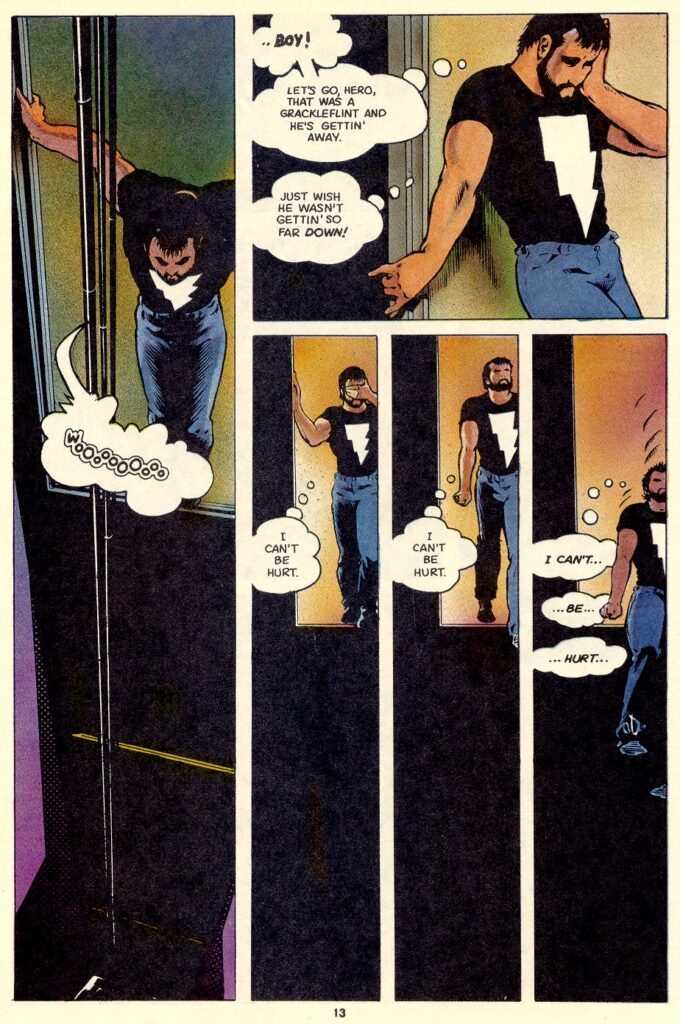
And then Grendel is told entirely in captions with no word balloons, which is really interesting. That’s in Devil by the Deed. The original black and white issues are more of a standard thing. Devil by the Deed is told almost entirely in these one page, almost like stained glass window looking pages that tell the history of this character. it of steps you away from it and presents it in a little bit more mythical
fashion and I really agree with you that without these colors I think this loses a lot. I get why they did it because later on there are a bunch of later Hunter Rose issues that are black, white, and red and that became a popular motif when using that version of Grendel and so he wanted to kind of like bring everything into line but I think this original version with these beautiful colors is just the way to go.
Klint Finley (13:27)
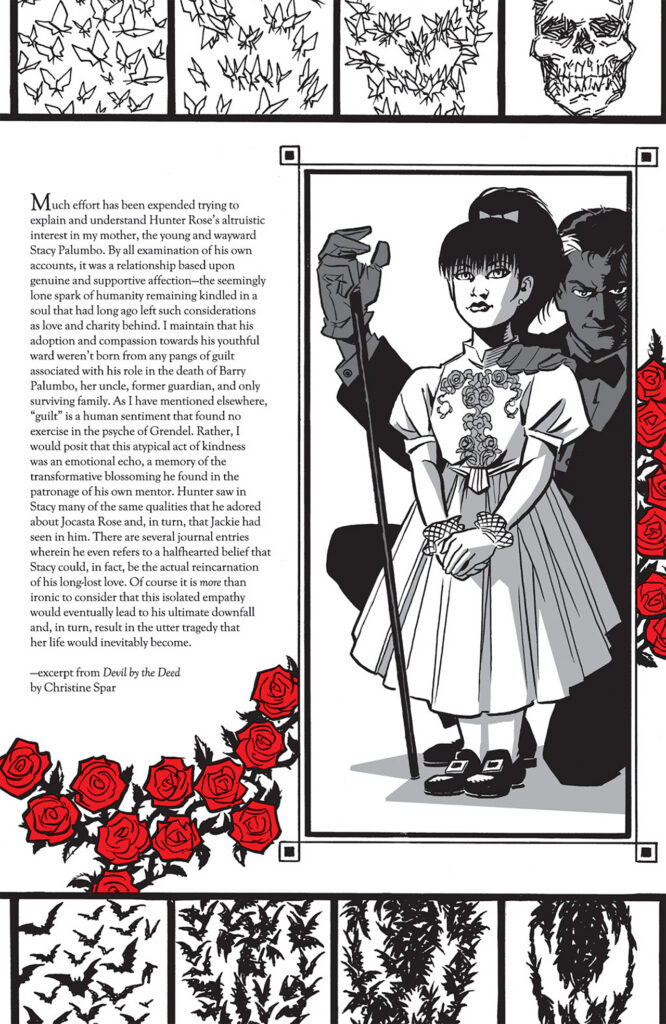
So on the topic of captions versus dialogue, I have read the first few issues of Mage. He does still use word balloons to get a little bit of extra information that you can’t get through dialogue. But yeah, it is, like you said, the opposite of Devil by the Deed, which the text of it is presented as the text from a book also called Devil by the Deed written by one Christine Sparr, who is the
daughter of the original Grendel Hunter Rose’s adopted daughter. she’s the granddaughter of Grendel and minor spoiler for a very old series, she becomes Grendel in the ongoing color Grendel series that we’ll probably talk about in the next episode. And that all gets set up in Devil by the Deeds. That’s another interesting thing to like go back and reread it as you can see how
Christine is already thinking about Grendel and hinting at the idea of Grendel being something more than just one man. And then of course it becomes something much, much bigger later down the road. And we start to learn of Grendel as almost like a spirit that possesses people or maybe something more abstract than that. I don’t think it’s really ever.
⁓ explained fully, which I think is good, that it’s just, it remains sort of mysterious and abstract. ⁓
John (14:52)
Matt Wagner says
in some of his writing about it that he feels like Grendel is about the nature of aggression. so, you know, Grendel himself is kind of just an aggressive spirit that pushes people and possesses people. I like it a lot in the subsequent series, you know, that, like you said, maybe we’ll talk about those in a later issue. But each
each story really handles it in a very different way. And he’s able to kind of push that in different directions. And at first, it’s just kind of moving from character to character. But then, as you mentioned, it gets even bigger than that. It becomes kind of like a global malevolent force at some point. ⁓ It’s really, it’s cool. It’s a cool world. And you could tell that he had a lot of ideas.
Klint Finley (15:33)
Yeah.
John (15:40)
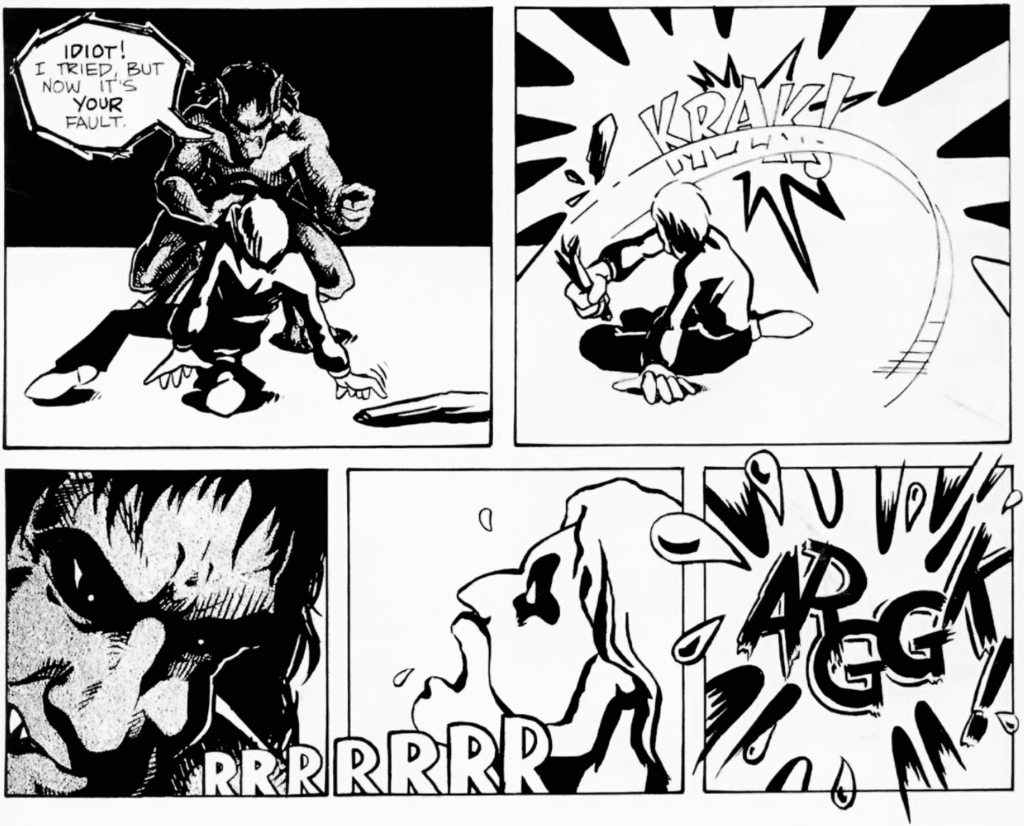
you know, springing even out of the original gate. Like if you look at that, even just the early black and white issues, you know, there’s weird stuff going on in this world. Like ⁓ there’s a werewolf type character that everybody just is cool with. They just accept that he exists in this world. And you’re like, what? What is this? And Argent is kind of a neat counterpoint to Grendel because he resembles the Grendel of myth. But he’s not Grendel. He’s fighting Grendel.
Klint Finley (15:54)
Mm-hmm.
John (16:07)
Our Grendel is a man, albeit a very smart one. But it’s an interesting way to tell a story. There’s a lot of little things in here, and there’s a lot of hints about the time period. The original Grendel is kind of contemporary to when it came out, but then as the story moves forward, we’re going into the future, and so we get to see their idea of a future world.
Klint Finley (16:09)
Yeah.
John (16:33)
and then even further into the future in the later stories.
Klint Finley (16:36)
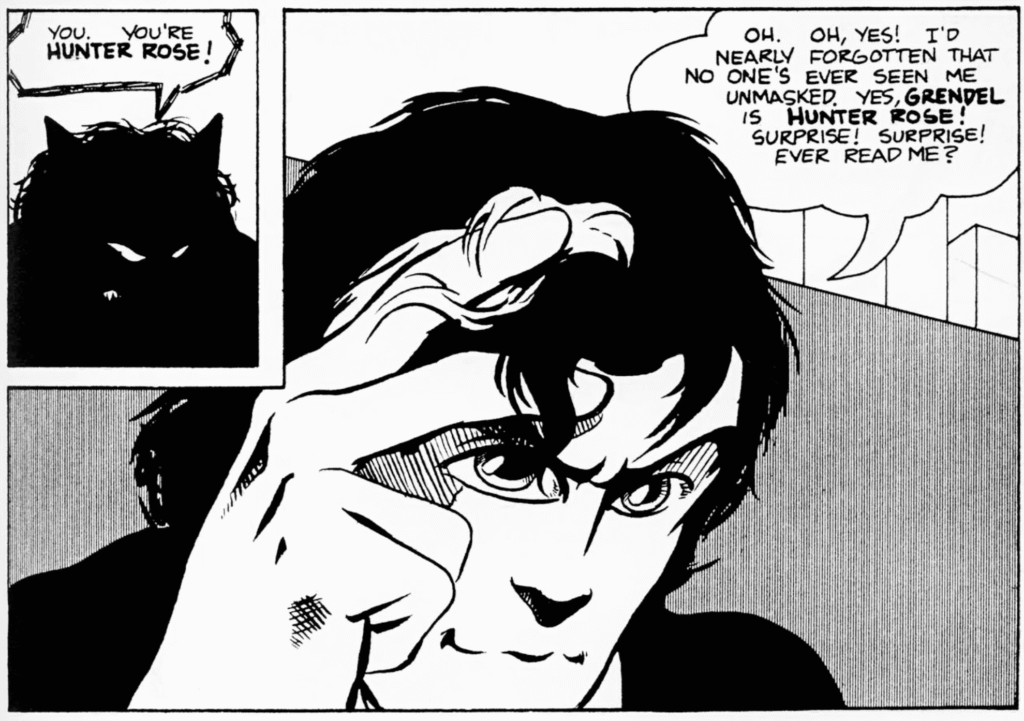
Argent is interesting. It’s part of what I think makes the story work. Even though it’s, you know, it seems so basic of the crime fighter versus the villain. And it could have been really cheesy. But Wagner made some interesting decisions early on. Like one of them is that the first issue of Black and White series
it starts with Hunter and Argent both injured on a roof and Hunter takes his mask off and reveals his secret identity to Argent and starts telling his origin story. He’s like literally and figuratively spilling his guts on this this rooftop. So you know from the beginning that this is a finite story that Hunter Rose’s time is coming to an end at the very beginning and he’s just recounting
his adventures to his ⁓ arch nemesis. And then by making Grendel this like charming and handsome character with, you know, he kind of looks like a superhero. And then Argent looks like a monster. He’s a giant wolf man who’s violent and scary. And he’s the, to the extent that there is a good guy at all in this, that would be Argent.
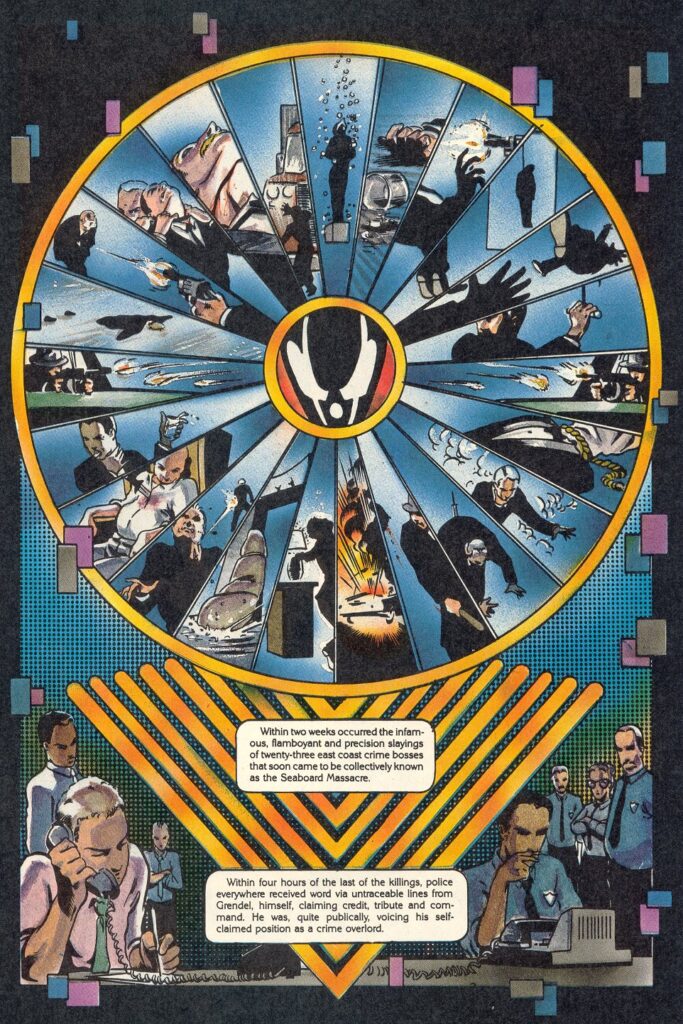
But then it gets complicated further because Grendel is taking over the crime world and he’s forcing out some of the less savory elements of it. In the first Comico primer story, he kills someone who’s trafficking miners and they establish that he has like no tolerance for that type of thing as he’s taking over the underworld of the entire like
East Coast of the United States. So you can kind of see these ways into, just like these blurrings of good and evil. And that was something that Wagner had written later was part of what he was trying to explore. Like the idea that the good and evil are virtually indistinguishable, as he put it, in the eternal cycle between light and dark. I think those are some interesting decisions to make.
what could have otherwise been a pretty bland and cliche story kind of come to life a little bit.
John (18:28)
I also like the idea that Hunter is super smart, but they make a point of saying that that wasn’t really recognized by like the adults in his life. And so this is just what happens when somebody that’s really smart is really bored. And so he’s like, well, what do I do? What do I do with my, with my talents and with my powers? And it’s, it’s kind of interesting that this is what he decides to do, right? He He decides to come up with a whole, whole nother identity and, and
Klint Finley (18:41)
Mm-hmm.
John (18:55)
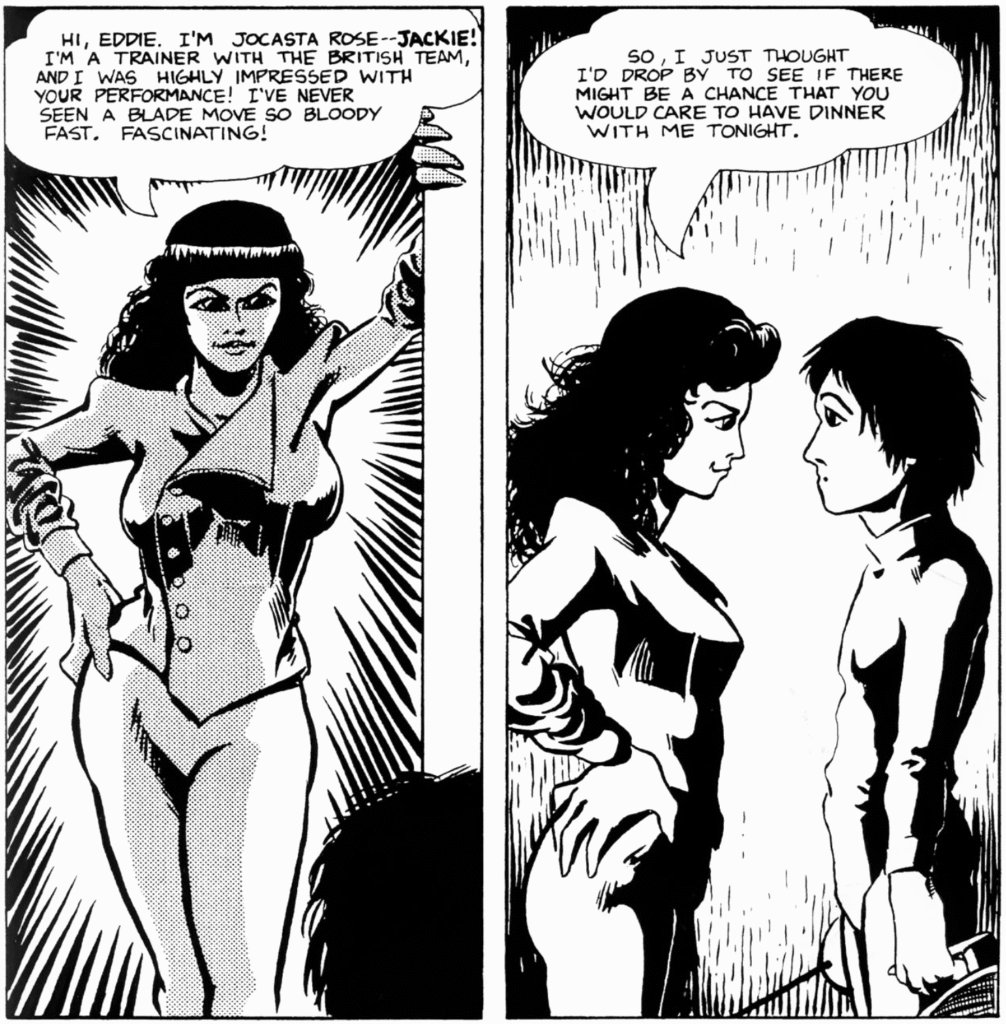
get into the crime business and do all of this, which is heavily influenced by someone he meets when he’s learning to fence. He becomes like a world-class fencer and he meets this woman at 14 years old, right? And he meets this woman that leads him down this path. yeah. ⁓
Klint Finley (19:06)
At 14 years old, yeah.
Yeah, she’s 36 and he’s
14. Yeah. So I was, that’s something I’m curious about because in Devil by the Deed, so this woman’s name is Jacosta Rose. then he says, he never says what his real last name is, but he said he grew up as Eddie, Hunter Rose did. And then he changed his name to Hunter Rose in honor of this woman who changed his life. But in Devil by the Deed, Christine Spar writes that
⁓ She was never able to find any evidence of Jocasta Rose ever existing. So it raises some questions about Hunter as a narrator because everything we know is either told to Argent on that rooftop in the black and white stories or it’s Christine’s research based off of Hunter’s journals. So we don’t know. Was she even real? Did he just make this up?
Or did she maybe use a fake name? Did he use a fake name for her? So there’s, it creates some interesting bits of ambiguity. And it also leaves open the possibility that she was a Grendel before Hunter Rose. Because we say Hunter Rose is the original Grendel. And he describes in the black and white story, I think even coming up with the mask and the name, but.
What we see of Grendel is that it spreads like a virus, an idea virus that tends to seem to spread from reading his writing. That’s how his adopted daughter Stacey turns on him, though she never is identified as a Grendel per se. Then her psychiatrist ends up marrying her and going mad and killing himself.
It seems like he probably read the Hunter journals. And then Christine, of course, reads the journals and becomes Grendel. And then the character that follows her reads the journals as well. So I wonder, you know, if it starts before, so the name Grendel maybe starts with Hunter, but does it go even further back before Hunter to Jocasta and, you know, possibly, you know, further back besides her.
John (21:10)
And I feel like that idea of spreading it continues too, because Christine publishes a mass version of this book about Grendel. And one of the police officers that chasing him also publishes things about Hunter Rose. And shortly thereafter, it becomes more of a mass influence. And so I wonder if there’s a connection there too, that all these people have read about Hunter Rose and it kind of infiltrates their psyche.
Klint Finley (21:38)
Yeah, it’s cool stuff.
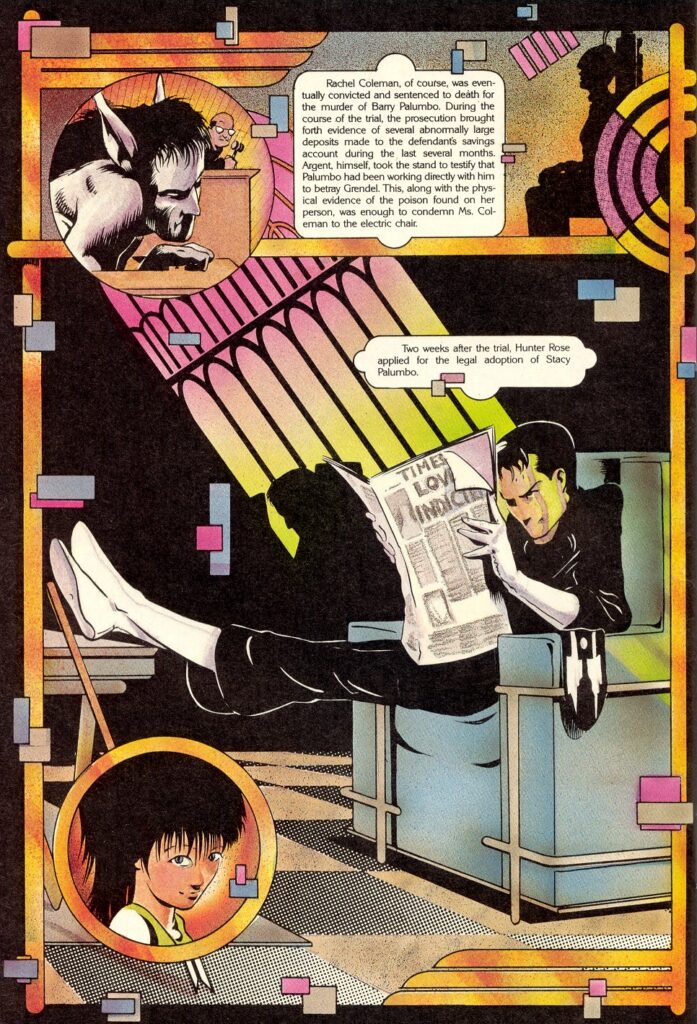
Let’s see. So getting back to Devil by the Deed, I love the art in this. Like you said, it looks like stained glass panels. I think that’s great. I found it ultimately though, a little unsatisfying as a story because it is so zoomed out and it reads like, you just a Wikipedia summary of a larger work. I wish that he had continued.
the story, you know, the beyond just doing the like the fast Cliff Notes almost version of this larger story. Like the first three issues of the Black and White series are condensed into like four pages in Devil by the Deed. So you can kind of imagine how much more the story would have taken up if it was decompressed in that way. Alan Moore had written
asked in his introduction what separates an illustrated story from a comic strip told entirely with captions. And to me, I’m not sure that this is a comic book. think it, to me it is more like illustrated prose. And I think for me, the line there is that the artwork isn’t really telling the story. It’s just the prose telling the story and the artwork enhances the story. It gives it a lot more depth and meaning, but
You don’t need the illustrations to read the comic and they’re additive rather than like foundational, it seems like. But I’m sure there are people who disagree with that. And I think there’s sort of an abstract concept there of whether the art is being used to illustrate a story or to tell a story.
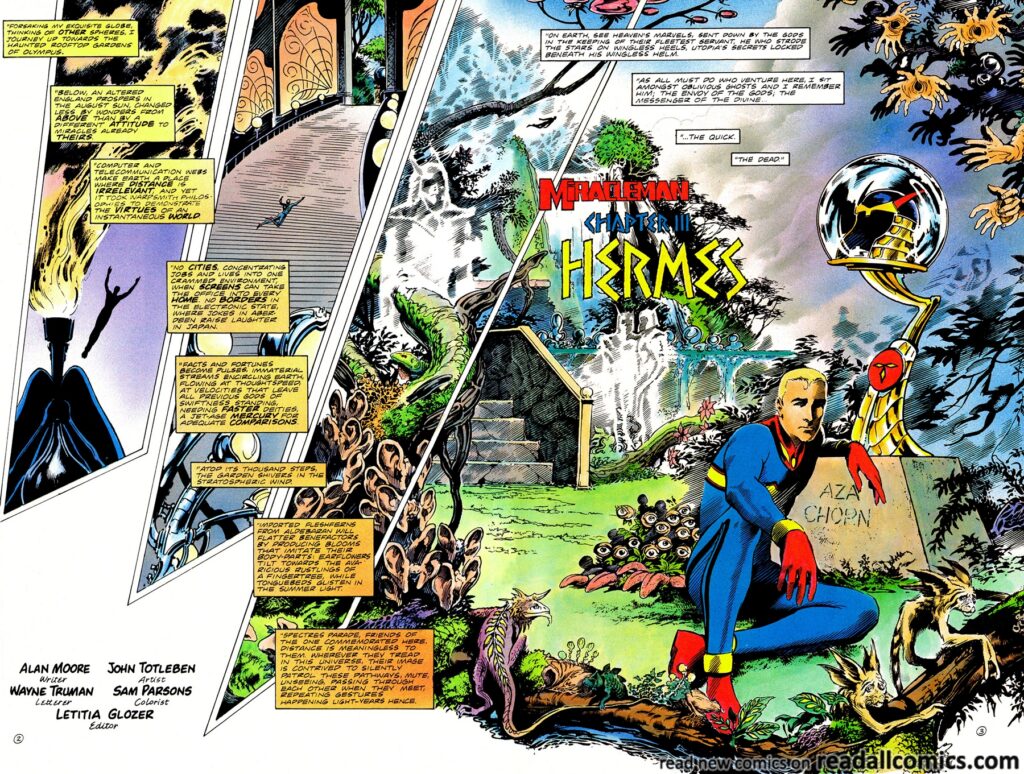
But something else that the suggested by mature readers site had pointed out is that Alan Moore used a similar storytelling technique in the Olympus story arc in Miracle Man, where it’s Miracle Man in the future giving a summary of how he got from the end of the previous issue to where he’s at in the future. And it’s also like a pretty like breakneck speed taking you through
A lot of material that Moore had clearly originally planned on being many, many more issues. And he just wanted to wrap it up and be done with Miracle Man, it seems like. So he just condensed it down into these like the summary style thing. But I haven’t really seen anything else that is like Devil by the Deed in terms of like the whole package of doing the art in that, that particular way, combined with the, with the captions.
It’s an experiment that I just haven’t seen replicated and we’ll see a lot of that kind of experimentation as the series unfolds.
John (24:01)
Are the, you might know this since you’ve already read through, but is the later Hunter Rose stuff more of a standard comic book format when they do the black, white and red issues and they do the stuff, I assume the ones with Batman are more of a standard comic book issue. ⁓
Klint Finley (24:18)
Yeah, I’ve
I have read the batman versus Grendel comics and those are yeah, like standard comics I haven’t read Hardly any of the latter day hunter rose stuff unless you count the the captain wiggins ones In the comico run that we that we’re just getting to or i’m just getting to in this reread I haven’t read black white and red or or any of that stuff yet that’s part of why i’m holding off on reading the master’s edition
of Devil by the Deed as I realized it’s incorporating stuff from some of those latter-day stories. And I don’t want to spoil them by reading essentially summaries of them in this book. I think some of them are pretty standard panel-to-panel comic storytelling. I think some of it is done as additional excerpts from Devil by the Deed, but I’m not sure.
John (25:03)
The Omnibus editions kind of break it up by character. And so they have all the Hunter Rose stuff together and all the Christine Spar stuff together. But I definitely like to see the order that it kind of unfolded in publication. Because some of these things are really far apart. Like I mentioned earlier that the new version of Devil by the Bee didn’t come out until 2023. That’s just a few years ago.
Some artists like to revisit stuff to kind of see their progress. And I do think that it’s interesting that there’s now essentially three versions of Grendel. There’s the black and white series. There’s Devil by the Deed. There’s even the recolored Devil by the Deed. So I guess that’s almost like a fourth. And then there’s now the completely redrawn and expanded version that adds something like 120 pages.
to it, but really even more than that, because as you said, I don’t think any of the original pages survive in it. I think even those ones are redrawn. So while it’s a really cool thing to see how far the creators come and what they can do, for me, it’s not a replacement. I would never tell someone to start there and read that first. I would want them to this version of it, this original version.
Klint Finley (26:12)
Yeah, I agree. And I wish that if he was going to revisit the original Hunter Rose story, that he would have done it as a traditional panel to panel story instead of sticking with the Devil by the Deed summary format. So I would like to see like the whole thing that there’s a trial where Hunter Rose, who’s supposed to be 18 years old,
is adopting a nine-year-old girl, which is not something that you would expect to normally happen in the real world. There’s the continued conflicts with Argent and there’s just a lot of…
of the entire taking over the East Coast crime world. know, it’s another thing that that’s like one page or something in Devil by the Deed. And, you know, that’s probably like a six story arc in a normal comic. ⁓ I would like
John (27:00)
Well, in my head, these
are all comics later that come out later that they expand upon. And some of it probably is in some of later stuff, but I just haven’t gotten there yet.
Klint Finley (27:07)
Yeah.
Yeah, you get a little bit of that in the Wiggins stories, and maybe in Black, White and Red that I haven’t read yet, but I’m not sure how much of that actually comes through. So I wanted to talk a little bit about Wagner and Comico as well. Did you have anything else you wanted to say about Grendel before we move on to that?
John (27:28)
No,
I think I’ll hold the rest of what I’ve got for later episodes because like I said, went up, at least I went up to issue 20 and I think you may have even went past that at this point. And then we’ll, you know, we’ll just keep going until we’ve read the whole thing. But there’s some stuff in those issues from the ongoing that I’m definitely down to talk about. But if we’re stopping at Devil by the Deed here, I think I’m good.
Klint Finley (27:50)
Yeah, no, I actually stopped at 16 because I wanted to, uh, jump ahead and read, devil child, which is the story about Stacy, the adopted daughter, I mean, I’ll kind of go back to that of it’s, it’s pretty weird that an 18 year old wants to spend a lot of time with this nine year old and ends up adopting her. And so there’s, people have pointed out that it, seems, you know, creepy. And I think.
That’s part of why Matt Wagner had Grendel killing the human traffickers who trafficked in Underage Girls. think it was Wagner trying to tell us, Hunter isn’t being a predator here towards Stacey. He has an authentic connection to her. In later stories, I know he actually suggests that he thinks that Stacey might be the reincarnation, though, of Jocasta Rose.
which I think is Wagner again, it’s, yeah, exactly. It sounds, I think it was Wagner trying to like explain, give like a rational explanation to his interest in Stacy, but it ends up digging his self, digging himself a deeper hole. Cause that sounds like grooming. But I would think that it’s kind of more like he probably sees her as the daughter that he and Jocasta never had is what I.
John (28:40)
problematic.
Klint Finley (29:01)
what I actually think is probably going on there, or what Wagner is probably trying to get at, didn’t quite, didn’t communicate that well, I think. So it’s, it’s… ⁓
John (29:12)
Well, he’s also really
intelligent and really developed. So he probably like, you know, feels a lot older than he is. And so, and also, and also he has a status in society because he’s a popular author. and he’s rich and about a hundred rows. Yeah. So, so like, so it would be, ⁓ I think it would be more likely to see that kind of thing in the real world. Cause if, if Joe Schmo, who’s 18 wants to adopt a nine year old, like the court’s going to go, what are you?
Klint Finley (29:18)
Yeah.
We’re talking about Hunter Rose here. ⁓ Wagner is also popular out there.
John (29:40)
What are you doing? Like, that’s not a thing that we do. But Mr. Famous and Rich walks in and says, I’ll take care of this. They just kind of give it a pass. And I think we do that in society. We give that a pass for rich people and for, you know, people that have excelled. And so I can kind of buy it. Like it didn’t. But it was a little bit strange. And it’s strange, too, the girl also has a relationship with Argent.
And so there’s this whole pull between these two figures, and that ends up factoring heavily into why everything comes to an end. So it’s an interesting shell for a story that he came up with. I feel like there were a lot of ideas swirling around in there.
Klint Finley (30:20)
Yeah, yeah, it’s fascinating and just keeps keep sprawling out into more. So we’ll talk about the rest of the series, but there are a couple of things I wanted to touch on here. It’s like kind of mostly just about Comico itself, because there’s just a lot of names that came out of Comico that become important throughout the Dark Age. So it was founded in 1982 by Jerry Javinko and Bill
⁓ Cousin Nota, but they kind of just seem like they fade into the background pretty quickly. And the company is better known for the people that they hired, to, run things. So Wagner is one of them. He goes on to become not just, one of their star creators, but he was the editor of Comico Primer starting with issue four. So he’s actually the one who edited the issue that introduces us to Sam Keith and the Max, which is issue five.

They also hired Bob Shrek, Diane Schutz and Shelley Bond, ⁓ back then known as Shelley Roebuck. So Shrek and Schutz would end up going to Dark Horse after Comico declared bankruptcy and they kind of helped make Dark Horse become what it was in the 90s. I don’t want to take away from what Mike Richardson accomplished in the other early…
People at Dark Horse, but when it really started to come into its own as the thing that we all know It basically coincides with with Shrek and Shutz Going there During the the manhunter episode. I mentioned that Archie Goodwin was one of the most beloved and respected editors in comics Shutz is another one just an enormously important figure at Comico and at Dark Horse and You know just for the the Dark Age of comics at large Wagner also married her sister
little bit of trivia there. And then Shelley Bond took over Comico at a very young age after Shrek and Shutt’s left. became the, I don’t know if her title was editor in chief, but that was the role that she was basically thrust into, kind of just fresh out of college. And, you know, she did her best at it. And then after that, she went to work for Karen Berger.
at Vertigo when Vertigo was first launching. And she ended up running Vertigo for a while after, after Berger departed DC. So in a way, Komiko is a predecessor to both Vertigo and to Dark Horse. And then Shrek went on to found ⁓ Oni Press and Legendary Comics. there’s, know, Komiko is long gone now. You know, it has this impressive legacy.
And that’s not even to mention a lot of the creators who were involved. So in addition to Sam Keith and Matt Wagner, there’s William Messner Loebs, Chuck Dixon, Bill Willingham, Steven T. Siegel, Tim Sale. James Robinson was supposed to do some Grendel work there early in his career. Mike Allred and Siegel had a never completed project called Jaguar Stories that was supposed to be published by Comico in the Shelley Bond era.
So you can see how a lot of those, those, that talent became the talent that at Dark Horse ⁓ Robinson and Wagner did Terminator stuff at Dark Horse pretty early on. And, Allred and Siegel and Wagner all were involved in, things at Vertigo. some cool, legacy that came out of all of that.
And we’ve kind of mentioned a couple of times different places, Sacramento and Michigan, that really punch above their weight class when it comes to comic book talent. So I’ll point out here, Matt Wagner lives here where I do, Portland, Oregon. He didn’t grow up here though. He’s from Pennsylvania. It kind of seems like Portland is a place that doesn’t necessarily produce a lot of talent, but just attracts a lot of talent here. Though the founder of DC Comics, Malcolm Wheeler Nicholson actually grew up in Portland before.
He went to the military and then ended up in New York starting DC. anyway, it’s a, there’s a bunch of companies here, Dark Horse, Oni, Image Comics moved their headquarters here. This has kind of become a, secondary comic book hub besides New York City. And a lot of that has to do with Dark Horse and with, again, with them hiring Shrek and Schutz to turn it into like, you know, the amazing company that it became.
know, Oni basically ended up spinning out a dark horse. The Pander brothers, who are going to be, will be introduced to next time when we talk about the next Grendel story arc. They lived here even at that time in the eighties and as far as I know, still do. So it’s a, there’s a deep Portland connection here to ⁓ the world of Grendel.
And so yeah, thanks for coming to my Ted talk. Well, anything else before we wrap up?
John (34:43)
haha
No, just to be continued, I feel like there’s at least three more Agrendel episodes in this at some point here. Because we want to do the whole thing. We want to get all the way to the current stuff. I think the last stuff is from like 2024.
the first part of that Devil’s Crucible Defiance came out in 24 and then there’s supposed to be two more parts ⁓ that have not yet been released, but I suppose that those will be forthcoming.
Klint Finley (35:07)
Okay.
Yeah, yeah, so he’s still.
John (35:13)
And all the new
stuff has art by Wagner and then has colors by his son, which I think is kind of cool. I don’t know how far back you have to go for them to start working together or how old his son is, but all the modern stuff is colored by him. And so that’s cool that they get to work together. And most of the new stuff is, you know, spun out of that future storyline that we see.
In the later Comico issues and then in the dark horse stuff later on
Klint Finley (35:42)
Yeah. Awesome. Well, thanks for joining me again and we’ll see all of you next time when we will either be continuing with Grendel or maybe we’ll switch things up and do Ronin. Tune in to find out.