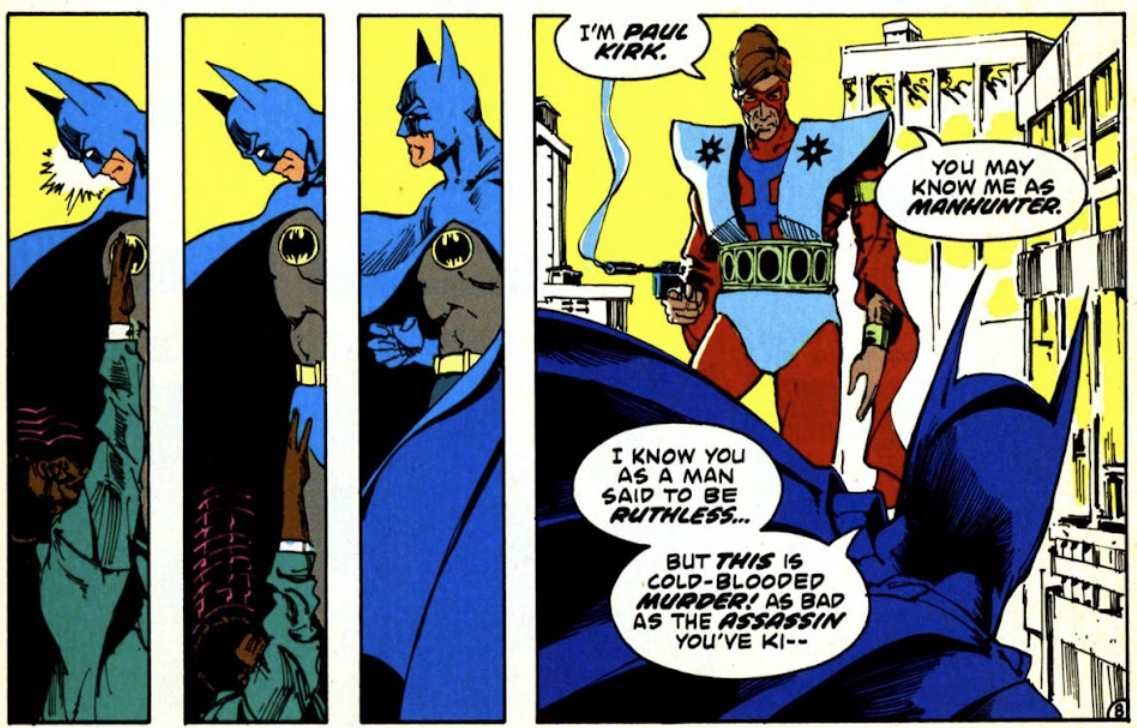
This episode we dive into Manhunter by Archie Goodwin and Walt Simonson. This was essentially a Dark Age comic that happened to come out in the early Bronze Age (1973). This comic was ahead of its time in many ways, including:
– Simonson’s cinematic art technique that pre-dated Frank Miller’s similar work on Daredevil.
– A grim ‘n gritty reboot of a Golden Age character.
– An anti-hero willing to use deadly force.
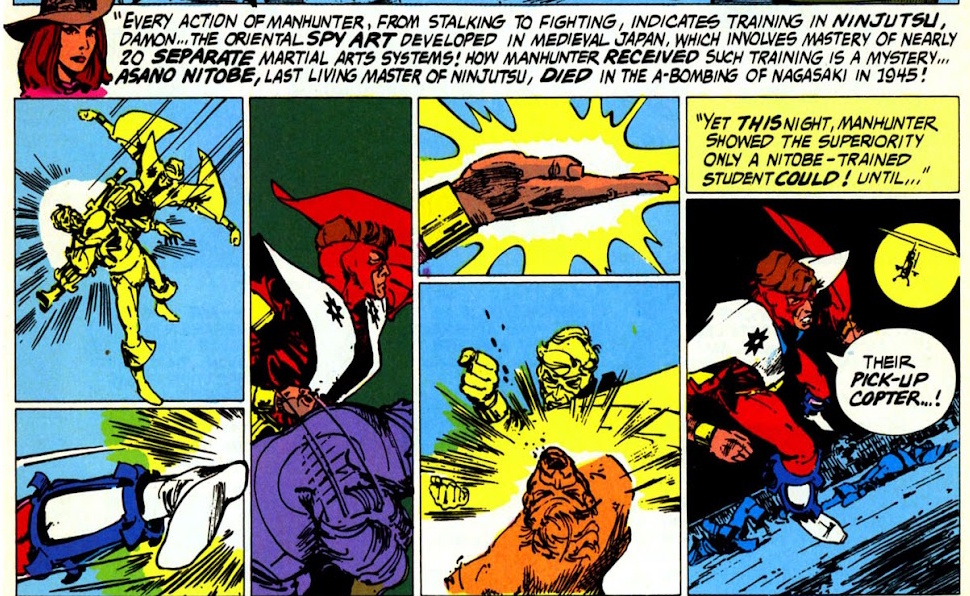
– Ninjas, years before Frank Miller and Larry Hama used them in Daredevil and GI Joe.
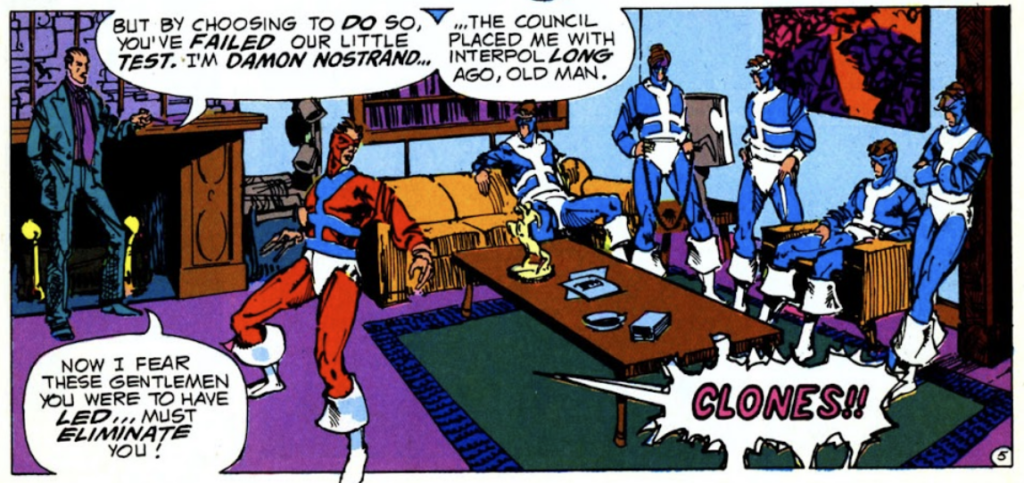
– Clones!
– A “healing factor” before it was ever established that Wolverine had one (let alone that it was called that).
– A finite story with a definitive ending.
Also: The Sewer Mutant print zine is coming! The theme is cyberpunk. I’m working on an article on OMAC and Deathlok. John’s working on articles on Death’s Head and John Bergin’s Golgothika. And we might do a tie-in episode on Machine Man. If you’d like to contribute an article, artwork, or short comic, email me pitches at klintfinley at gmail.com. The deadline will be August 15th, with a goal of publishing this fall.
Subscribe to the podcast feed or find it on Spotify, Apple Podcasts, YouTube, or your favorite podcast app.
Credits:
Credits:
Hosts: Klint Finley and John Ekleberry
Music: Krudler
Mentioned in this episode:
– Manhunter was originally serialized in Detective Comics issues 437 through 443. A a black and white oversized edition collection was published by Excalibur Enterprises in 1979. The then in color in 1984, then with a previously unpublished silent story in 1999, and most recently in a hardcover “Deluxe Edition” in 2021.
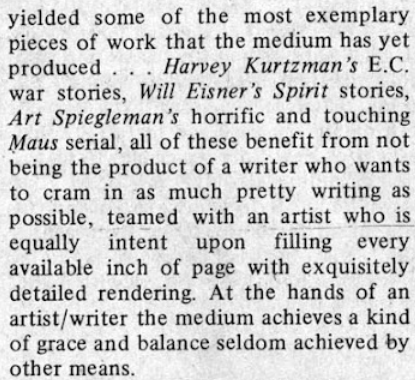
– Alan Moore’s list of notable comic books appears in the essay “The Importance of Being Frank” in The Daredevils issue 1 from Marvel UK. That list was: Jim Steranko’s Nick Fury stories, Neil Adams’s Dead Man, Jim Starlin’s Warlock, Barry Windsor Smith’s Conan, Harvey Kurtzman’s war stories, Will Eisner’s The Spirit, and Art Spiegelman’s Maus (then being serialized in RAW).
– American Comic Book Chronicles, specifically the 1970s volume.
– Secret Society of Super Villains featured a clone of Manhunter. The series was co-created by the late Gerry Conway, who recently passed away. RIP.
– Christine St. Claire appeared in several issues of The Power Company starting in 2002 and has not been seen since as far as I know.
– See Wikipedia for a full list of Manhunter reboots. One notable one included Sam Kieth as an inker in 1988.
Rush transcript:
Klint Finley (00:35)
Welcome to Sewer Mutant, the comic book podcast for Weirdos Like You. Our theme music is by Krudler and you can find more of his work at krudler.bandcamp.com. I’m your host, Finley, and I’m joined as always by my cohost, John Ekleberry. How are you today, John?
John (00:49)
I’m great, always glad to be here.
Klint Finley (00:51)
Yeah, so today we’re continuing our prehistory of the Dark Age of comic books by looking at Manhunter by Archie Goodwin and Walt Simonson.
But first, let’s break the ice. ⁓ So, John, we talked about movies last time and talked about some other non-comics things. I was wondering, are you a music fan and do you have a favorite album or two?
John (01:12)
⁓ I’m not a huge music guy. think most of my exposure to music is through film, ⁓ soundtracks and whatnot. if I had to pick my favorite band is Eve six. I really liked their lyrics. I think they’re fun. but no, I’m not, I’m not huge into music in, in high school. was kind of a listening to rock and, know, wearing black skinny jeans and going to rock concerts kind of thing, you know, Metallica and Oz Fest and all of that. ⁓ but I don’t listen to a ton of that anymore.
How about you?
Klint Finley (01:38)
Yeah, so I, for me, I am a big music fan and for me it actually all started with The Crow. And so I have three favorite albums that are tied and they all have a tie back to The Crow soundtrack. So one of them is Nine Inch Nails, The Downward Spiral. And obviously Nine Inch Nails was on The Crow soundtrack doing Dead Souls.
The Jesus and Mary Chain, Psycho Candy, also one my very favorites. They were also on the Crow soundtrack. And Joy Division, Unknown Pleasures is another top favorite. And Dead Souls by Nine-ish Nails was actually a cover of a Joy Division song. And in the Crow comic book, there’s Joy Division references throughout it, a little drawing of Ian Curtis and the caliber issue one.
Yeah, all of it for me just really starts with the crow. That’s what got me into music, got me into a lot of stuff really.
John (02:30)
Well, The Crow had a fabulous soundtrack. That’s probably one of the best movie soundtracks, know, rock driven. And like you, I checked out some of the other stuff that was referenced in both the book and the bands that played on the movie soundtrack. So Unknown Pleasures is a fantastic album. I like both of the Joy Division albums are fantastic and the new order albums that come later are good too. But yeah, a lot of my music consumption comes through references from other things, from books or from movies.
Klint Finley (02:58)
Yeah, yeah, totally. Do you have a favorite film soundtrack?
John (03:01)
Favorite, well, probably The Crow. If I had to do in the, I mean, I like movie scores too. I mean, the score to Conan the Barbarian is fantastic. The score to Gladiator is really good. There’s a lot of good ones. As far as soundtracks that use like pop songs, the Tarantino soundtracks, they’re both really good. I used to spin the Reservoir Dogs and Pulp Fiction soundtracks in my car a lot. But beyond that, I’m not sure what else it would be.
Do you have a movie soundtrack that’s off the beaten path?
Klint Finley (03:28)
I don’t know about off the beaten path. I mean, yeah, the crow is easily, you know, hands down for me, my, my favorite, but, ⁓ there’s a bunch of other good ones. ⁓ lost highway, natural born killers, gross point blank has a lot of great stuff on it. Like 80s alternative tunes.
John (03:43)
Even The Crow 2, which was not a fabulous movie, had a pretty good soundtrack. So they kind of continued that lineage and got a whole lot of artists of the day in to come and do their renditions of covers of older stuff and of their own stuff.
Klint Finley (03:56)
Yeah, the third Crow movie also, the soundtrack’s not bad.
John (04:00)
Yeah, true. Got some Rob Zombie on there and a few other things. It’s pretty good.
Klint Finley (04:05)
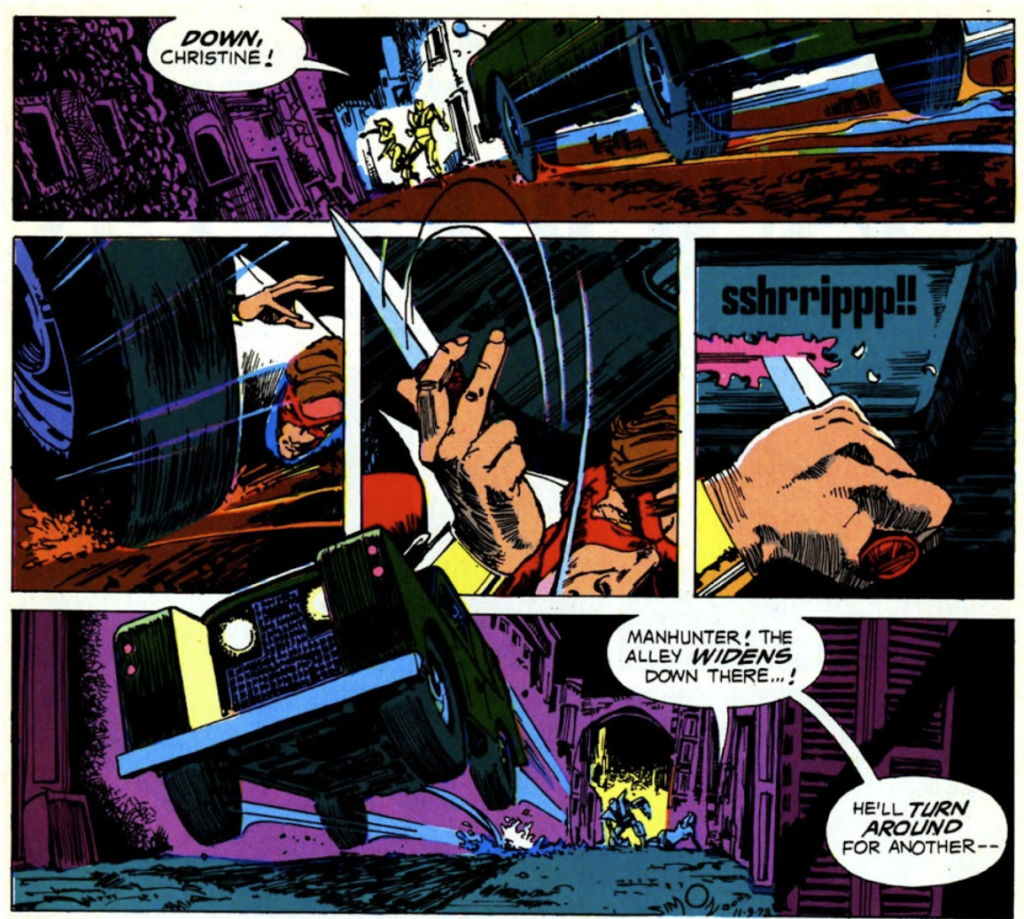
Yeah. All right. So let’s get into Manhunter. So this was first published in 1973, so we’re jumping backwards before even Alex Center here. It was a backup series in Detective Comics starting with issue 437. So this is the early Bronze Age, the same year as the death of Gwen Stacy, the first appearance of Shang-Chi, master of Kung Fu.
and the beginnings of Jim Starlin’s run on Captain Marvel. So had you heard of this one before?
John (04:33)
I hadn’t, no. When you mentioned it, I decided to kind of look into it and then I laughed when I read that Alan Moore piece in the Daredevils that mentioned it and I was like, this is also probably where you heard about it. And yeah, I loved it. I thought it ⁓ was pretty great.
Klint Finley (04:49)
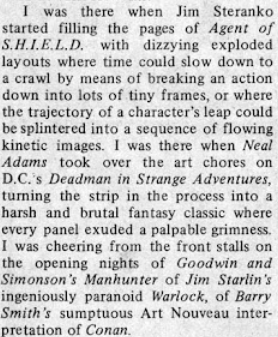
Yeah, so I had heard of it before, but it wasn’t really fully on my radar until I read that Alan Moore list. So in the first issue of Daredevils, he does an essay on Frank Miller, and it includes a couple sort of lists of what he thought were basically the best of comics up to that point. So that list includes Neil Adams as Dead Man,
Jim Starlin’s Warlock, Jim Steranko’s Nick Fury stories, Barry Wintersmith’s Conan work, Will Eisner’s The Spirit, and Bernie Kriegstein’s Master Race. so I read that and that made me decide to grab, well, I mean, I read them on DC Infinite, but to read both this, Man Hunter, and the Neil Adams Dead Man run.
What struck me though really about this was how much it felt like it predicted what Frank Miller would do in Daredevil in a lot of different ways. So I thought it was worth grabbing it and looking at it. was published a lot earlier than most of what we’ve been talking about, but it was reprinted in 1984 as the Manhunter special. And so was just right on the verge of the dark age.
during Simonson’s 1980s Thor run. And as we talked about in the last episode, publishers were starting to recognize that there was a market for certain books in the direct market, the comic book store market. So they reprinted, Marvel reprinted Jim Starlin’s Warlock for the direct market. DC did this book in 84, and then in 1985, they reprinted Neil Adams’ Dead Man Run. So there is a little bit of a tie into the Dark Age. This isn’t just some
a predecessor, but it was something that for a lot of people, the first time they saw it was actually probably during the 80s when it was reprinted.
John (06:31)
There’s definitely some similarities with some of the other stuff that we’ve looked at. We covered Warrior Magazine, which was primarily a anthology strip that was in black and white. And this is also an anthology because it comes in eight page segments. There weren’t a lot of trade paperbacks back then and Manhunter won some awards after it came out. And in 1979, there was an oversized black and white
collection of it published. And oddly, it’s published by Excalibur Enterprises. It’s not published by DC. And they didn’t publish anything else. And so all I can think is that DC gave their blessing for Goodwin and Simonson to just kind of publish their own cheap edition of it. That’s still out there for collectors. And then like you said, five years later, DC did a collected reprint of it.
And then later in 1999, they did another collected edition where they added a final story that Simonson did. Simonson and Goodwin had talked about maybe doing one more story, but they couldn’t really figure out, you know, how to do that without, you know, kind of messing up the end of the original. And then they finally kind of hashed it out and then Goodwin died. And Simonson decided to do it as a silent story. And so that story is included in
both the 99 Special Edition and the 2021 hardcover, which is actually what I read when I read it. it’s nice because that hardcover collects stuff from the earlier collected editions. So there’s a good forward by Goodwin that talks about the making of the book. And then there’s an afterward by Simonson that’s also got some interesting tidbits in it.
Klint Finley (08:08)
Yeah, yeah. So this is some very early work by Simonson. So in the first episode of this season, I had mentioned that I thought Simonson was maybe a little underrated in his influence on a lot of the later dark age stuff. And so I was actually just there referring more to his work on X Factor, particularly the covers, and how that was probably influential to the image style of really in your face graphic storytelling.
And then also a little bit of how the Beta Ray Bill saga in Thor was a pretty early template for doing one of those, like the big shakeups of a character and the status quo of a book that became really common in the Dark Age. So that’s more of what I was thinking of was like 80s Walt Simonson.
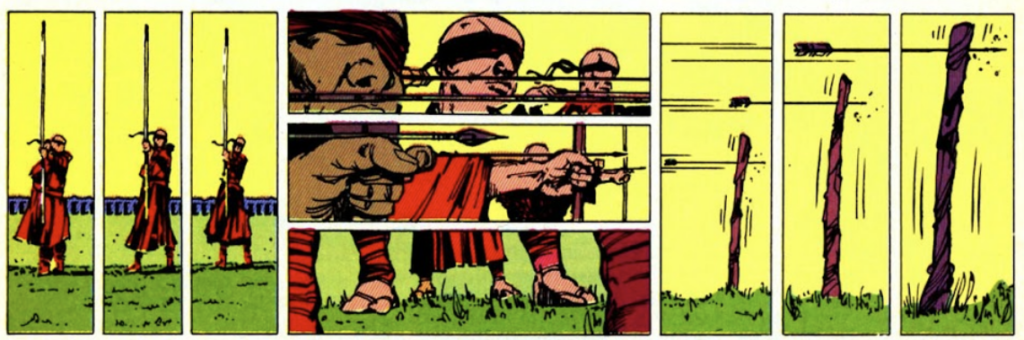
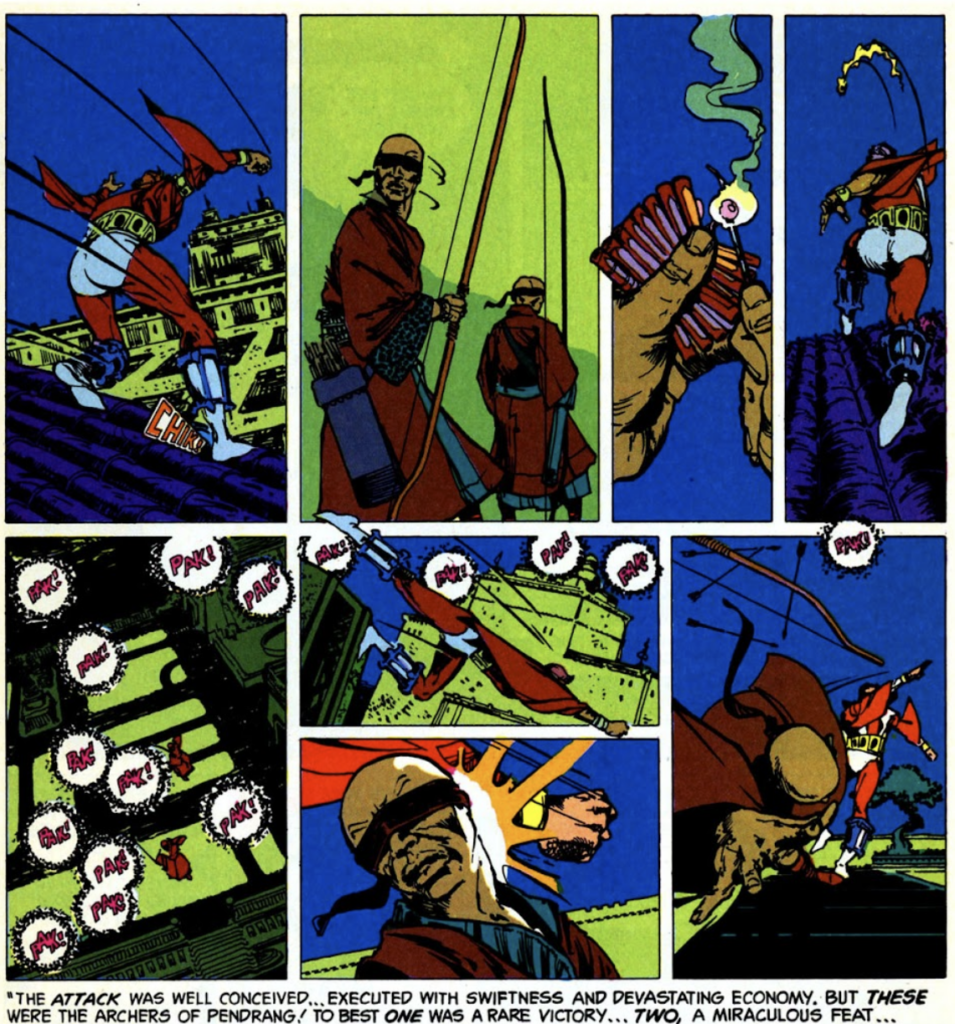
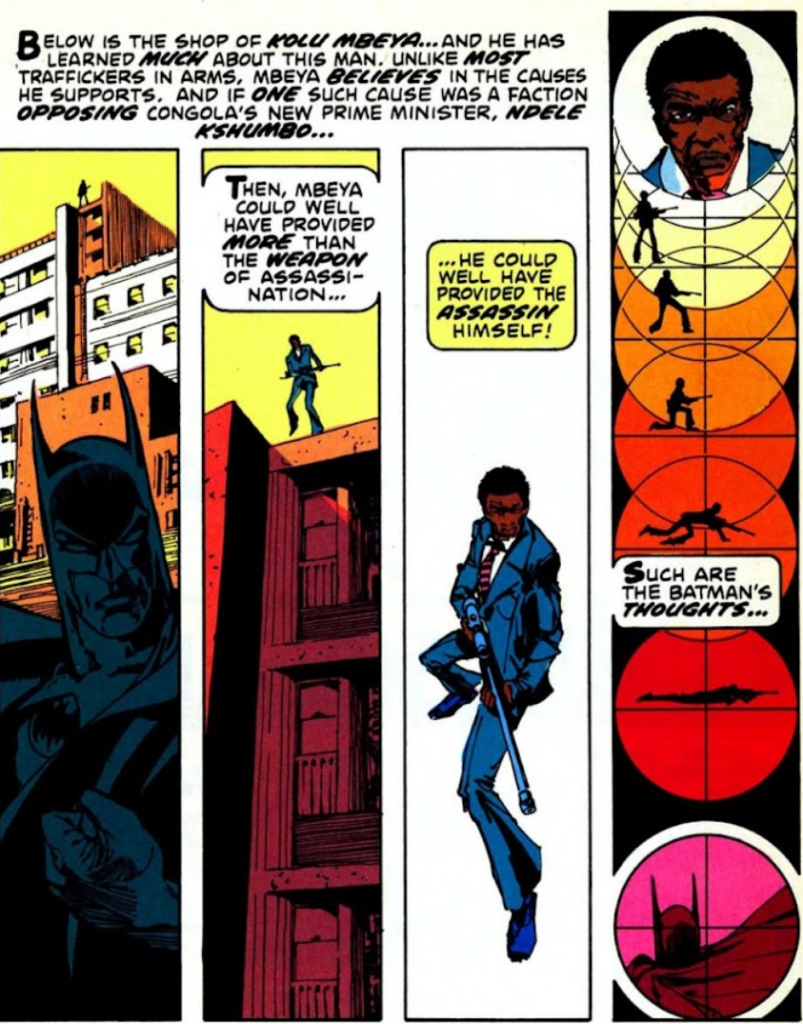
Like I said, this was barely on my radar before. guess I don’t think I had really realized. how good it was and how early it was looking at it. I mean, he’s really coming out the gate, again, doing a lot of what Frank Miller would end up doing. A lot of really dense pages with tons of panels, a lot of graphic storytelling without necessarily relying on exposition to explain what’s happening. There’s a fair amount of exposition, but there’s also a lot of sequences that are just entirely wordless and I carry the story that way. A lot of skinny vertical panels that is something else I came to associate with Frank Miller’s Daredevil run.
so, and Goodwin was also, he was pretty well established by this point, having been a writer and editor for the Warren magazines. He also did freelance writing for newspaper comic strips. But this also put him on the map in a really new way. And he’s really one of the most famous comic editors of all time and one of the most beloved figures in the comic book industry and a big figure in the dark age of comics. He was an editor of Black and White Comics magazines. He was the editor of Marvel’s Epic Line, which is where their original mature readers and creator-owned titles lived. He co-created Luke Cage, which I hadn’t realized before.
And then as an editor at DC during the 90s, he worked on things like Starman and Long Halloween. So just a lot of major points of Dark Age comic book history, he’s there for it. Or, you know, the kind of precursor, a lot of the precursor stuff, like the, Warren magazines, he was deeply involved in that as well, starting in the late 60s. So just a towering figure there. And, ⁓
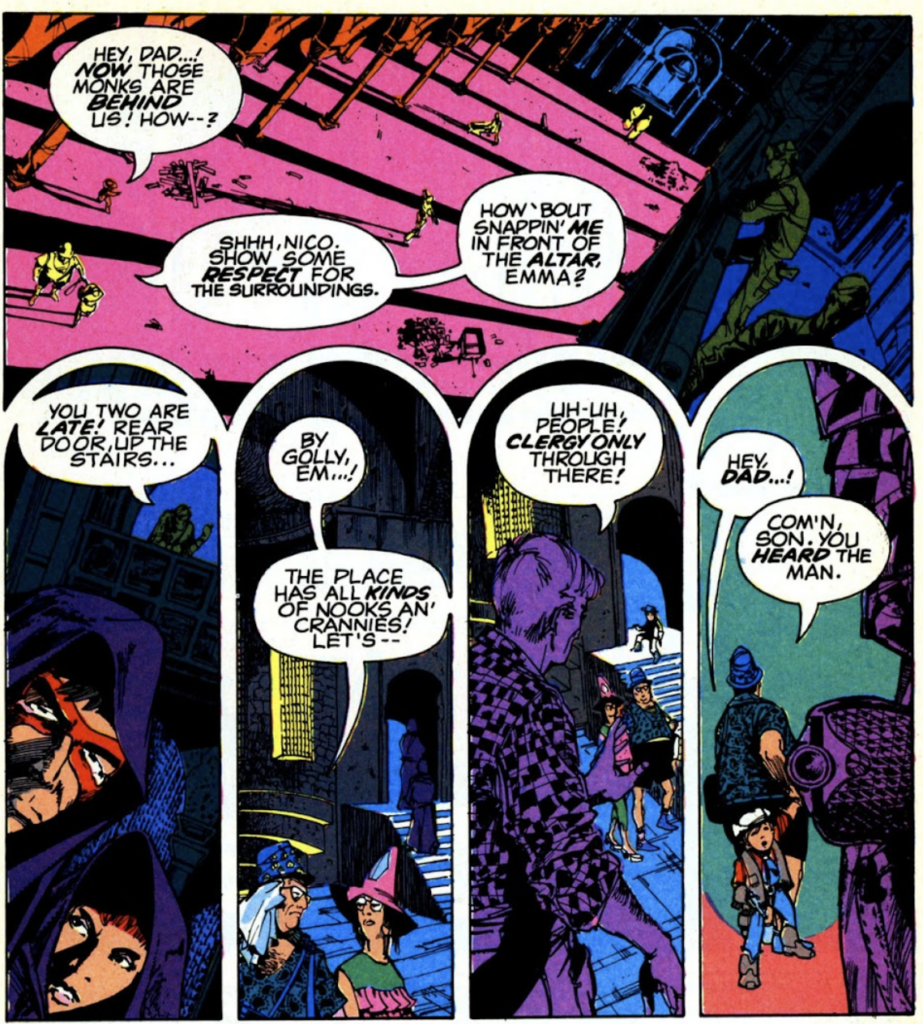
This is, guess, what really catapulted his name to the tongues of comic book fandom. And like you said, they won a bunch of awards. So Goodwin and Simonson won Best Individual Short Story for The Himalayan Incident, which is the first chapter of the series. And Goodwin won Best Writer. And Simonson tied with Jim Starlin for Best New Talent.
That was all in 1973. And then in 1974, they won again for Best Individual Short Story for Cathedral Perilous and Best Individual Story for Gauter Damerung. And Goodwin won Best Writer again. I can’t believe that Simonson didn’t win Best Penciler at any point for any of this, but there you go.
John (11:20)
Yeah,
his work is really good. It’s earlier than what I was familiar with. I was more familiar, like you said, with the X Factor and Thor stuff. And Simonson certainly grew into his own style and very bombastic, big double page spreads and things. But ⁓ this I could see more Neil Adams in. So he was still kind of developing his style. And maybe part of that’s that he was, you know, this was a backup in a Batman book. And that was maybe the kind of the prevailing style at the time.
Not to take anything away from it. think the work is really good, but I did feel like I saw some Neil Adams there in the manhunter style.
Klint Finley (11:54)
Yeah, for sure. Though I really found that he was a lot more fully formed than I was expecting there. And I looked at some of his actual, his later work before the Beta Ray Bill storyline, some of his late 70s Star Wars stuff. And that is less flavorful. It’s less, it looks less like this, like Manhunter. So it seems like he did maybe slide back into doing some more.
kind of normy work after really coming out of the gate with this. Just, I mean, just nothing looked like this.
John (12:24)
I mean,
I think there are creators that are a little more concerned with curating their career. And then there’s, you know, there’s just creators that work. And you see this in music and stuff too, or movies. And people now have a little bit more leeway. Like Rob Liefeld talks about this, about how like he didn’t want to take X Factor because he didn’t want to follow Walt Simonson. He would rather take New Mutants. That was a book that needed some help, that needed to be.
revitalized and, know, trench his own path. But, ⁓ for Simonson, like he took all kinds of different stuff. Like he did a lot of like, he did some adaptations of things. I think he did the adaptation of the alien movie and, ⁓ he did, ⁓ you know, he just did a lot of, a lot of various work over the years and he has a pretty big body of work. He’s continued to, to crank stuff out and he, he, he’s both a writer and an artist. And so he’s really prolific.
Klint Finley (13:13)
Yeah, so he did, he has a creator own series called Star Jammers that is actually what got him his work on Manhunter was he had a portfolio of Star Jammers work that he brought to the DC offices. He also did Robocop versus Terminator at Dark Horse. He did the alien adaptation that you were talking about, which was also with Archie Goodwin.
John (13:34)
Yes, absolutely.
Klint Finley (13:35)
He did
an Orion series at DC that is considered one of the best takes on the fourth world that isn’t by Jack Kirby. So, yeah, a lot of really consequential work. ⁓ He did a long run on Fantastic Four that was probably at the time we were getting into comics, it was him that was doing Fantastic Four.
John (13:56)
I feel like if somebody is going to follow Kirby, Walt Simonson is a great, great person to do that. He kind of has that same Kirby energy with the large figures and the kind of somewhat exaggerated, you know, poses and things. Yeah, I really like it. I really like the stuff.
Klint Finley (14:10)
Yeah, he actually followed John Byrne for Fantastic Four, but yeah, he definitely has a very Kirby-esque approach to some of his line work and the dynamic nature of his layouts and pages.
John (14:27)
I also think that it’s kind of bold that they set out to tell a finite story, you know, within this industry that always wants to just have stuff that goes on forever and ever and ever. But ⁓ they really did just tell this one, one story that has a beginning, a middle and an end. And, ⁓ you know, of course at the end, I don’t think it’s a spoiler because it’s a really old book, but Paul Kirk dies at the end of it. And so there’s not like a really good way to tell a sequel or anything. Not that they didn’t try. Pretty.
Pretty soon after, a couple years after Manhunter, there was a DC series called The Secret Society of Super-Villains. the guy that gets the Super-Villain Society together is a clone of Paul Kirk that’s still out there. And then he gets killed fighting Darkseid in issue five. And then ⁓ in that silent story that I mentioned earlier, the whole plot of the silent story is Manhunter’s allies tracking down the last clone and killing him.
And so that’s all kind of fun. I like those themes anyway. I like the themes of identity in my fiction and cloning is always really interesting. It’s been used well elsewhere. We were just talking about the prisoner the other day. There’s some interesting allusions to cloning there as well. ⁓ But I like seeing it pop up here.
Klint Finley (15:38)
Yeah.
Yeah, and this is… ⁓
pretty early instance of doing a lot with cloning as a theme. It definitely wasn’t the first. You mentioned the prisoner. I’m sure there are a number of other examples, but in comics is like a main, a major theme.
This was definitely early to that. And a number of other things as well. So ninjas, this was coming out in an era where there’s a lot of excitement about Bruce Lee movies, the Kung Fu TV show, but ninjas hadn’t really caught on as a big thing in Western media yet because Kung Fu is Chinese, ninjas are Japanese. So Goodwin brought this in, you know,
several years before Frank Miller or Larry Hama did. ⁓
John (16:21)
And he
was kind of like right on the, like Goodwin was an editor for DC, as you mentioned, but when this story started coming out, he was right on the edge of kind of deciding whether he not wanted to maybe move into something else or whatever. And he actually left his position as an editor while manhunter was going on. And, you know, they let him just finish the story because he was having so much fun doing it. And I think both, ⁓ Simonson and him felt that this was like a really,
kind of key work in their careers. They enjoyed doing it together and they both liked the work and they both were proud of the work. And so it’s more than just kind of a journey of an assignment.
Klint Finley (16:57)
Yeah, I mean, it took a toll on them too. The American comic book Chronicles mentions that during this, Simonson contracted walking pneumonia and mono, and Goodwin fell behind on his editing chores, which might actually be part of why he shifted away from editing for a while and gained 15 pounds. So.
John (17:15)
Yeah, he mentioned
that in the forward that I read as well about about gaining the weight while he was doing it. Interesting.
Klint Finley (17:20)
Yeah.
So was a tough assignment. seems like, like you said, it wasn’t just a journeyman project for them. And I think that that might be part of why Simonson’s work looks so wild in this, because it was a backup story. So the pressure was probably a lot lower to conform to more house style layouts or to be less experimental. It wasn’t a big deal.
Detective comics at that point was an anthology. Each issue I think was about 80 pages and each manhunter story until the end when it becomes the, you know, it crosses over with Batman and becomes part of the main story. It’s just eight pages out of 80 where most of the pages are reprints from Golden Age comic books. So it wasn’t really.
John (18:03)
Right, yeah, I noticed
that it’s, and you know, it’s funny, I just noticed that when I was looking through the, the Collected Edition has reprints of the covers, and I was like, why is this a hundred page issue? Like, what was going on? It didn’t seem like it was an anniversary issue or anything. And so I went and looked and 437 was 80 pages, and then I think 438 through 443 were a hundred page, you know, that had a bunch of reprints, like you said. there wasn’t, there wasn’t a lot of,
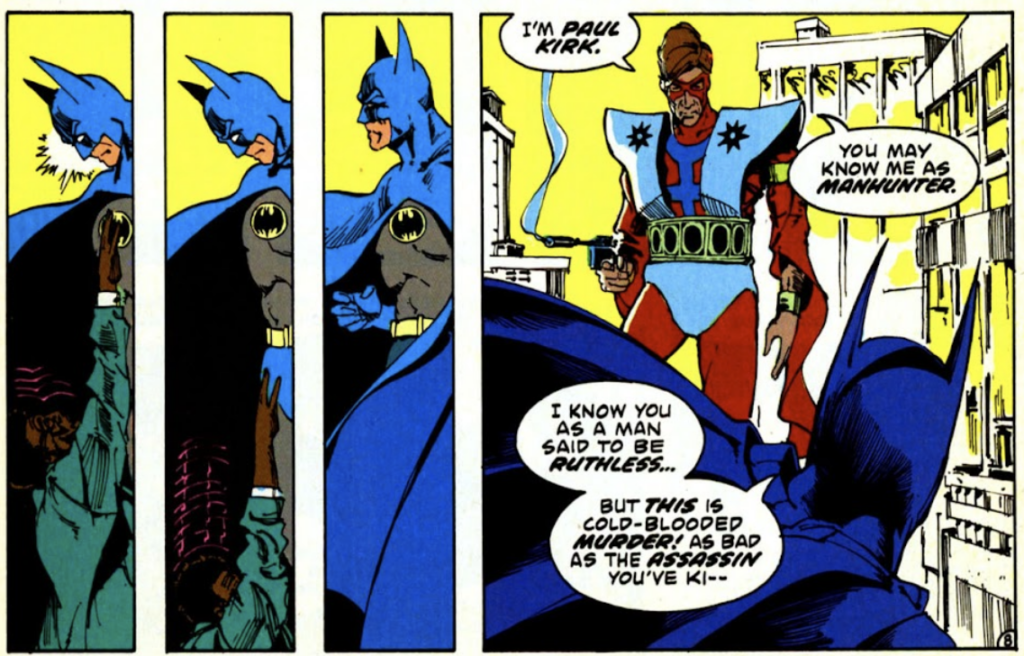
pressure on them to do any of this. But I do think it was cool that they decided to tie it into Batman. They didn’t have to do that, but they did decide in that last chapter to tie it into the Batman story and then flesh it out because now they had their eight pages, but they also had however many pages the Batman story would have been. that last last issue is a full is a full story rather than just an eight page.
Klint Finley (18:52)
Yeah. So you mentioned this was something I didn’t come across in my research. Did they actually always intend for it to be a finite story or did they just decide to end it somewhere along the way?
John (19:02)
I guess I don’t know. ⁓ It seems like it had a pretty final ending, but maybe that wasn’t what they thought about when they initially set out. But it seemed to me that they weren’t going to do it forever. And it wasn’t something that was necessarily going to be handed off to another creative team to continue again on down the line. There were other Manhunters later. DC took that name and…
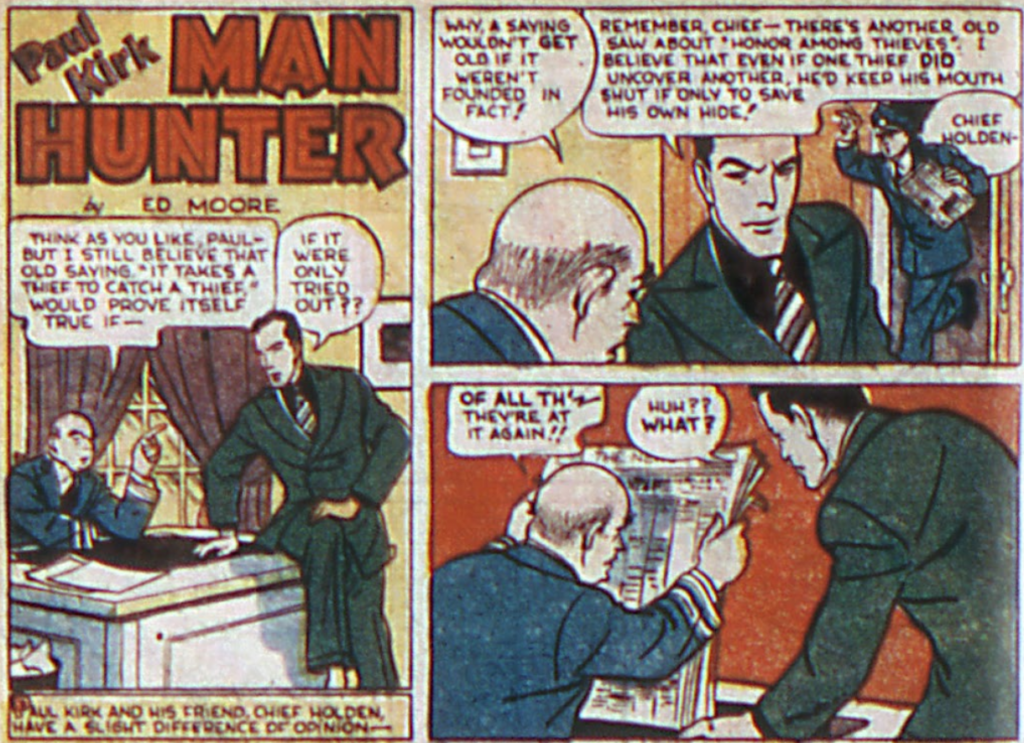
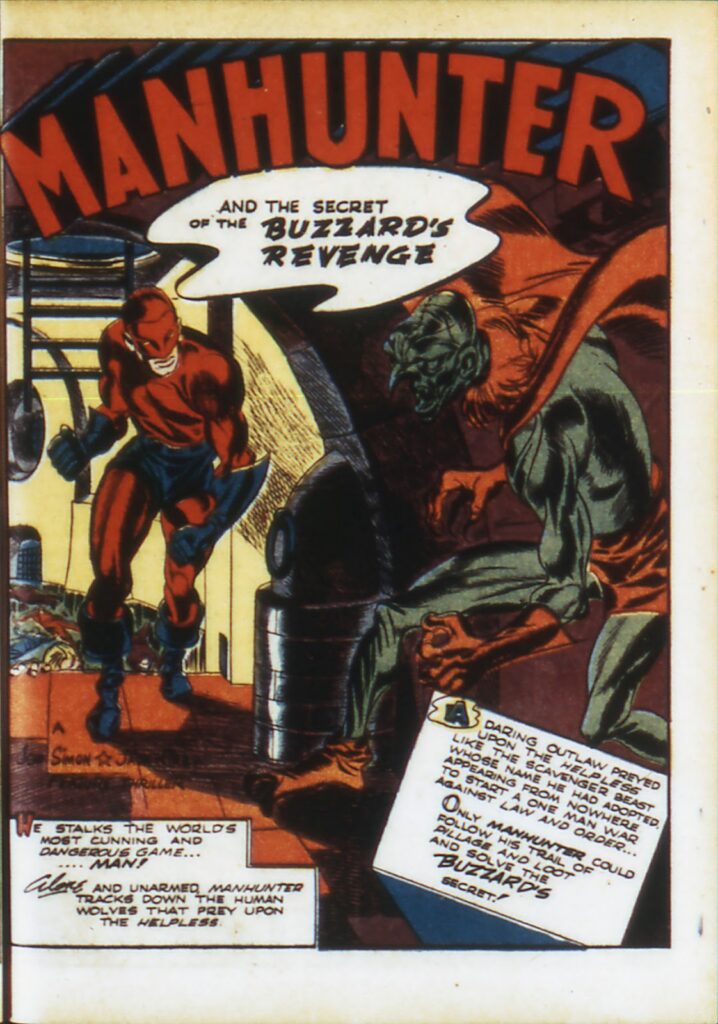
And used it and there were man hunters before to I guess we should mention that there was a 40s character that was a detective detective character. ⁓ Paul Kirk man hunter name when he.
Klint Finley (19:36)
The next one
was Rick Nelson, and that’s the one that was Jack Kirby and Joe Simon. then they, that was only the first appearance of him. He was called Rick Nelson. And in the next issue, he was back to being Paul Kirk, even though he was a completely different character. ⁓ Wikipedia sort of implies that it’s because Quality Comics had just published a comic that had a character called Manhunter, and that maybe they were trying to tie their
John (19:40)
Right.
Right, yep.
Klint Finley (20:02)
their new manhunter to their old manhunter to make it seem less like they were coming after the quality manhunter. But otherwise, yeah, I don’t know what other reason they would have for doing that because it was pretty clearly a different character. ⁓
John (20:16)
Well, and Goodwin
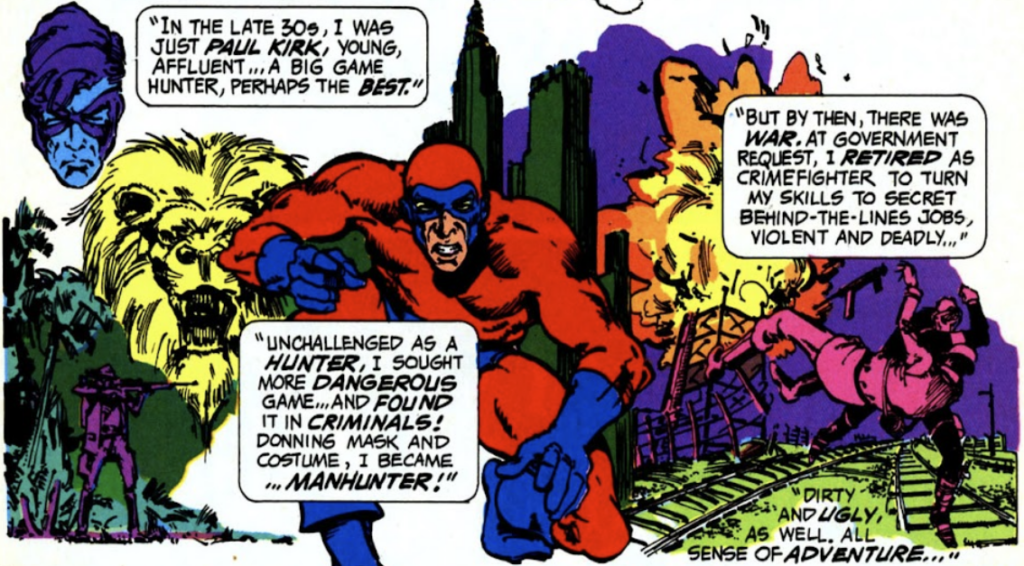
and Simonson weren’t going to call him Paul Kirk either. They were going to have him be a separate character. And then as they kind of geared up for the series and researched it and stuff, they decided to tie it in to that older character. And it’s neat that they did given the nature of the story. I liked the idea that, you know, the original character died and then got cryogenically frozen. And then they brought him back. It’s a very Captain America-esque.
kind of thing where they bring him back later as a sort of super soldier. Yeah. But with the ninja themes.
Klint Finley (20:47)
Yeah, it’s also…
Yeah, and it’s also a pretty early example of the Grim and Gritty reboot, because we’d seen reboots of characters before, but they weren’t, as far as I know, much like this, where they have him come back and become more of an anti-hero who uses guns and kills people. That just… I mean, as we’ve talked about, in the Golden Age, there was a lot more violence in comics.
Even in the Silver Age, there was the original peacemaker who was surprisingly violent from the start. So it wasn’t unprecedented, but to take a character who existed previously and make him darker, I don’t know that that had really been done before. It certainly wasn’t common to do it at that point.
John (21:29)
Thank you.
In the final
chapter, it’s funny that you mentioned about the willingness to kill and all of that. In the final chapter, Batman is going to go with them on a mission and they’re like, yeah, you don’t need to come with us because we kill people and you don’t. And you know, that’s not going to work for us. And of course, Batman ends up showing up anyway. But I find the idea of, you know, we have to go on this mission to fight this big organization, but we’re not going to take Batman with us. Who’s this resource to us to be a wild idea that would maybe not happen on comics now.
Klint Finley (21:47)
Mm-hmm.
Yeah.
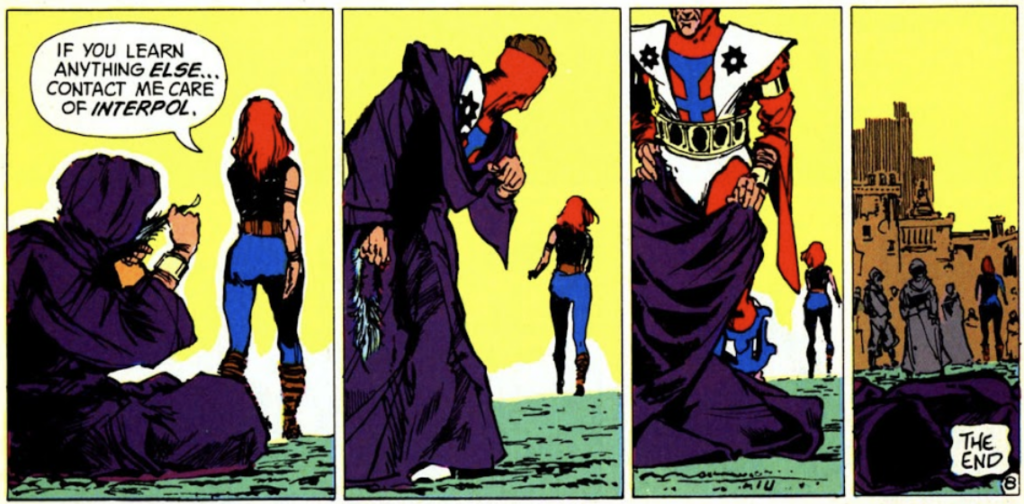
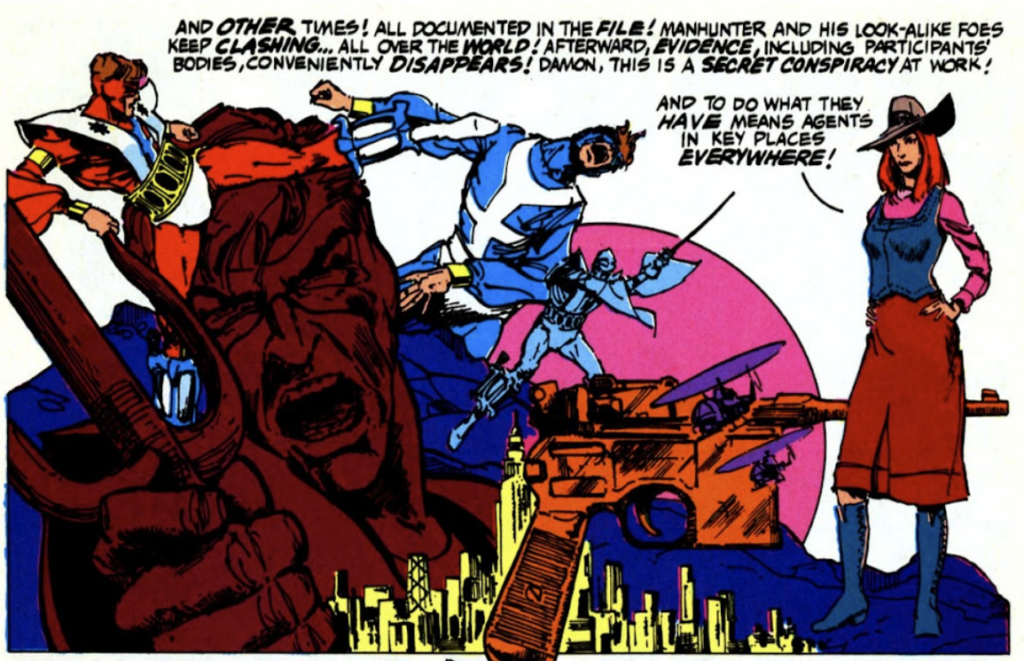
Yeah. I also thought it was cool the way that the story was told, particularly in the beginning, where it was told from the perspective primarily of the Interpol agent, Christine St. Clair, which we see more of that now, of deciding to tell a superhero story from the perspective of somebody else. So she’s this character who’s investigating Paul Kirk, trying to find him, and going to these different countries and then…
John (22:09)
Thank you.
Yeah.
Klint Finley (22:26)
that he’s just been in and then she hears the story from someone. In one case, it’s actually a manhunter in disguise. Yeah, telling her the story. So yeah, just some really fun ideas there that are, I think were a lot less common back then. They had to have been a lot fresher techniques and are still good to use even now as a way.
John (22:31)
him. Right. I love it.
Another
idea that was uncommon at the time that I’m sure existed in comics at some point, but wasn’t spelled out quite the way it was here, is the idea of a healing factor. And Goodwin actually calls it a healing factor, which it’s called that in Wolverine later, but I think this might be the first instance of them calling the power of that specific thing in comics. Goodwin did do…
⁓ some issues of Wolverine at some point. I don’t, I don’t know if that’s when it was first mentioned or if it was mentioned earlier than that, or, or called that specifically, but, ⁓ Paul Kirk is genetically modified to have this healing factor so that he’s really hard to kill and he can recover from most wounds. and like early Wolverine, that didn’t mean he was unkillable. It just meant that he could survive most things.
Klint Finley (23:29)
Hey, sorry.
Yeah, I hadn’t picked up on that, but I think this may be even before the first appearance of Wolverine. And I don’t think in those early appearances they had established that he had any sort of healing ability.
John (23:43)
Yeah, he didn’t originally in his early appearances, although I guess to be able to get knocked out by the Hulk and live, you’d have to have have something special going on. But I don’t think they talked about his healing powers until later as they were developing the character. Wolverine is a really good example of a character that was developed over time anyway, because Claremont added so much stuff and Barry Winsor Smith added stuff. ⁓
Klint Finley (24:03)
Yeah.
Like we talked
about in the last episode, the whole idea of him having false memories wasn’t introduced until 1991 by Larry Hammer.
John (24:17)
Right, exactly.
Klint Finley (24:18)
one last thing I would say is I really did think that the Christine St. Clair character was great. I’m surprised she hasn’t been used more. They brought back Manhunter at some point as a female character, but it’s not Christine. It’s somebody else. And it seems like a missed opportunity they could have.
John (24:34)
It does. It does to me. That would have been… Does that character ever resurface at all anywhere in the DC universe?
Klint Finley (24:42)
Once, I forget the name of the title, it was in like 2004. So she disappears for decades, reappears for just a few issues of something, and then disappears again for, it’s been 22 years now. So, yeah, remarkable.
John (24:56)
His,
the other supporting character too, the ninja master that teaches Paul Kirk, know, his fighting style and stuff also comes back with Christine in that later silent story. And ⁓ he’s ⁓ got like kind of a demon mask that he wears. And it reminded me of ⁓ Ogun in the Wolverine series, Katie Pride and Wolverine, where it talks about this ninja master who had trained
Wolverine sometime in the past and so we’ve got all these Wolverine connections. It’s kind of kind of fun to see all these different things used over and over again.
Klint Finley (25:26)
Yeah, yeah, so we can wrap it up here. Just tune in next time for more Sewer Mutant.
John (25:32)
See you next time.